Table of contents
Create a culture that means business™
Schedule a demo with an Achievers solution expert today.


 Copy URL
Building a culture of recognition has never mattered more, and the data proves it. According to the State of Recognition Report, appreciation is missing in Australia. Just 21% of Australian employees say they feel meaningfully recognised, while fewer than 1 in 5 employees feel they’re operating at their best.
And in a workplace, that’s the difference between people feeling seen and people wondering whether their work matters at all.
That’s the real danger of the recognition gap, and the reason it deserves more than a quick look. In this blog, we’ll explore why the gap exists, shine a spotlight on a global organisation that’s getting it right, and what HR leaders can do to build that culture of recognition.
Inside the recognition gap — and why it matters for your culture
The recognition gap is wider than most leaders realise. Employees aren’t feeling appreciated often enough, and those rare moments designed to celebrate them aren’t landing the way they should. In fact, the latest Engagement and Retention Report shows that only 25% of employees feel appreciated during Employee Appreciation Day or Week. Those are moments that should be guaranteed wins.
Why does that matter so much? Because recognition is one of the clearest behaviour signals you can send. And when it happens, 85% of employees repeat the action they were recognised for. When it doesn’t? That alignment disappears fast, and your culture starts moving in the wrong direction.
How a global organisation closed the recognition gap
Today’s leading organisations are rethinking how recognition works, and Campbell’s is one of the best examples of what’s possible when they do. After a period of cultural disruption and a new CEO stepping in with a desire for change, it was clear their existing recognition program wasn’t cutting it. The ingredients for a strong culture were there — they just needed a little pinch of something extra.
Their biggest challenges:
- Hourly employees felt unseen, despite being essential to operations across plants, warehouses, and mixing centres.
- Peer-to-peer recognition didn’t exist, and top-down appreciation was reserved for big moments instead of everyday wins.
- Tools weren’t integrated into the systems their people used every day, making recognition feel like an extra task to check off.
To close the gap, Campbell’s partnered with Achievers to make recognition easy, visible, and integrated into the way people actually work. They built a network of onsite champions, rolled out fun and memorable communications, and used their platform to spark appreciation not just during Employee Appreciation Week, but in the days leading up to it and the ones that followed.
The result? Adoption took off immediately, with over 6,000 recognitions sent after the first month. But recognition didn’t just improve. It became a much bigger part of how Campbell’s shows up for its people. Turns out, a little consistency can be pretty souper powerful.
Campbell’s story is what happens when organisations go beyond the basics and truly invest in their people and their culture.
If you’re feeling inspired by what’s possible, here are 11 practical ways to build your own culture of recognition:
11 ways to build a culture of recognition
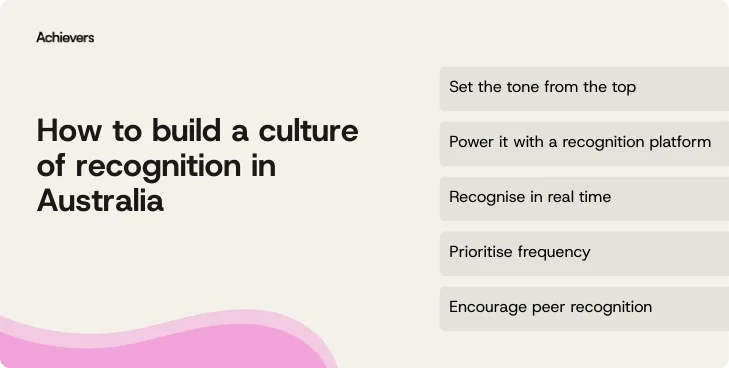
1. Set the tone from the top
If leadership doesn’t recognise, recognition won’t scale. It’s that simple.
Employees look to leaders to model the culture — and if recognition isn’t part of the everyday vocabulary at the top, it won’t be at the bottom either. When executives and managers make appreciation a habit, it sends a clear message: recognition matters here. And everyone’s expected to take part.
2. Power it with a platform
Recognition can’t just “happen when it happens.” Without a system behind it, it’s inconsistent, invisible, and easy to forget.
A recognition platform is one of the most effective ways to recognise employees, giving your people the tools they need to show appreciation in the moment — across teams, time zones, and tools. Look for one that integrates into the flow of work and supports global, points-based reward systems with real choice. Bonus points for usage rates that don’t drop off after launch.
3. Recognise in real time
Recognition loses power the longer you wait. So does vagueness.
“Nice work” doesn’t tell employees much. Instead, call out the exact behaviour and explain why it mattered. Recognition that’s specific and timely does more than boost morale; it helps people understand what to repeat and reinforces the values your business runs on.
4. Prioritise frequency
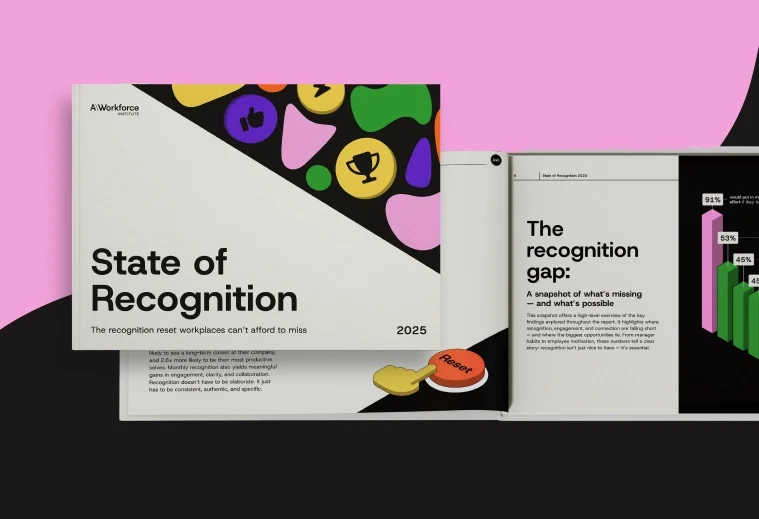
Most people aren’t recognised often enough — and they feel it. While recognition is on the decline across workplaces, data from Achievers Workforce Institute tells us that 91% of employees who are meaningfully recognised at least monthly say they’re very engaged. That’s a stat worth paying attention to. The more frequently recognition happens, the more it reinforces the behaviors you want to see.
5. Encourage peers recognition
Managers can’t see everything. But peers? They’re in the trenches.
Peer-to-peer recognition builds trust and connection across teams — especially in hybrid or remote settings. Give employees an easy, visible way to appreciate each other. The best platforms embed right into Slack, Teams, and Outlook, so peer praise is just a click away.
6. Personalise the experience
Recognition isn’t one-size-fits-all. And neither are rewards.
Some people want the spotlight. Others prefer a private note. One person might redeem for a coffee run; another might save up for noise-cancelling headphones. If you’re looking at how to improve the employee experience, a flexible points-based system lets employees choose what recognition looks like for them — and that choice makes it stick.
7. Connect recognition to what matters most
Recognition shouldn’t float in a vacuum. When you tie it to a company value, team goal, or key result, it becomes more than a pat on the back — it becomes a moment where everyone is in sync.
This helps employees see how their efforts drive impact and gives leaders a clear way to reinforce what matters. The more your recognition connects to strategy, the more it fuels the workplace community and culture that you’re trying to build.
8. Make inclusion part of the design
Recognition shouldn’t favour the loudest voice in the room.
To build a sense of belonging at work, make sure appreciation reaches every employee — across functions, geographies, and lived experiences. Celebrate all the ways people drive impact, not just the most visible wins. Recognition that’s inclusive is recognition that builds trust.
9. Keep it visible
Out of sight, out of culture.
Recognition should be reinforced often — in team meetings, 1:1s, onboarding, and performance conversations. It’s not enough to say it matters. You have to show it, regularly. That repetition turns recognition into a shared habit, not a leadership initiative.
10. Make it a part of how people work
If employees have to leave their workflow to recognise someone, odds are they won’t do it often.
That’s why the best programs integrate directly into tools like Workday, Slack, Microsoft, and more. When recognition is a part of how teams work every day, it becomes frictionless, natural, and far more consistent across roles and regions.
11. Listen, learn, and adapt
You can’t improve what you don’t track.
Use feedback tools to find out what’s working and what’s missing. Then layer in platform data — recognition frequency, activation rates, reward redemptions — to get a full picture. Recognition cultures don’t stand still, and your strategy shouldn’t either.
The importance of a culture of recognition
A strong culture of recognition is one of the most practical things you can do to keep your people engaged, your teams aligned, and your top performers off LinkedIn.
Because when employees feel genuinely appreciated, they don’t just feel good — they do good. Recognition creates momentum. It tells people, this matters, and gives them a reason to keep doing it. And over time? It changes how your organisation works.
Here’s what a culture built on recognition makes possible:
- Higher engagement and better performance: When people know their work is being noticed, they tend to keep doing more of it. Funny how that works.
- Stronger retention: Employees who feel recognised are less likely to ghost you for another offer. It’s harder to leave a place where your contributions actually count.
- Better collaboration: A little appreciation goes a long way in building trust. Teams that recognise each other regularly tend to work better together — fewer silos, more shared wins.
- More innovation and knowledge sharing: Recognition builds psychological safety. And when people feel safe, they speak up — with new ideas, fresh thinking, and solutions you didn’t see coming.
Make recognition a core part of your culture
Building a culture of recognition (and closing the recognition gap) is about more than throwing a company-wide pizza party during Employee Appreciation Week. It’s about telling your people again and again how much they’re valued for the work they do and for the people they are.
Achievers lets you show that in real time — from any device, in any moment. Whether it’s a peer-to-peer shoutout or manager-led praise, recognition becomes easy, visible, and scalable 365 days of the year. And with access to a global rewards marketplace featuring 2,500+ brands and 3M+ items (no markup, ever), every moment of appreciation carries meaning beyond the big celebrations.
Pair that with our Voice of Employee solution, and you’ve got the tools to act on feedback, close the loop fast, and keep your culture evolving with your people — not in spite of them.
So, if you’re ready to build a culture of recognition just like Campbell’s, Achievers is here to help make it happen.
“If you make it easy and you embed it into the way people work, versus making it something extra stand alone or separate, it will start to just become part of your culture and the way we work.”
Kathryn Rider
AVP of Benefits, The Campbell's Company