Table of contents
Create a culture that means business™
Schedule a demo with an Achievers solution expert today.


 Copy URL
An employee pulse survey is increasingly critical in Australian workplaces where employee engagement is shaped less by annual programs and more by everyday experience. From fluctuating workloads and hybrid work expectations to the quality of leadership and recognition, how employees feel can change quickly — and often quietly — week to week.
Despite that reality, many Australian organisations still rely on annual engagement surveys to understand their workforce. The issue isn’t intent; it’s timing. By the time results are reviewed, socialised, and acted on, the feedback is already out of step with what employees are experiencing now and the opportunity to respond meaningfully has often passed.
The consequences of delayed listening are showing up clearly in the data. According to the 2026 Engagement and Retention Report: APAC edition, only 22% of Australian employees feel appreciated, 22% say they’re engaged, and just 31% find their work meaningful. At the same time, 30% are actively looking for work and another 25% are unsure about staying. When regular check‑ins are missing, disengagement doesn’t arrive loudly — it builds gradually, until retention risk becomes impossible to ignore.
To keep pace with what employees actually need, more Australian organisations are shifting toward frequent, focused ways of listening. That’s where employee pulse surveys come in, offering a practical way to capture real‑time sentiment, spot early warning signs, and turn insight into action before connection, trust, and motivation start to slip.
Employee pulse survey: what it is and why it matters in Australia
An employee pulse survey is a short, regular check‑in that helps organisations understand how employees are feeling now, not once a year, and not after priorities or pressures have already shifted.
Unlike traditional engagement surveys, pulse surveys are designed for the pace of modern Australian workplaces. They provide timely insight into how people are experiencing their work, their manager, and their sense of recognition and support.
That matters because engagement isn’t fixed. It moves with leadership decisions, changing workloads, and everyday moments of appreciation. In Australia, where recognition gaps remain one of the strongest drivers of disengagement, missing those signals means employees start checking out long before they start checking job boards.
Pulse surveys help organisations catch those shifts early, while there’s still time to respond, rebuild trust, and reinforce connection.
What can an employee pulse survey measure?
Employee pulse surveys are built for flexibility. They can measure anything that matters to your people — as long as you keep enough consistency to track change over time. That’s exactly why they work. Engagement isn’t static. It shifts week to week based on workload, recognition, line manager behaviour, and whether employees feel supported, connected, and safe to speak up.
For Australian organisations navigating hybrid work, rising psychosocial risk, and ongoing change, pulse surveys offer a practical way to stay connected to the lived employee experience, not just a once‑a‑year temperature check.
Here are the most common areas an employee pulse survey can measure, and how each one helps leaders take meaningful action:
- Engagement and pride: Understand whether employees feel motivated, committed, and proud of the work they do — and spot early signs of disengagement before they impact performance or retention.
- Appreciation and recognition: Measure whether people feel genuinely recognised for their contributions, and whether appreciation is happening often enough to make a difference, not just at performance review time.
- Manager effectiveness: Gain insight into whether managers are providing clarity, feedback, and support, or whether leadership gaps are quietly driving frustration and disengagement.
- Workload and well-being: Identify early signals of stress and burnout, helping organisations respond before pressure turns into absenteeism, disengagement, or psychological injury claims.
- Connection and belonging: Track whether employees feel connected to their colleagues, their manager, and the organisation’s values, which is the foundation of trust, safety, and retention.
- Change readiness: During restructures, policy changes, or technology rollouts, pulse surveys provide real‑time insight into employee sentiment so leaders can adjust quickly and reduce uncertainty.
- Action plan progress: Use short follow‑up pulses to check whether changes are actually landing or whether good intentions are still stuck in a deck or comms plan.
Common employee pulse survey questions by theme
A strong employee pulse survey isn’t a long list of “nice‑to‑know” questions. It’s a small, focused set of prompts leaders can realistically respond to. The goal isn’t to collect more data, it’s to turn feedback into action.
Below are example questions designed to be quick for employees to answer, and practical for leaders to act on.
Engagement (outcome)
- “I would recommend this organisation as a great place to work.”
- “I feel motivated to do my best work here.”
Recognition and appreciation (driver)
- “I feel recognised for the work I do.”
- “In the past seven days, I received meaningful recognition.”
- “Recognition here feels genuine and linked to real impact.”
Manager support (driver)
- “My manager helps me focus on what matters most.”
- “I receive useful feedback that helps me perform better.”
Workload and well-being (driver)
- “My workload feels manageable.”
- “I feel supported in my well-being at work.”
Connection and belonging (driver)
- “I feel connected to my team.”
- “I feel a sense of belonging at work.”
Open‑text (context)
- “What’s one thing we should start, stop, or continue?”
- “What’s one thing making it harder for you to do your job well right now?”
Pro tip: Include one “recognition moment” question in each pulse, not just “how engaged are you?” but “what behaviours or contributions should we be recognising more often?” That’s how employee listening starts to shape culture in real time — not just measure it.
Now that we’ve covered what an employee pulse survey is — and what it can measure — let’s look at the key benefits of employee pulse surveys, and why frequent listening helps Australian organisations stay resilient, responsive, and ready to act.
10 benefits of an employee pulse survey
So why are more Australian organisations making employee pulse surveys a core part of their people strategy? Because when they’re used well, pulse surveys don’t just collect feedback, they turn insight into action, build trust, and help leaders make better decisions at every level of the organisation.
In Australia, engagement, appreciation, and connection are under real pressure. Only 22% of employees say they feel engaged at work, and just 22% feel appreciated. With so many employees feeling unseen or uncertain about their future, frequent listening isn’t optional, it’s how organisations stay aligned with reality.
Here are 10 benefits that show how regular employee listening can make a meaningful difference for both your people and your organisation.
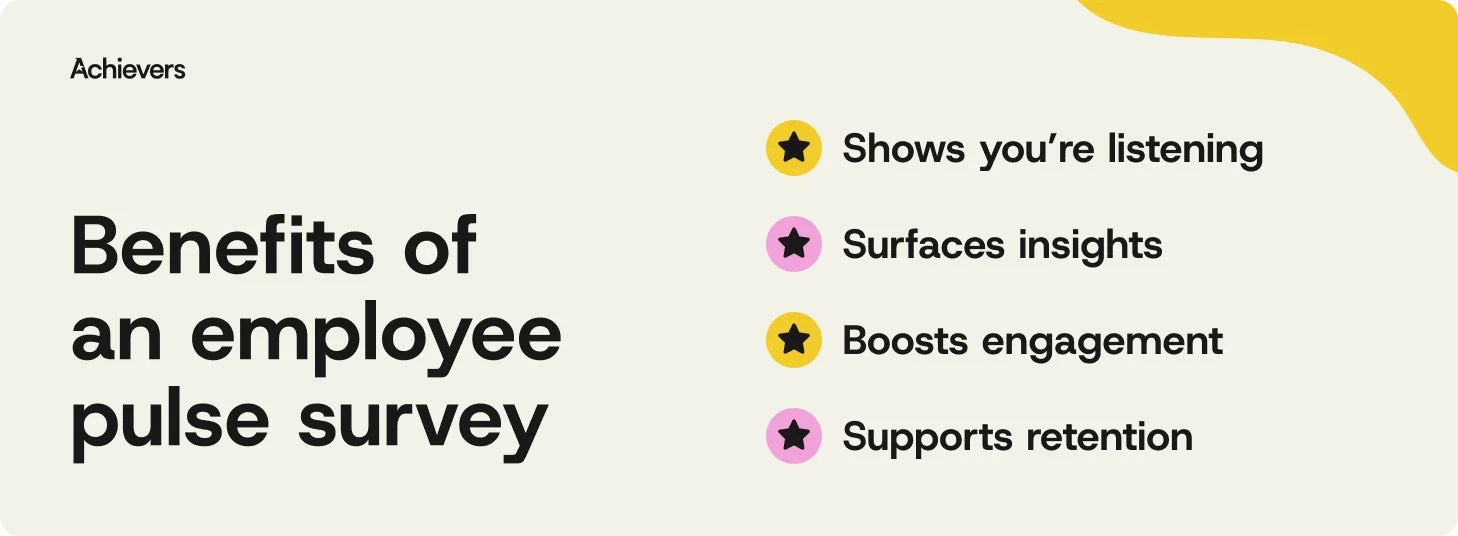
1. Shows employees you’re genuinely listening
Running an employee pulse survey sends a clear message: employee voice matters. In Australia, where fewer than one in four employees feel appreciated, that signal is critical. But listening only builds trust when leaders act on what they hear. Feedback without follow‑through weakens confidence rather than strengthening it.
2. Brings issues to light quickly
ecause pulse surveys are short and frequent, they surface concerns early, whether that’s workload pressure, leadership misalignment, or declining morale. This matters in Australian workplaces where wellbeing indicators are already strained, with data from the 2026 APAC Engagement and Retention Report highlighting only 18% of employees reporting healthy work–life balance.
3. Strengthens engagement through visible action
Employees are more engaged when they see their feedback lead to change. Australian data shows a strong link between feeling appreciated and staying engaged at work. Pulse surveys help leaders understand where recognition is missing and where it can make the greatest impact.
4. Supports retention before it’s at risk
Disengagement rarely appears overnight. Pulse surveys help identify early warning signs — frustration, fatigue, or feeling overlooked — before employees actively start looking elsewhere. With 55% of Australian employees either unsure or planning to leave, early insight creates room to intervene.
5. Flags problems while they’re still manageable
From unclear priorities to manager misalignment, pulse surveys highlight issues while they’re still fixable. That proactive insight helps organisations address challenges before they affect wellbeing, performance, or trust.
6. Creates a safer space for honest feedback
Many employees are hesitant to raise concerns directly, particularly when issues involve management. Pulse surveys offer a safer, often anonymous channel for candour, which is critical when the APAC Engagement and Retention Report tells us that only 14% of Australian employees feel a strong sense of belonging at work.
7. Encourages continuous improvement
Each pulse survey captures a snapshot of how employees are feeling. Over time, those snapshots reveal patterns, helping leaders see what’s improving, what’s stalled, and where to focus next. This continuous feedback loop supports better, more informed decisions.
8. Reduces bias in employee feedback
Traditional feedback often reflects only the voices that feel most confident speaking up. Pulse surveys help level the playing field by offering consistency and anonymity, resulting in clearer, more representative insights across teams.
9. Helps leaders focus their efforts
Pulse surveys don’t just highlight sentiment, they guide action. With targeted insight, leaders can prioritise initiatives that address real employee needs instead of relying on assumptions or outdated data.
10. Increases participation by respecting time
Long, infrequent surveys often feel burdensome. Short pulse surveys respect employees’ time, making participation easier and feedback more consistent. When surveys feel manageable, people are far more likely to take part.
What makes an employee pulse survey a pulse survey?
Not all surveys serve the same purpose. An employee pulse survey is designed for focus, frequency, and action, not for sitting unread in a shared drive.
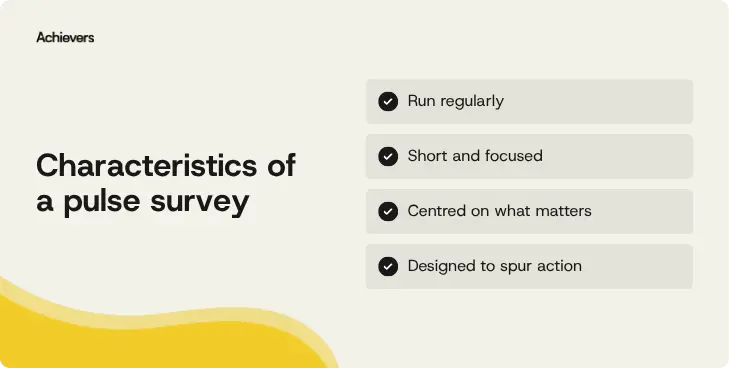
Run regularly
Weekly, fortnightly, or monthly pulse surveys keep employee sentiment current. A consistent cadence helps Australian organisations spot shifts early and stay connected to how employees are really feeling without waiting months to respond.
Short and focused
Effective pulse surveys stick to a small number of relevant questions. Keeping surveys quick and easy to complete increases participation and encourages more honest feedback, while avoiding survey fatigue.
Centred on what matters now
The best pulse surveys focus on timely priorities like leadership, recognition, workload, and wellbeing. These areas shift quickly — and asking about what employees are experiencing now makes feedback more actionable.
Built for action
Pulse surveys should deliver real‑time insight leaders can respond to quickly. When results are easy to understand and shared openly, leaders can close the loop faster and turn feedback into visible change.
Together, these principles make employee pulse surveys a powerful way to stay connected to what employees need most.
How to avoid survey fatigue (and still get honest answers)
Let’s be upfront about the reaction many employees have when a survey lands in their inbox: “Another one?”
Here’s the reality. Survey fatigue isn’t caused by asking too often, it’s caused by not doing anything visible with the feedback. When employees take the time to speak up and nothing changes, trust drops, participation falls, and surveys start to feel like a box‑ticking exercise instead of genuine listening.
To keep pulse surveys effective, and encourage people to keep sharing honest feedback, Australian organisations need to build these habits into the way they listen:
Close the loop, every time
Let employees know what you heard, what you’re acting on, and what isn’t changing and why. Even when change isn’t immediate, clarity and transparency go a long way in building credibility.
Keep a small set of anchor questions
Track a handful of consistent questions over time so you can show real trends, not just snapshots or gut feel. This helps leaders see whether things are genuinely improving or quietly slipping.
Rotate the rest to stay relevant
Each pulse should focus on one or two priority areas, such as recognition, workload pressure, or line manager support. Rotating topics keeps surveys feeling purposeful rather than repetitive.
Only ask what you’re prepared to act on
If there’s no realistic path to action, leave it out. Asking questions you can’t respond to is one of the fastest ways to lose trust — especially in environments where employees are already stretched.
Be clear and honest about anonymity
Employees are far more open when they know their feedback is safe. Be explicit about how anonymity works, how data is handled, and how insights will be used.
A recognition‑led twist: when employees speak up, recognise the teams and leaders who take action on that feedback. That’s how listening becomes part of everyday culture, not just another quarterly task driven by HR.
Add an employee pulse survey to your toolkit
An employee pulse survey isn’t just a feedback tool, it’s a signal to employees that they’re seen, heard, and valued. In Australia, where recognition gaps continue to undermine engagement, that signal matters more than ever.
But listening alone isn’t enough. Organisations that see real impact are the ones that turn insight into action, connecting feedback to recognition, supporting managers to respond effectively, and reinforcing behaviours that build trust.
If you’re looking for a practical, high‑impact way to stay connected to your workforce, an employee pulse survey is a strong place to start. With Achievers, employee voice doesn’t sit in isolation, it connects directly to recognition, rewards, and outcomes that strengthen culture and performance.
Employee pulse survey FAQ
Key insights
- Engagement shifts quickly, making regular pulse surveys more effective than annual feedback.
- Pulse surveys only matter when feedback leads to visible action.
- Organisations that listen often and act early build stronger trust, engagement, and retention.