Table of contents
Create a culture that means business™
Schedule a demo with an Achievers solution expert today.


 Copy URL
An employee pulse survey is becoming essential in Singapore workplaces where employee engagement is shaped less by annual initiatives and more by the realities of fast‑moving, high‑pressure work. Long hours, performance expectations, manager relationships, and whether employees feel recognised all influence how people feel, and those feelings can change quickly, often without warning.
Despite this, many organisations in Singapore still rely on annual engagement surveys to understand their workforce. The challenge isn’t commitment to listening, it’s speed. By the time feedback is analysed, shared, and acted on, employees’ priorities may have shifted, frustration may have deepened, or trust may already be wearing thin.
That delay is showing up clearly in the data. According to the 2026 Engagement and Retention Report: APAC edition, only 15% of employees in Singapore feel appreciated, 15% say they’re engaged, and just 21% find their work meaningful. At the same time, 43% are actively looking for work, while another 31% are undecided about staying. In a highly competitive talent market, when regular check‑ins are missing, disengagement doesn’t announce itself, it accelerates quietly until retention risk becomes unavoidable.
To keep pace with what employees actually need, more organisations in Singapore are turning to frequent, focused ways of listening. That’s where employee pulse surveys come in, offering a practical way to capture real‑time sentiment, surface early warning signs, and turn insight into action before connection, confidence, and motivation start to slip.
Employee pulse survey: what it is and why it matters in Singapore
An employee pulse survey is a short, regular check‑in that helps organisations understand how employees are feeling right now, not once a year, and not after pressure, priorities, or expectations have already shifted.
Unlike traditional engagement surveys, pulse surveys are designed for the pace of modern Singapore workplaces. They provide timely insight into how people are experiencing their work, their manager, and their sense of recognition, growth, and support.
That matters because engagement isn’t static. It moves with leadership decisions, workload intensity, career opportunity, and everyday moments of appreciation. In Singapore, where competition for roles is high and career mobility is real, missing those signals means employees begin disengaging long before they hand in their notice.
Pulse surveys help organisations catch those shifts early, while there’s still time to respond, rebuild trust, and reinforce connection.
What can an employee pulse survey measure?
Employee pulse surveys are designed for flexibility. They can measure anything that matters to your people as long as there’s enough consistency to track change over time. That’s exactly why they’re effective. Engagement isn’t fixed. It moves with workload, recognition, manager behaviour, and whether employees feel supported, included, and confident speaking up.
For organisations in Singapore, where work moves fast, expectations are high, and change is constant, pulse surveys offer a practical way to stay connected to how employees are really experiencing work, not just what shows up in annual results or engagement scores.
Here are the most common areas an employee pulse survey can measure, and how each one helps leaders take informed action:
- Engagement and pride: Understand whether employees feel motivated, committed, and proud of the work they do — and identify early signs of disengagement before they affect performance or retention.
- Appreciation and recognition: Measure whether employees feel genuinely recognised for their contributions, and whether appreciation shows up often enough to matter, not just during formal reviews or milestone moments.
- Manager effectiveness: Gain insight into whether managers are providing clarity, feedback, and support, or whether gaps in leadership are creating frustration or slowing teams down.
- Workload and well‑being: Surface early signs of stress and overload, helping organisations respond before pressure leads to burnout, disengagement, or attrition.
- Connection and belonging: Track whether employees feel connected to their team, their manager, and the organisation’s values — a critical factor in trust, collaboration, and long‑term commitment.
- Change readiness: During restructures, policy shifts, or digital transformation initiatives, pulse surveys provide real‑time visibility into employee sentiment so leaders can adjust quickly and reduce uncertainty.
- Action plan progress: Use short follow‑up pulses to check whether changes are actually landing or whether good intentions are getting lost between planning and execution.
How to turn pulse survey results into action
Start by identifying the trends that have the biggest impact on the employee experience. Look for recurring themes around recognition, manager support, communication, workload, or career growth. Then prioritise the areas where small changes can make the greatest difference. According to Achievers Workforce Institute (AWI) research, only 18% of employees across APAC feel appreciated at work, 25% say their work feels meaningful, and just 17% feel connected to company values. These findings highlight a significant opportunity for organizations to strengthen engagement and retention through more frequent and meaningful recognition.
Once you’ve identified key themes, close the feedback loop. Share survey findings with employees, outline what actions will be taken, and provide regular updates on progress. Continuous listening works best when employees can see that their feedback is shaping real decisions. As Achievers’ employee listening philosophy emphasises, feedback should help leaders uncover employee engagement drivers, spot trends early, and take meaningful action — not sit in a dashboard waiting for the next survey.
A simple framework for turning pulse survey results into action:
- Identify patterns: Focus on the most common themes and engagement risks
- Prioritise what matters most: Address issues that have the biggest impact on employee experience and business outcomes
- Create clear action plans: Assign owners, timelines, and measurable goals
- Leverage recognition: Reinforce positive behaviours and address engagement gaps through meaningful recognition
- Communicate progress: Share updates so employees know their feedback is making a difference
- Measure and adjust: Use future pulse surveys to track progress and refine your approach
Common employee pulse survey questions by theme
A strong employee pulse survey isn’t a long list of “nice‑to‑know” questions. It’s a focused set of prompts leaders can realistically act on. The goal isn’t to gather more data; it’s to translate feedback into timely, visible action.
Below are example questions designed to be quick for employees to answer and practical for leaders to use.
Engagement (outcome)
- “I would recommend this organisation as a great place to work.”
- “I feel motivated to do my best work here.”
Recognition and appreciation (driver)
- “I feel recognised for the work I do.”
- “In the past seven days, I received meaningful recognition.”
- “Recognition here feels genuine and linked to real impact.”
Manager support (driver)
- “My manager helps me focus on what matters most.”
- “I receive feedback that helps me perform better.”
Workload and well‑being (driver)
- “My workload feels manageable.”
- “I feel supported in my well‑being at work.”
Connection and belonging (driver)
- “I feel connected to my team.”
- “I feel a sense of belonging at work.”
Open‑text (context)
- “What’s one thing we should start, stop, or continue?”
- “What’s one thing making it harder for you to do your job well right now?”
Pro tip: Include one “recognition moment” question in each pulse, not just “how engaged are you?” but “what behaviours or contributions should we be recognising more often?” That’s how employee listening moves beyond measurement and starts shaping culture in real time.
Now that we’ve covered what an employee pulse survey is — and what it can measure — let’s explore the key benefits of employee pulse surveys, and why frequent listening helps organisations in Singapore stay agile, aligned, and ready to act.
10 benefits of an employee pulse survey
So why are more organisations in Singapore making employee pulse surveys a core part of their people strategy? Because when they’re used well, pulse surveys don’t just gather feedback, they turn insight into action, build trust, and help leaders make better decisions in fast‑moving, high‑expectation environments.
In Singapore, the employee experience is under pressure. Only around 18% of employees say they feel appreciated, just about 22% feel engaged, and fewer than one in five feel a strong sense of belonging at work, according to research from the APAC Engagement and Retention Report. Against that backdrop, frequent listening isn’t a “nice to have,” it’s how organisations stay aligned with reality.
Here are 10 benefits that show how regular employee listening can make a meaningful difference for both your people and your organisation.
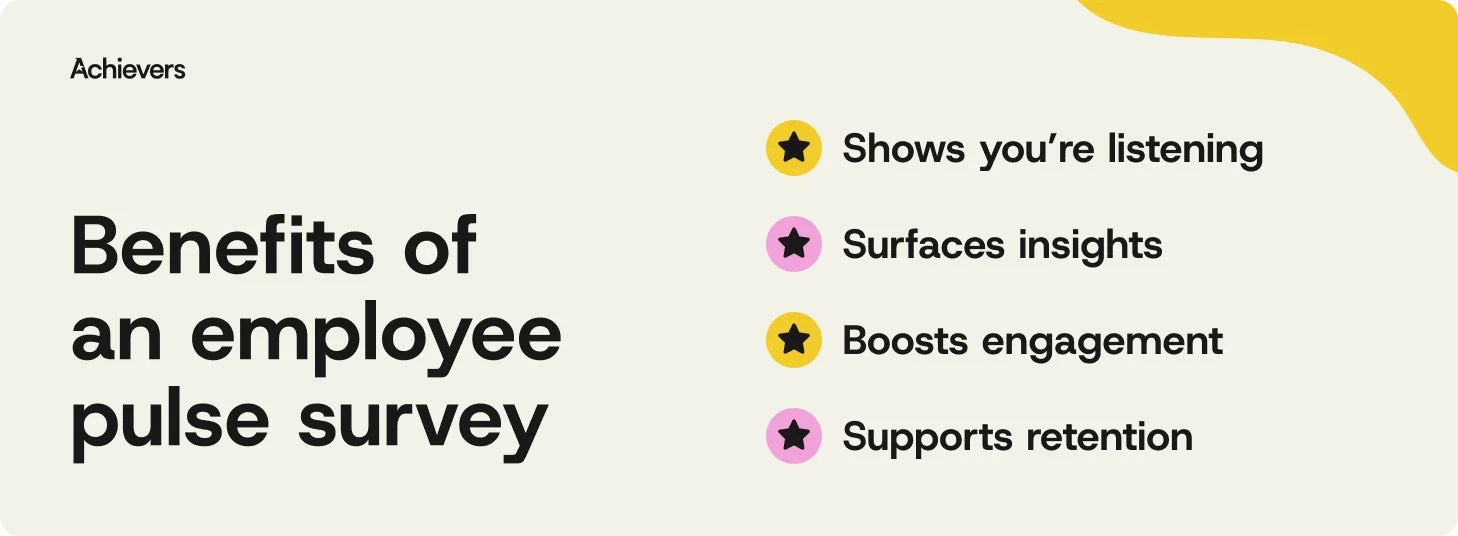
1. Shows employees you’re genuinely listening
Running an employee pulse survey sends a clear message: employee voice matters. In Singapore, where fewer than one in six employees feel appreciated, that signal carries weight. But listening only builds trust when leaders act on what they hear. Feedback without follow‑through weakens credibility instead of strengthening it.
2. Brings issues to light quickly
Because pulse surveys are short and frequent, they surface concerns early, whether that’s workload pressure, manager disconnects, or declining morale. That speed matters in Singapore organisations, where pressure can compound quickly if left unaddressed.
3. Strengthens engagement through visible action
Employees are far more engaged when they see feedback lead to change. Singapore data shows a strong link between feeling valued and staying engaged, yet engagement currently sits at just over 20%. Pulse surveys help leaders pinpoint where recognition and support are missing, and where targeted action can make the biggest impact.
4. Supports retention before it’s at risk
Disengagement rarely appears overnight. Pulse surveys help identify early warning signs — frustration, fatigue, or feeling overlooked — before employees actively start exploring other opportunities. With nearly three‑quarters of employees in Singapore either job hunting or undecided, early insight creates space to intervene.
5. Flags problems while they’re still manageable
From unclear priorities to misaligned leadership expectations, pulse surveys highlight issues while they’re still fixable. That proactive insight helps organisations address challenges before they affect wellbeing, performance, or trust.
6. Creates a safer space for honest feedback
Many employees hesitate to raise concerns directly, especially when issues involve management or workload. Pulse surveys offer a more comfortable, often anonymous way to share candid feedback, giving leaders insight they may not otherwise receive.
7. Encourages continuous improvement
Each pulse survey captures a snapshot of how employees are feeling. Over time, those snapshots reveal patterns, helping leaders see what’s improving, what’s stalled, and where to focus next. This ongoing feedback loop supports smarter, more responsive decisions.
8. Reduces bias in employee feedback
Traditional feedback often reflects only the voices that feel most confident speaking up. Pulse surveys help level the playing field by offering consistency and anonymity, resulting in clearer, more representative insights across teams.
9. Helps leaders focus their efforts
Pulse surveys don’t just highlight sentiment, they guide action. With targeted insight, leaders can prioritise initiatives that address real employee needs instead of relying on assumptions or outdated data.
10. Increases participation by respecting time
Long, infrequent surveys often feel burdensome. Short pulse surveys respect employees’ time, making participation easier and feedback more consistent. When surveys feel manageable, people are far more likely to take part.
What makes an employee pulse survey a pulse survey?
Not all surveys serve the same purpose. An employee pulse survey is designed for focus, frequency, and action, not for sitting unread in a shared drive.
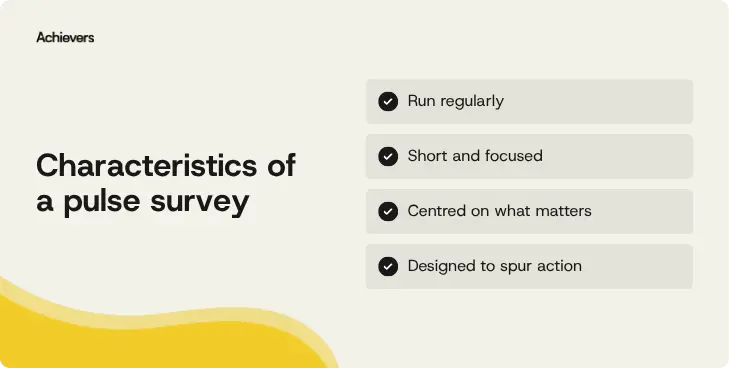
Run regularly
Weekly, fortnightly, or monthly pulse surveys keep employee sentiment current. A consistent cadence helps organisations in Singapore spot shifts early and stay connected to how employees are really feeling, without waiting months to respond.
Short and focused
Effective pulse surveys stick to a small number of relevant questions. Keeping surveys quick and easy to complete boosts participation and encourages more honest feedback, while avoiding survey fatigue.
Centred on what matters now
The best pulse surveys focus on timely priorities like leadership, recognition, workload, growth, and wellbeing. These areas shift quickly, and asking about what employees are experiencing now makes feedback more actionable.
Built for action
Pulse surveys should deliver real‑time insight leaders can respond to quickly. When results are easy to understand and shared openly, leaders can close the loop faster and turn feedback into visible change.
Together, these principles make employee pulse surveys a powerful way to stay connected to what employees need most.
How to avoid survey fatigue (and still get honest answers)
Let’s be honest about the reaction many employees have when a survey lands in their inbox: “Another one?”
In Singapore’s fast‑moving work environment, survey fatigue isn’t about being asked too often. It’s about what happens next. When employees take the time to share feedback and see little or no visible response, trust wears thin, participation drops, and surveys start to feel like compliance rather than genuine listening.
To keep pulse surveys effective — and encourage employees to continue sharing candid feedback — organisations in Singapore need to be deliberate about how they listen and respond.
Close the loop, consistently
Employees want to know their input matters. Share what you heard, what actions you’re taking, and what isn’t changing — and explain why. Even when change takes time, clarity and transparency help build confidence and credibility.
Keep a small set of anchor questions
Track a handful of consistent questions over time to show real trends, not just one‑off reactions. This gives leaders a clearer view of whether things are improving, stagnating, or slipping, and helps teams take corrective action earlier.
Rotate the rest to stay relevant
Each pulse should focus on one or two priority areas, such as recognition, workload pressure, or manager support. Rotating themes keeps surveys focused on what matters most right now, rather than feeling repetitive or disconnected from day‑to‑day work.
Only ask what you’re prepared to act on
If there’s no clear path to action, leave it out. Asking questions without follow‑through quickly erodes trust, especially in high‑performance environments where employees are already stretched for time.
Be clear and credible about anonymity
Employees are more likely to be open when they trust the process. Be explicit about how anonymity works, how data is handled, and how insights will be used. Clarity here is essential for honest feedback.
A recognition‑led twist: when employees speak up, recognise the teams and leaders who act on that feedback. That’s how listening becomes part of everyday culture, not just another quarterly HR exercise.
Add an employee pulse survey to your toolkit
An employee pulse survey isn’t just a feedback tool, it’s a signal to employees that they’re seen, heard, and valued. In Singapore, where recognition gaps and career uncertainty continue to undermine engagement, that signal matters more than ever.
But listening alone isn’t enough. Organisations that see real impact are the ones that turn insight into action, connecting feedback to recognition, supporting managers to respond effectively, and reinforcing behaviours that build trust.
If you’re looking for a practical, high‑impact way to stay connected to your workforce, an employee pulse survey is a strong place to start. With Achievers, employee voice doesn’t sit in isolation, it connects directly to recognition, rewards, and outcomes that strengthen culture and performance.

Employee pulse survey FAQ
Key insights
- Engagement shifts fast in Singapore, making regular pulse surveys more effective than annual feedback.
- Pulse surveys only matter when insight leads to visible action.
- Organisations that listen early and act quickly build stronger trust, engagement, and retention.