Table of contents
Create a culture that means business™
Schedule a demo with an Achievers solution expert today.


 Copy URL
Most companies double down on manager-to-employee recognition. Great — until you realize they’re missing a key ingredient: peer recognition. When employees recognize one another, it sparks something bigger than just good vibes. We’re talking stronger engagement, better teamwork, higher productivity, and yes — even fewer “sick days.”
According to recent data from the Engagement and Retention Report (E&R Report), compared to employees with low peer connection, those with high connection are: 4.7x more likely to feel appreciated, 5.4x more likely to feel well-being support, and 5.4x more likely to feel a sense of belonging.
Peers notice the quiet wins and the everyday heroics that managers can’t always see. And when they call it out? It fuels connection, reinforces purpose, and creates a company culture where people actually want to show up and do their best.
In this post, we’ll break down what peer recognition really means, why it matters more than you might think, and share 15 tried-and-true best practices to help your organization create a recognition culture that works—from the ground up.
Ready? Let’s do this.
What is peer-to-peer recognition?
Peer‑to‑peer recognition is the practice of employees recognizing and appreciating one another for meaningful contributions, collaboration, and living organizational values.
Unlike top‑down recognition, peer recognition reflects how work actually gets done. It captures real‑time impact, reinforces shared standards, and highlights behaviors that matter day to day — not just at review time.
When peer‑to‑peer recognition is supported with the right structure and tools, it becomes more than a feel‑good gesture. It creates visibility, reinforces values, and helps organizations understand which behaviors are driving engagement and performance across teams.
At its best, peer recognition turns everyday moments of appreciation into a consistent habit — helping employees feel seen, heard, and valued, while giving leaders the visibility they need to shape culture with intention.
How does peer recognition reduce employee turnover?
Peer recognition everyday connections that shape how employees feel about their work, and whether they see a future with the organization. When employees feel seen by the people they work with every day, they’re less likely to disengage or update their resume.
It supports employee well-being
Peer recognition reinforces that effort and impact are noticed in real time, not just during formal reviews. That validation reduces stress, builds confidence, and supports well-being day to day. Employees with strong peer connections are 4.7x more likely to be engaged. That means disengagement and burnout at work are less likely to be a part of your story.
It builds a genuine sense of belonging
Being acknowledged by teammates builds real emotional connection and reinforces purpose. In fact, the same E&R report found that employees with strong peer connections are 3x more likely to find their work meaningful. That’s a direct influence on whether someone stays with your company or starts looking elsewhere.
It creates stronger, more connected cultures
Peer recognition is what brings teams together across different teams, roles, and time zones. As those relationships grow, collaboration improves, culture becomes visible in everyday moments, and employees feel more invested in the organization as a whole. When people feel connected to one another, they’re more motivated to grow within the organization rather than search for connection somewhere else.
15 peer-to-peer recognition best practices and ideas
Peer recognition is foundational to any healthy, thriving workplace culture. But knowing where to start can feel overwhelming. Here are 15 practical, people-first ways to build a peer recognition program that actually works (and doesn’t gather dust in the HR drawer):
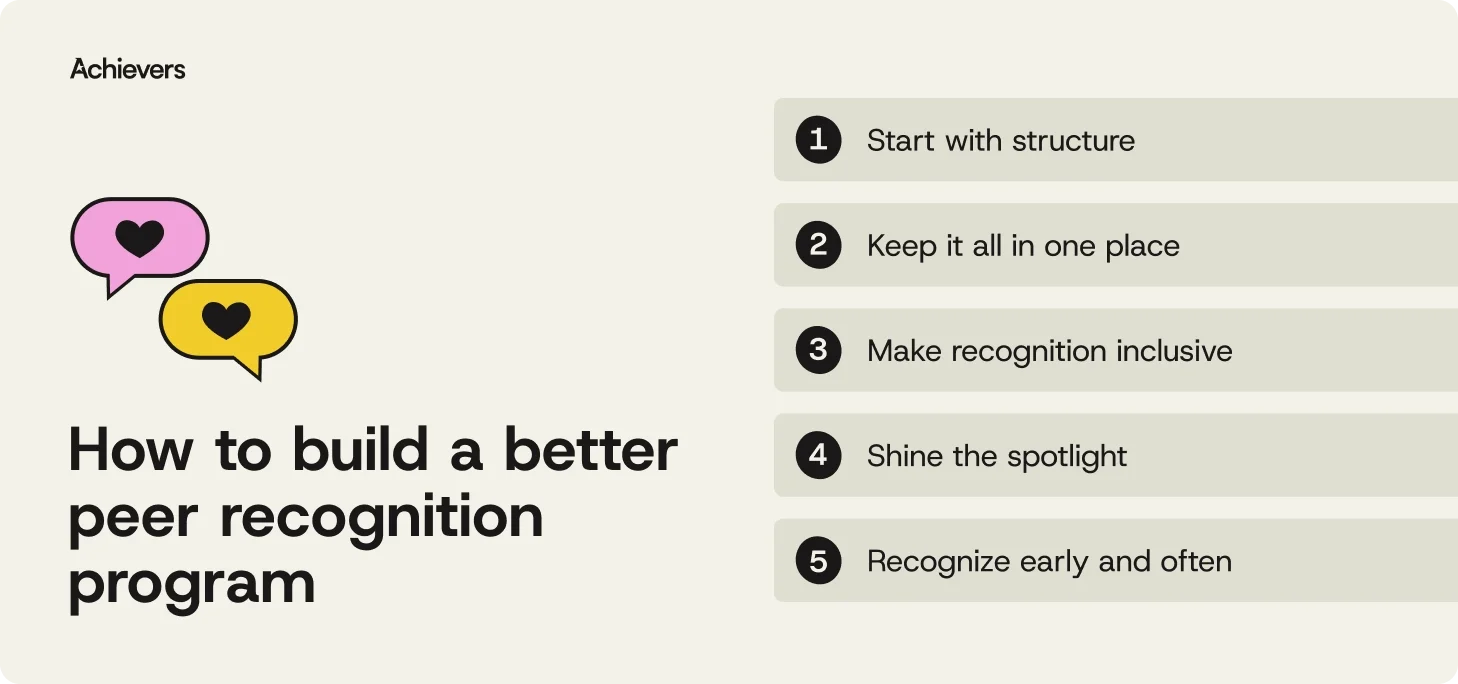
1. Start with structure
Great peer recognition doesn’t happen by accident. It starts with a clear framework. Define what meaningful recognition looks like between peers and set guidelines that make it easy for everyone to join in. From shout-outs to peer-nominated awards, structure makes it easier for recognition to stick — and become part of the everyday workflow within your employee recognition program.
2. Keep recognition in one place
If your coworkers need a scavenger hunt to give recognition, something’s off. A single, easy-to-use recognition platform makes peer recognition simple and seamless. It ensures no good deed goes unnoticed, keeps things fair and visible, and makes it easy for peers to celebrate one another without friction or confusion. Fewer clicks. More kudos.
3. Make recognition inclusive
Peers see effort in the details, not just the end results. Build an organizational culture where everyone can recognize and be recognized — not just the extroverts or team leads. Celebrate all types of contributions and review the data to make sure every voice is heard. Real inclusion means every peer has a chance to be seen.
4. Spotlight great peer recognitions
Recognition is contagious. Publicly highlighting peer contributions reinforces what good work looks like and shows others that appreciation is part of the team’s DNA. Whether it’s a quick mention in a standup or a company-wide shout-out, public peer recognition creates energy, visibility, and shared pride in your employee engagement strategy.
5. Recognize early and often
Peers notice the day-to-day wins long before performance reviews do. That’s why frequent recognition matters. Encourage regular peer shout-outs for everything from saved deadlines to morale boosts. When recognition becomes a habit, it strengthens relationships and reinforces a positive, people-first workplace culture.
6. Prioritize specific recognition
When recognizing a peer, skip the “great job” and say what really made a difference. Specificity matters. Call out what they did, why it stood out, and how it helped the team. This makes your recognition more meaningful and helps everyone understand the behaviors worth repeating — a key driver of employee performance.
7. Lead by example
If peer recognition is going to thrive, leaders need to walk the talk. When managers and executives participate in recognizing peers — not just direct reports — it shows that appreciation isn’t about hierarchy; it’s about humanity. The more they model it, the more others will follow across your company culture.
8. Mix social and monetary rewards
Sometimes a peer thank-you says it all. Other times, adding a small reward sweetens the impact. A well-balanced employee reward and recognition program offers both social praise and tangible incentives. Whether it’s a global reward or a coffee voucher, the right mix keeps peer recognition meaningful and motivating.
9. Celebrate employee milestones
Peers are there for the milestones, big and small. From promotions to personal wins, recognizing those moments helps people feel supported and valued by their teammates. It also reinforces that success is a shared journey and strengthens your employee experience overall.
10. Make it fun
Recognition doesn’t always have to be serious business. Let peers nominate each other for themed awards, run friendly challenges, or keep a kudos leaderboard. A little gamification can supercharge your recognition strategy and keep employees actively participating in a culture of appreciation.
11. Recognize teams and individuals
Peers contribute in different ways — sometimes solo, sometimes as part of a group. Celebrate both. Highlight the collective effort on projects and call out standout individual contributions. When both are recognized, it reinforces that everyone’s role matters and boosts employee morale.
12. Measure key metrics
Want to keep peer recognition impactful? Track participation, frequency, and equity. Use data from your recognition platform to see how often peers are recognizing each other and whether it reflects your whole workforce. These insights help improve your employee recognition strategy over time.
13. Let employees nominate peers
Let your people lift each other up. Peer nominations add authenticity to your recognition program and bring hidden contributions into the light. Employees know who’s making a difference behind the scenes. Give them a chance to say so through a structured nomination process.
14. Recognize cross-functional wins
Peers often collaborate beyond their immediate teams. When they do, don’t let that work fall through the cracks. Recognize moments where peers from different departments support each other. It breaks down silos and builds a more collaborative culture at work.
15. Link recognition to growth
Peers notice growth before anyone else does. When someone stretches into a new role, learns a new skill, or shows leadership, celebrate it publicly. Recognizing professional development supports a growth mindset and reinforces learning as a core part of your employee value proposition.
How peer-to-peer recognition software brings these best practices to life
These peer recognition best practices are powerful on their own, but without the right technology, they’re not easy to sustain. This is where peer-to-peer recognition software becomes the connective thread between intent and impact. A dedicated platform gives recognition structure, visibility, and consistency, ensuring appreciation doesn’t depend on memory, proximity, or personality.
By centralizing recognition, tying it to values, enabling real-time appreciation, and providing data-driven insights, peer recognition software turns best practices into everyday behaviors. Instead of recognition living theoretically, it shows up where work actually happens — shaping culture, strengthening connection, and driving clear engagement and retention outcomes.
Improving company culture through peer recognition
Peer recognition shapes company culture in the small, consistent moments. It’s how teams learn what matters, how people experience belonging, and how positive behaviors become part of everyday work. Research from Achievers Workforce Institute (AWI), show that when peer recognition is frequent and meaningful, it strengthens the foundations that help people do their best work and feel good doing it.
Here’s why it’s important:
- It helps people understand what good work looks like: Peer recognition is already part of many employees’ day-to-day experience. In fact, 60% of employees give or receive peer recognition at least monthly. Each of those moments sends a clear signal about what matters, helping teams align around shared values and expectations without needing a rulebook.
- It creates a culture where people feel they belong: Employees who receive weekly recognition are 9x more likely to strongly agree they feel a sense of belonging at work. Monthly recognition still delivers a 6x lift. If you’re trying to create a more connected culture, this is where you start.
- It makes strong performance feel normal and repeatable: When culture is present at work, so are people. Employees who are recognized weekly are 2.6x more likely to say they’re operating at their most productive. By noticing and reinforcing positive behaviors in the moment, peer recognition helps high performance become part of everyday culture.
- It builds workplaces people want to stay connected to: Feeling seen by peers has a lasting impact. Employees who feel meaningfully recognized are nearly 6x more likely to see a long-term future at their company. Recognition is one of the true ways to improve employee turnover, keeping your best people right where they are.
The takeaway? A culture of recognition isn’t built overnight — but with the right tools, frequency, and intention, it’s entirely within reach. With the right focus and frequency, peer recognition becomes one of the most effective ways to shape culture, and the results speak for themselves.
Don’t just work together — recognize each other
Peer-to-peer recognition might sound like a soft skill, but the impact is anything but. It boosts engagement, drives productivity, strengthens culture — and helps people feel seen for the work they do every day (not just the big wins). It’s one of the simplest ways to shape a workforce that’s connected, motivated, and built to last.
With Achievers, recognition becomes part of the rhythm of work. Our platform makes it easy for employees to recognize and reward one another in real time — with purpose, meaning, and maybe even a few emojis. From culture campaigns to global rewards, Achievers helps you turn values into behaviors into results.
Ready to build a culture where everyone feels appreciated? You’re in the right place.


Peer-to-peer recognition FAQs
Key insights
- Peer recognition boosts engagement, teamwork, productivity, and attendance by highlighting everyday wins managers often miss.
- Frequent, specific, and inclusive peer appreciation strengthens connection, belonging, and a positive workplace culture.
- Frequent recognition drives engagement, retention, and performance.