Table of contents
Create a culture that means business™
Schedule a demo with an Achievers solution expert today.


 Copy URL
Over the past few years, remote work has evolved from a temporary fix into a long-term reality for millions of professionals. In fact, approximately 27% of U.S. employees now work remotely full-time. And while flexibility has its perks, it also brings a unique set of challenges — think blurred work-life boundaries, digital fatigue, and a lack of spontaneous connection.
That’s why keeping remote teams productive and engaged is essential. When employees feel supported and connected, performance, culture, and retention all improve.
In this blog, we’ll share 20 actionable remote work tips to help remote employees stay focused, motivated, and connected — so your teams don’t just work remotely, they thrive remotely.
20 tips to engage remote workers as an HR professional
Engaging a dispersed workforce doesn’t happen by accident — it takes intentional strategy and a people-first mindset. From empowering autonomy to creating space for connection, here are 20 actionable tips HR professionals can use to boost productivity, morale, and belonging in any remote or hybrid workplace:
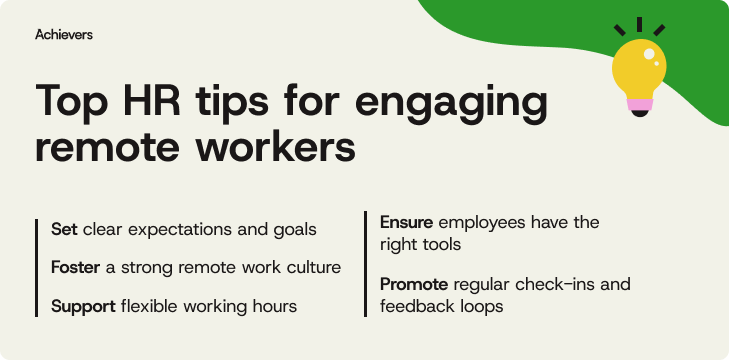
1. Set clear expectations and goals
Remote work breaks down quickly when goals are unclear. Set specific, measurable objectives and define what success looks like, including timelines and ownership. When expectations are documented and visible, employees spend less time interpreting messages and more time doing meaningful work.
2. Foster a strong remote work culture
Culture still exists when people work remotely — it just shows up differently. Reinforce values through consistent behaviors, shared norms, and simple team-building activities that create continuity. Small, repeatable moments matter more than one-off virtual events.
3. Ensure employees have the right tools
Remote teams rely on their tools to do their jobs well. Make sure employees have access to reliable collaboration software, secure systems, and functional home setups that support how they actually work. When tools remove friction, productivity follows naturally.
4. Promote regular check-ins and feedback loops
Without regular touchpoints, remote work can start to feel disconnected. Schedule consistent one-on-ones and team check-ins to share progress, unblock challenges, and provide feedback while it’s still useful. Frequent conversations help teams stay aligned and supported.
5. Support flexible working hours
Flexibility is one of remote work’s biggest strengths. Give employees room to structure their day around when they work best, while staying clear on responsibilities and deadlines. When outcomes are clear, flexibility becomes a trust-builder — not a trade-off.
6. Encourage time management strategies
Remote work requires a bit more self-structure. Share practical approaches like prioritizing tasks, blocking focus time, or breaking work into manageable chunks. These small habits help employees stay focused without feeling overwhelmed.
7. Establish clear communication guidelines
Clear internal communication keeps remote teams from burning out. Set shared expectations for response times, meeting norms, and which channels to use for different types of messages. When people know when to respond, and when they don’t have to, work feels more sustainable.
8. Recognize and celebrate achievements
Employee recognition shouldn’t be reserved for just award shows or annual town halls. Call out contributions regularly, share wins publicly, and make appreciation part of everyday work — not just milestone moments. When effort is acknowledged, motivation and connection grow.
9. Prioritize mental health and well-being
You can’t pour from an empty cup — especially when the cup is running five Zooms deep. Encourage employees to take breaks, respect boundaries, and speak openly about workload and job burnout. Supporting well-being isn’t a perk — it’s part of building a resilient, high-performing team.
10. Promote social connections
Let people be more than job titles. Create optional, low-pressure opportunities for employees to connect as people — whether through casual chats, fun employee games, shared interests, or informal check-ins. Those moments make collaboration feel easier and more natural.
11. Offer opportunities for professional development
Growth shouldn’t slow down just because work is remote. Provide access to learning, training, and development opportunities that help employees build skills and confidence. When people see a future with your organization, they’re more likely to stay engaged.
12. Ensure fair and transparent career progression
Remote employees shouldn’t have to guess how growth works. Be clear about how performance is evaluated and what advancement looks like across roles. Transparency builds trust and helps employees stay focused on the right goals.
13. Create a remote-friendly onboarding experience
Starting remotely can feel isolating without the right support. A structured onboarding experience — with clear documentation, introductions, and check-ins — helps new hires feel confident and connected faster. A strong start sets the tone for long-term success.
14. Address remote work isolation proactively
Out of sight shouldn’t mean out of mind. Check in often, encourage open conversations, and create space for employees to share challenges as well as wins. Feeling supported goes a long way in keeping people engaged.
15. Encourage movement and ergonomic best practices
Slouching is not a strategy. Share simple guidance on ergonomics, posture, and movement, and encourage employees to step away from their screens regularly. Small changes can make workdays feel noticeably better.
16. Support employee resource groups (ERGs)
ERGs are more than buzzwords — they build a sense of belonging and they help employees feel connected and represented, even when teams aren’t physically together. Support these groups with visibility, resources, and leadership involvement so they can create meaningful community across locations.
17. Make meetings more engaging and effective
Not every update needs a meeting. Use async communication when possible, and make live meetings focused, purposeful, and respectful of time. Fewer, better meetings help teams stay energized and not drained.
18. Offer incentives for engagement and performance
Incentives help reinforce what your organization values,. Whether it’s recognition, rewards, or meaningful perks, acknowledging effort encourages continued engagement and strong performance over time. When effort is seen and rewarded, motivation skyrockets (and so does retention).
19. Solicit regular feedback from employees
Ask employees how remote work is actually working for them. Use satisfaction surveys, open forums, or anonymous feedback channels — and close the loop by acting on what you learn. Feedback only matters when it leads to change.
20. Lead by example
Remote culture is shaped by leadership behavior. When leaders communicate clearly, respect boundaries, recognize effort, and show up authentically, those behaviors scale across the organization. People follow what leaders do — not what they say.
How Achievers helps keep remote employees engaged and connected
Even the most thoughtful remote work policies need the right tools to bring them to life. That’s where Achievers comes in. Our platform helps HR leaders, managers, and more support, recognize, and engage remote teams at scale — with features built to connect people, spark motivation, and turn insights into action.
Here are just a few of the fun things we offer:
Recognition and rewards
Working remotely shouldn’t mean working in a vacuum. With Achievers, recognition is just a click away — whether it’s a manager giving kudos for a big win or a colleague shouting out a behind-the-scenes hero. And because points turn into real rewards, motivation stays high (and swag drawers stay full).
Employee feedback and engagement insights
You can’t fix what you can’t see. Achievers captures real-time feedback from employees, so HR teams aren’t guessing how people feel — they know. With AI-powered insights, you can spot trends, flag concerns, and make smart moves to boost engagement before problems become exit interviews.
Build a thriving remote
Build a thriving remote workforce
Engaging remote employees isn’t rocket science — but it does require intention, consistency, and the right tools. From setting clear goals and encouraging flexibility to recognizing great work and gathering real-time feedback, the remote work tips we’ve covered are your blueprint for building a remote culture that actually works.
Because when employees feel supported, seen, and celebrated — no matter where they log in from — they don’t just stay productive. They stay loyal, motivated, and ready to bring their best.
Looking to bring all these strategies together in one platform? Achievers makes it easy to recognize, reward, and retain your remote workforce at scale. Explore how our employee experience platform helps you shape the behaviors that drive results (and maybe even a few happy dances along the way).
Key insights
- Remote employees stay most productive and engaged when organizations set clear expectations, support flexibility, and focus on outcomes over hours.
- Intentional connection, through recognition, regular feedback, and social touchpoints, is essential to preventing isolation and sustaining remote culture.
- The right digital tools, paired with consistent recognition and real-time employee insights, turn remote work from a logistical challenge into a performance advantage.