Table of contents
Create a culture that means business™
Schedule a demo with an Achievers solution expert today.


 Copy URL
Employee recognition in the healthcare industry is essential. Burnout is high, retention is low, and only 18% of employees feel meaningfully recognized, according to the Achievers Workforce Institute (AWI). When you’re working 12-hour shifts, juggling patients, paperwork, and the occasional emergency, feeling invisible is demotivating and unsustainable.
Recognition, done right, is the difference between a workforce running on fumes and one fueled by purpose, connection, and the occasional well-earned “thank you” that truly means something.
Recognition best practices in the healthcare industry
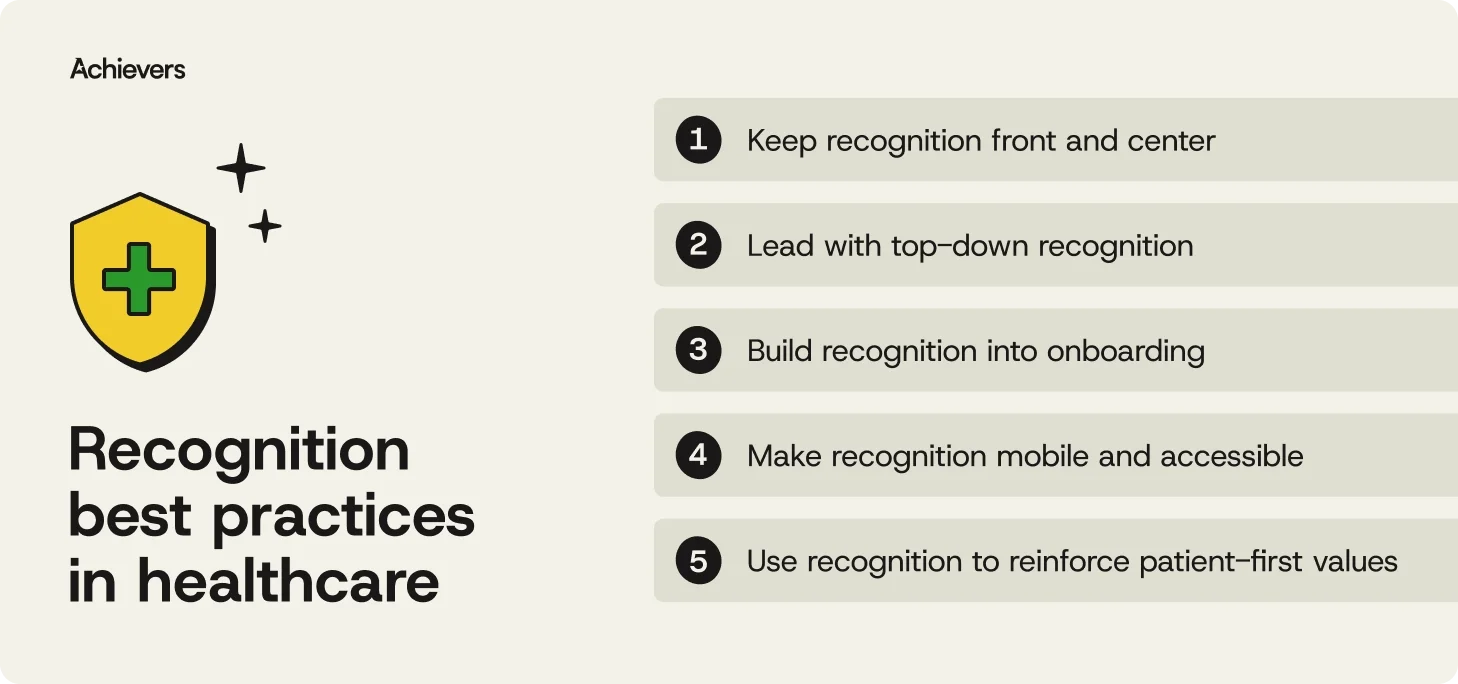
1. Keep recognition front and center
Recognition should be at the front and center of your employee experience. Keep recognition top of mind with ongoing campaigns that match your team’s rhythm: Nurses Week or even a surprise mid-shift spotlight. Use every touchpoint — newsletters, manager huddles, intranet banners, quick video shout-outs, external recognition — to spark the habit. In an environment where shifts blur together, a timely “thank you” can stand out more than you think.
2. Lead with top-down recognition
Leading with top-down recognition is key because managers set the tone, and in healthcare, that tone can mean the difference between staying and leaving. Recognition should be part of the job. At CHRISTUS St. Michael Health System, building manager accountability for recognition led to stronger communication, a 2.9% drop in nurse turnover, and a sixfold increase in near-miss reporting. Translation: when leaders make recognition a priority, culture and safety follow.
3. Build recognition into onboarding
The best recognition platforms build recognition into their onboarding process. Introduce recognition on day one, show new hires how to use the program, and make it part of onboarding checklists. When frontline employees become your biggest recognition advocates, the culture feels authentic, not corporate. And in healthcare, peer-to-peer appreciation hits differently — it’s one clinician saying to another, “I see what you did, and it mattered.”
4. Make recognition mobile and accessible
Make it easy for staff to send and receive appreciation from anywhere with mobile-first, accessible recognition. Whether they’re between patient rounds, grabbing a five-minute coffee, or heading home after a night shift, employees should be able to give (and get) recognition in the moment. The easier it is, the more often it happens, and the more it becomes part of the culture.
5. Use recognition to reinforce patient-first values
Recognition is a chance to remind everyone what great care looks like. Call out the actions that make the biggest difference for patients, whether it’s a quick-thinking response in the ER or a small act of kindness that puts someone at ease. You’re not just celebrating the person, you’re holding up a blueprint for the kind of care you want everywhere.
6. Connect recognition to career growth
Burnout loves a dead-end. Recognition tied to skill-building, certifications, or leadership potential tells staff you see more in them than just the next shift. It’s a way of saying, “We value what you do now — and where you’re headed.” In an industry where talent is mobile, that future-focused recognition can be the reason they stick around.
7. Listen as much as you celebrate
Recognition works best when it’s part celebration, part conversation. Pair the praise with channels, like Achievers’ Voice of Employee, that make it easy for staff to share what’s working and what’s not. When you act on what you hear, you’re proving recognition is a two-way street.
8. Make recognition personal and specific
Generic praise fades fast. In healthcare, “great job, team” doesn’t carry the same weight as “your quick diagnosis prevented complications for that patient” or “the way you calmed that anxious family made all the difference.” Match the recognition style and reward to the person, their role, and what matters to them, because what lights up a nurse after a 12-hour shift might be different from what motivates an administrator or a lab tech.
9. Recognize efforts to support well-being
In an industry where only 42% of countries surveyed have any kind of mental health support in place for nurses, according to the WHO, protecting well-being isn’t a “nice to have,” it’s survival. Recognition can highlight the people who model healthy boundaries, lead wellness initiatives, or step in so a colleague can take a much-needed break.
Even small acknowledgments, like calling out a manager for ensuring their team gets lunch away from the ward, reinforce that balance matters here. Over time, this shifts the culture from “burnout is part of the job” to “we take care of our people so they can take care of patients.
What is the best employee recognition software for healthcare?
Achievers is the best employee recognition software for healthcare organizations that need to improve retention, reduce burnout, and strengthen connection and communication across clinical teams.
Healthcare teams face challenges that most recognition platforms aren’t built for: deskless workforces, exhaustion, disconnected shifts, and the need to recognize employees where care happens. Here’s how Achievers is built for healthcare’s biggest challenges:
Built for frontline and deskless healthcare workers
Achievers is built for frontline healthcare teams with mobile recognition, offline tools, kiosks, QR codes, digital displays, and native app access that make recognition available throughout the workday. Employees can recognize coworkers, access communications, celebrate milestones, and redeem rewards whether they’re at a workstation, on a patient floor, or between shifts.
Patient recognition is part of the experience
Achievers supports patient recognition through dedicated tools that allow patients and families to recognize healthcare employees directly. Patient-submitted recognition can be captured through QR codes, integrations, and external recognition channels, ensuring appreciation reaches nurses, clinicians, and support staff whose contributions might otherwise go unseen.
Recognition, communication, and feedback in one platform
Achievers connects recognition, communication, and feedback in a single platform that helps healthcare organizations keep employees informed, recognized, and heard. Leaders can pair recognition with announcements, pulse surveys, employee feedback tools, important company resources, and frontline communications without relying on separate systems.
Scales across complex healthcare organizations
Achievers scales across complex healthcare organizations with centralized recognition, configurable programs, workforce insights, and integrations that support multiple hospitals, departments, and locations. Organizations can manage recognition consistently across the enterprise while giving employees a shared experience regardless of where they work.
Learn from real-world recognition wins
Achievers’ healthcare recognition playbook dives into real-world strategies from organizations that have cut clinical turnover by up to 33%, improved engagement, and even delivered 250% ROI on their recognition programs. You’ll find stories from leaders like CHRISTUS Health and Bayhealth, along with practical tools, checklists, and leadership tips you can put to work in your own organization.
Making recognition work in healthcare
Whether it’s healthcare companies like Bon Secours Mercy Health or pediatric medical centers like Seattle Children’s Hospital, it’s clear burnout, staffing shortages, and long hours aren’t going anywhere on their own. But recognition, done right, can help keep the people behind the care engaged, motivated, and ready for what comes next.
With Achievers, recognition becomes part of the daily rhythm, not just on special healthcare recognition days. From celebrating a nurse’s quick save to calling out a scheduler’s flawless coordination, every moment of appreciation fuels stronger teams, better patient care, and a culture people want to be part of.