Appreciation at scale: How to make every employee feel seen
Topics Covered:
Employee engagement
Appreciation isn’t a perk. It isn’t a campaign. And it definitely isn’t a once‐a‐year HR holiday. It’s one of the most powerful drivers of performance, connection, and culture your organisation has — and yet, too often, it’s treated like a calendar event rather than a cultural cornerstone.
Employee Appreciation Day may be a moment, but the real opportunity is in the movement it can spark. Employee Appreciation Day is the moment — and consistent recognition is the movement. When companies use this day not just to celebrate, but to reset expectations around daily gratitude, they create the conditions for stronger engagement, deeper belonging, and more resilient teams.
Because the truth is simple: Appreciation fuels performance. Employees who feel valued are significantly more likely to grow, stay, contribute, and connect — with their work, their colleagues, and their organisation’s purpose.
But appreciation doesn’t happen by accident. It happens through consistent, meaningful recognition moments woven into the everyday rhythm of work — from leaders, between peers, and even from customers.
This e‐book is your guide to making appreciation scalable, sustainable, and strategic. You’ll learn how to turn moments into habits, habits into culture, and culture into measurable business impact.
Because when every employee feels seen, heard, and appreciated, everything else becomes possible.
The case for meaningful, frequent recognition
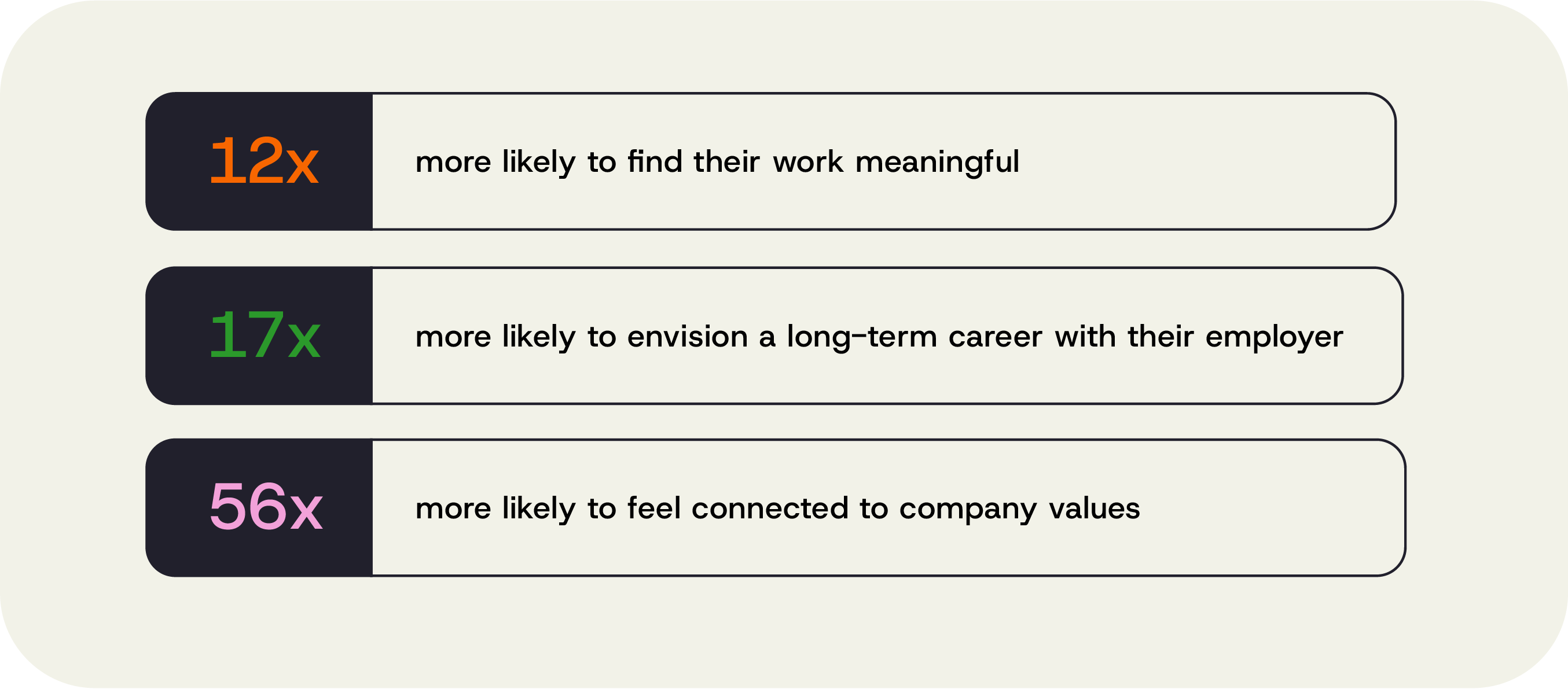
According to Achievers Workforce Institute (AWI) research, employees who feel appreciated experience dramatically stronger outcomes across belonging, engagement, and retention.
Employees who feel appreciated are:
- 12x more likely to find their work meaningful
- 17x more likely to envision a long-term career with their employer
- 56x more likely to feel connected to company values
These aren’t marginal gains — they’re cultural shifts.
And yet, many organisations still treat recognition as something “extra.” Something celebratory rather than strategic. Something HR drives rather than something leaders, teams, and systems reinforce daily.
The data tells a different story:
Feeling appreciated shapes purpose: Employees who feel valued are significantly more connected to meaningful work and the organisation’s goals.
Recognition strengthens relationships: Frequent recognition creates tighter manager and peer connections — two of the strongest predictors of engagement and performance.
Appreciation reduces turnover risk: Recognition isn’t a perk; it’s a predictor of loyalty, especially when only 26% of employees describe themselves as engaged.
Rewards reinforce motivation: Nearly 70% of employees say rewards motivate their performance, and 42% say redeeming rewards makes them feel appreciated — but these rewards have deepest impact when paired with specific, meaningful recognition.
Recognition is one of the few culture levers that simultaneously boosts engagement, strengthens belonging, and reduces attrition — quickly and measurably.
And it’s even more powerful when it’s frequent.
Frequent recognition builds strong networks and cultural ties that align people daily with purpose and performance. Every interaction becomes a micro‐moment of alignment — reinforcing behaviours, values, and shared ownership of success. This is how recognition evolves from “initiative” to “identity.”
Recognition is not about grand gestures; it’s about reinforcing meaning through consistent, human moments. It’s how people feel seen. It’s how culture becomes real. And it’s how organisations unlock resilience, retention, and results.
What belonging looks like in practice
Belonging isn’t a feeling employees stumble into — it’s something organisations intentionally cultivate through the everyday experiences that signal “you matter here.” At Achievers, we see a clear pattern: the organisations with the strongest cultures don’t rely on big events or once‐a‐year gestures. They build belonging through frequent, meaningful moments that reinforce care, connection, and shared purpose.
Belonging happens when employees consistently experience four things:
1. Consistent, clear communication
Best‐in‐class cultures communicate openly and often. They don’t wait for a formal cycle or a major announcement — they share context, reinforce values, and shine a light on great work in real time. Employees feel connected when they understand not just what’s happening, but why it matters and how their work contributes.
This transparency makes recognition feel more genuine and more grounded in shared goals — a crucial foundation for belonging.
2. Recognition tied to values and behaviours
Belonging deepens when employees see that their actions — big and small — are noticed and appreciated. But not all recognition is created equal. Specific, behaviour‐based recognition helps employees understand exactly how they are contributing to team and organisational success.
When recognition reinforces the behaviours and values you want to see, people feel aligned, appreciated, and proud. They understand the connection between their work and the culture your organisation is building.
3. Frequent feedback and a culture of listening
Belonging thrives in organisations where feedback isn’t reserved for performance reviews. It’s shared frequently, with empathy and clarity, and employees see that their perspectives shape decisions.
Companies who listen proactively and act on feedback build a stronger culture of trust and inclusion — both essential to belonging.
4. Everyday connection and development
People feel like they belong when they feel supported in their growth and connected to the people around them. Organisations that invest in continuous development and team connection — not just during Appreciation Week, but year‐round — build networks, encourage collaboration, and create opportunities for employees to learn, share, and shine.
The result: Belonging as a lived experience
Across the board, one truth stands out: employees who feel appreciated experience profoundly stronger connection to their work, their colleagues, and their organisation. They are more engaged, more aligned, and more likely to stay. Appreciation is the mechanism — belonging is the outcome.
Strong cultures don’t leave belonging to chance. They design for it. And recognition is one of the most powerful tools they use to make every employee feel seen, valued, and connected.
The science of scaling appreciation
Scaling appreciation isn’t about adding more celebrations, more messages, or more one‐ off moments. It’s about building systems, behaviours, and rhythms that make meaningful recognition an everyday experience — not an initiative, but an instinct.
The 2026 Engagement and Retention Report: EMEA edition includes insights that reveal a clear pattern: frequent, intentional recognition strengthens cultural ties, boosts motivation, and shapes performance at scale. Employees who receive regular recognition are more connected to their work, their colleagues, and their company’s purpose — and they show it through loyalty, discretionary effort, and resilience.
Below, we break down what truly enables recognition to scale.
Frequency is the engine of behaviour change
The data is unambiguous: frequent recognition builds strong networks and cultural ties that align people every day with purpose and performance.
Employees who feel appreciated are:
- 2.5x more likely to stay at their company
- 27x more likely to feel there are opportunities to grow and develop
- 54x more likely to feel a sense of belonging
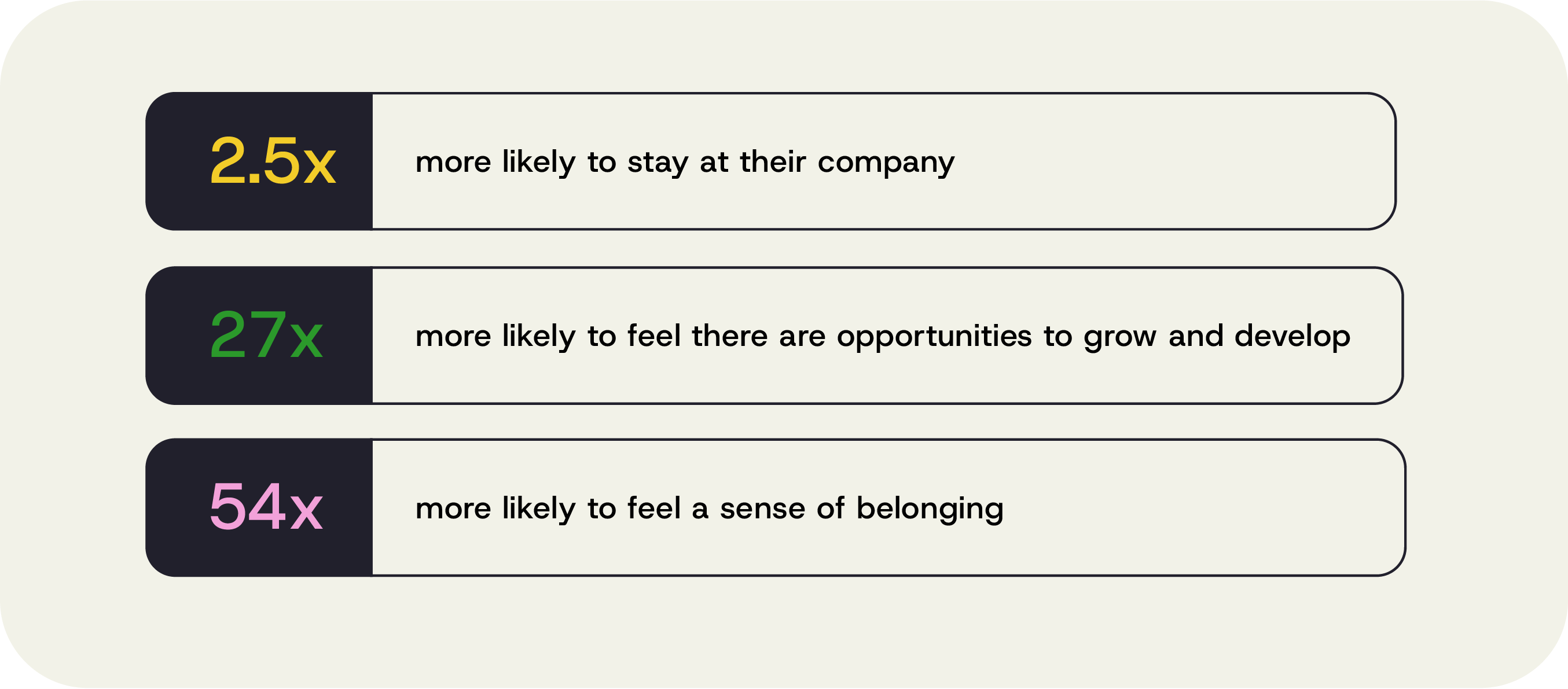
This isn’t just correlation — it’s cultural design. Every recognition is a behaviour signal. The more often people receive and witness recognition, the more clearly they understand:
- What matters
- What success looks like
- How their contributions make a difference
This is how recognition drives behaviour change — quietly, consistently, and cumulatively.
Leaders act as the amplifiers
Scaling starts at the top. Visible recognition from senior leaders fuels both credibility and momentum. Even a single recognition message from an executive can spark a chain reaction of peer‐to‐peer or manager‐to‐employee recognition.
During focused recognition periods, such as Employee Appreciation Day, leadership‐led moments unlock measurable gains in retention, productivity, and cultural resilience. When leaders go first, others follow. When leaders go often, the culture shifts.
Make recognition accessible everywhere work happens
A scalable recognition culture depends on frictionless access. Employees need to be able to recognise each other:
- In the tools they already use
- On their devices
- Whether they’re in‐office, hybrid, or frontline
- Even if they’re not part of the company at all (in the case of external recognition)
And organisations can expand recognition by offering:
- Mobile and desktop experiences
- QR codes for offline and external recognition
- Simple, intuitive flows to complete recognitions in seconds
- AI‐assisted language coaching to ensure recognition is inclusive and equitable
When recognition is easy, scalable habits follow.
Personalisation deepens emotional impact
Rewards motivate behaviour — nearly 70% of employees say rewards motivate their performance, and 42% say redeeming rewards makes them feel appreciated. But the message is clear: recognition must lead the way.
- 70% of employees say that rewards motivate their performance
- 42% say redeeming rewards makes them feel appreciated
- 61% prefer personalised rewards over generic ones
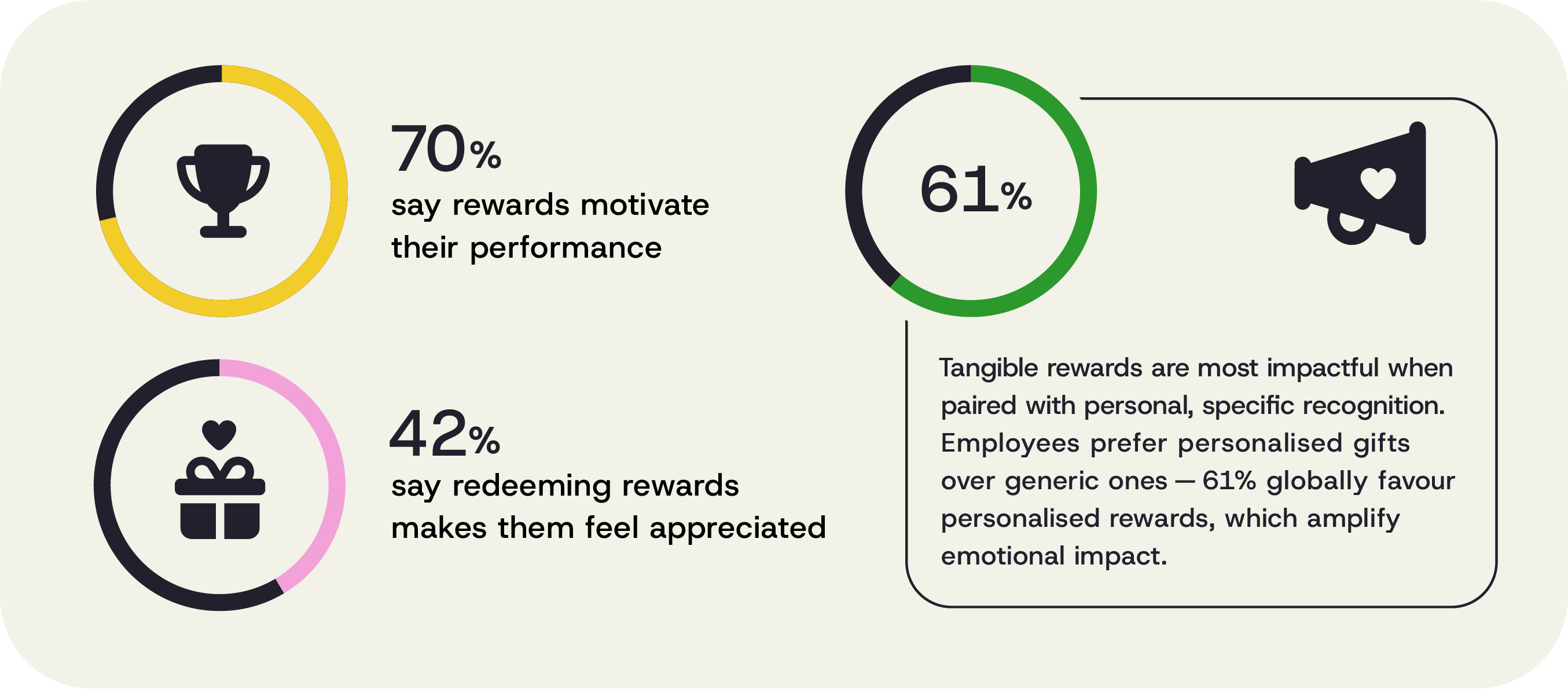
This is why personalisation isn’t a “nice‐to‐have.” It’s what makes recognition feel sincere at scale.
Recognition expands belonging — internally and externally
One of the most overlooked tools in scaling culture is external recognition. When customers, guests, or patients recognise employees, it validates purpose, pride, and contribution.
External recognition reinforces that an employee’s work doesn’t just matter internally — it matters to the people they serve. And when organisations integrate external recognition into their system, appreciation becomes 360°, not one‐directional.
This becomes culture, not ceremony.
The virtuous cycle: Recognition → belonging → performance → retention
Everything in the e‐book reinforces this chain:
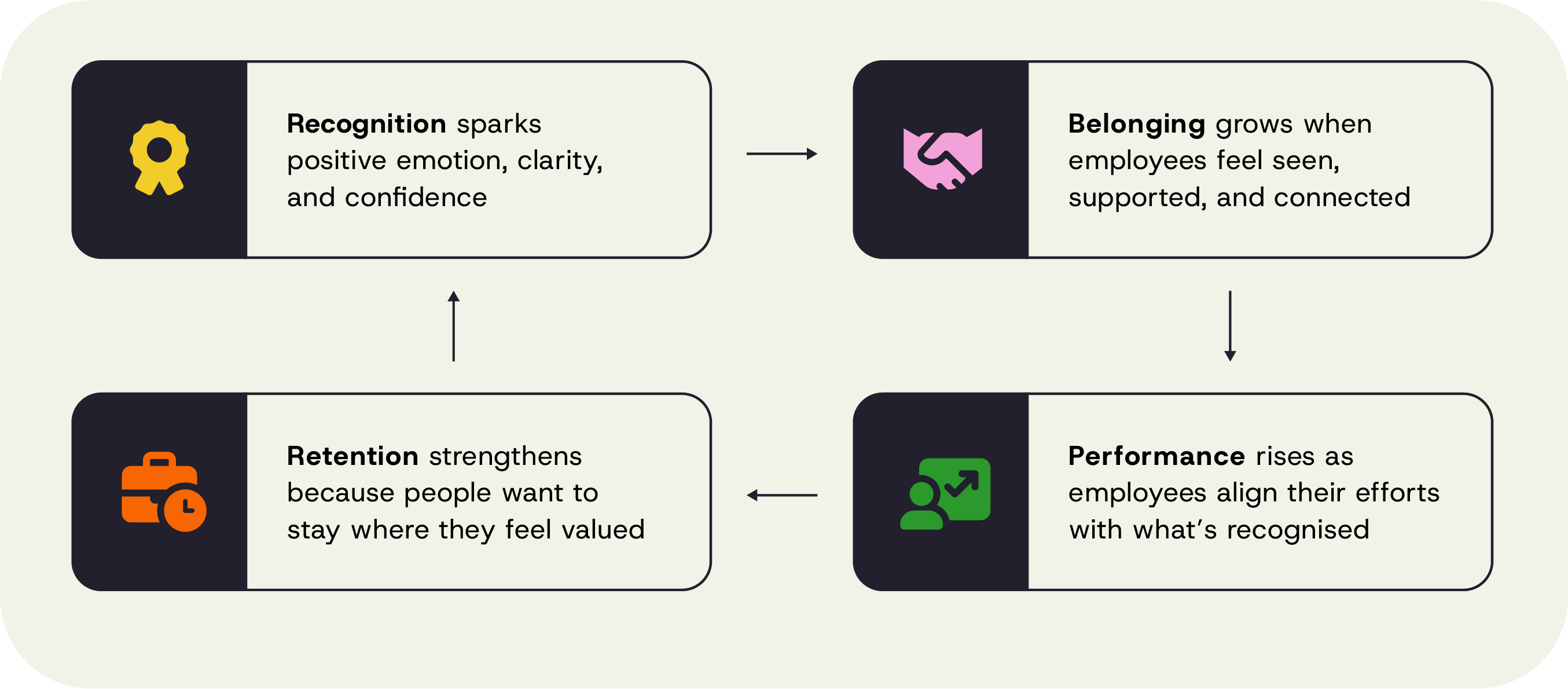
And when organisations systematise this — through rhythms, tools, leadership, and behavioural cues — they don’t just scale recognition, they scale culture.
Making every employee feel seen: Practical ways to start
Creating a culture where appreciation happens naturally doesn’t require a massive programme overhaul. It starts with a few simple, repeatable behaviours that make it easy for people to recognise one another in meaningful ways.
Here are the quickest, highest‐impact ways to build recognition into the everyday:
1. Lead with visible recognition
When leaders go first, everyone follows. A single message or company‐wide recognition upload from a senior leader signals that appreciation matters — and sparks a ripple effect across teams.
2. Encourage small, daily recognition moments
Ask employees and managers to share gratitude regularly — even one recognition a week builds momentum. Frequent acknowledgment strengthens ties to colleagues, managers, and company values.
3. Keep recognition accessible (anywhere, anytime)
Make it simple: mobile, desktop, QR codes, offline tools. When recognition only takes a few seconds, it becomes a habit instead of a task.
4. Personalise to make it meaningful
Employees respond most to specific, thoughtful recognition tied to behaviours and values. Personal detail elevates even small moments and builds real emotional impact.
5. Reinforce appreciation through rewards that matter
Rewards don’t replace recognition — they amplify it. Options like gifting, points, or personalised rewards deepen motivation and signal that effort is genuinely valued.
Short, simple, human: these moves turn recognition into a daily habit — and daily habits are what transform culture.
Designing an appreciation‐driven year
An appreciation‐driven culture isn’t built through one big moment — it’s built through planned, predictable, repeated rhythms that make recognition part of how your organisation operates.
Here’s a simple structure to help you turn one week of momentum into 12 months of meaningful habits:
1. Start with your anchor moments
Use major cultural milestones — like Employee Appreciation Week, service anniversaries, or industry recognition days — as high‐energy touchpoints that spark visible recognition across the business. Reinforce these “moments” strategically to amplify belonging and reinforce key behaviours.
2. Layer in monthly connection habits
Between anchor moments, keep recognition visible and active with lightweight habits:
- Monthly recognition prompts
- Themed appreciation challenges → Manager reminders and nudges
These simple routines maintain momentum and keep appreciation in the everyday flow of work.
3. Make quarterly campaigns your culture accelerators
Each quarter, run one intentional, higher‐impact initiative:
- Recognition challenges tied to company values
- External recognition campaigns for 360° appreciation → Gifting moments or marketplace promotions
These campaigns help deepen habits and spotlight new behaviours without overwhelming teams.
4. Support with tools that make recognition effortless
Scalable recognition depends on easy, everywhere access — mobile, desktop, QR codes, and leader‐driven uploads that fuel organisation‐wide participation. When recognition becomes frictionless, employees start doing it without needing reminders.
5. Measure, learn, repeat
After each campaign or monthly push:
- Look at recognition frequency
- Track participation across teams
- Identify leaders or departments that may need additional support
This ongoing review helps you adapt your rhythm and keep engagement high year‐round.
Stories that show recognition at scale works
The strongest proof that appreciation transforms culture isn’t found in theory — it’s found in the organisations already doing it. Here we’ll highlight several real‐world examples that show exactly what happens when recognition becomes a habit instead of a holiday.
These stories span industries, sizes, and workforce models — but the impact is consistent:
What these stories prove
Across every example, one truth holds:
When recognition is frequent, easy, and tied to purpose, it scales. It strengthens culture. It changes behaviour.
Whether it’s:
- Thousands of recognitions in a single week
- Near‐universal programme activation
- Or external validation transforming an employee’s sense of impact
Appreciation consistently drives connection, engagement, and resilience.
These organisations aren’t just celebrating employees. They’re showing them they matter — and building cultures where that message shows up every day.
Coles: Turning one week into organisation‐wide momentum
As one of Australia’s largest retailers, Coles needed a way to lift engagement and keep recognition front‐of‐mind for a hybrid, distributed workforce. During Employee Appreciation Week, they launched a multichannel campaign powered through Achievers — including social media, posters, digital signage, and even in‐store radio.
The impact was immediate and unmistakable:
- 32,000+ recognitions sent in one week
- 2,775+ boosts reinforcing meaningful messages
- 125,000+ comments and likes fuelling connection across teams
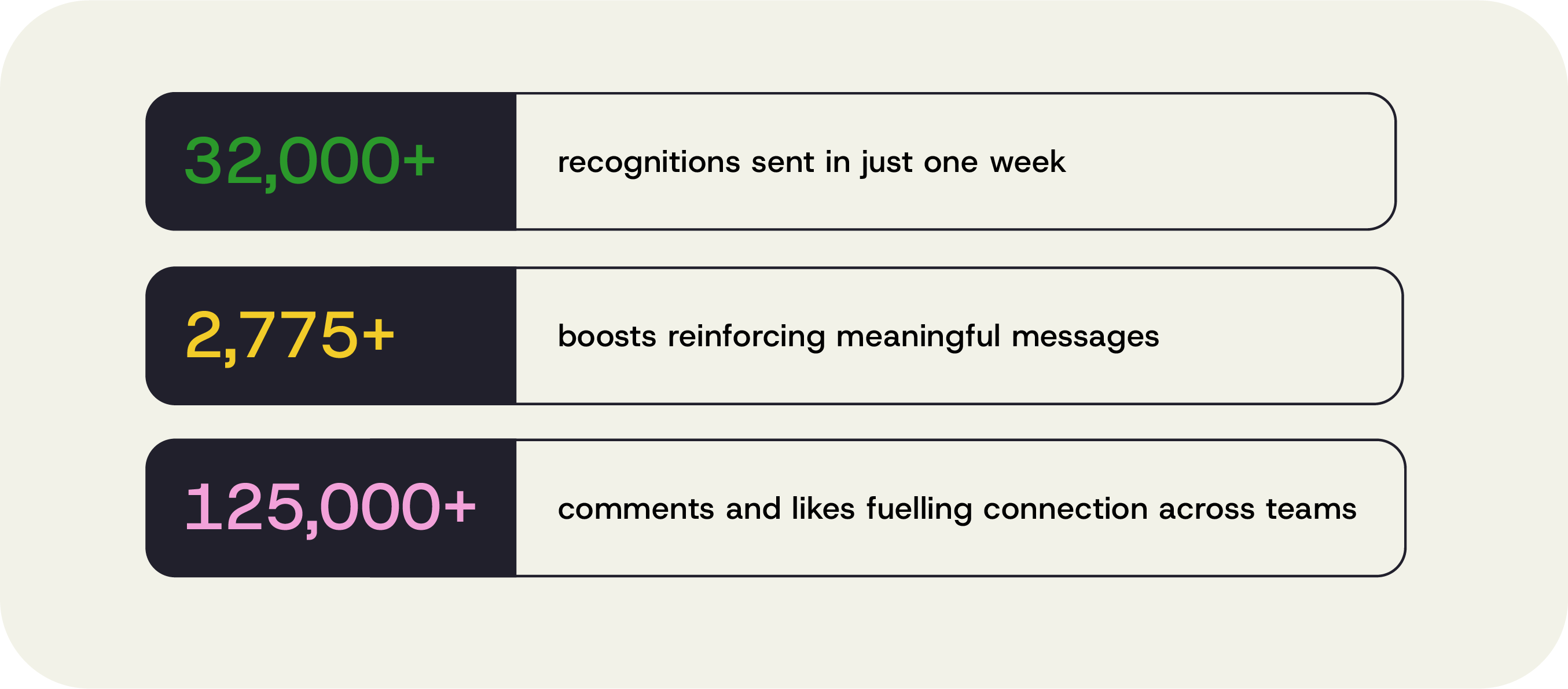
This wasn’t a spike — it was a shift. Coles proved that when recognition is easy to access and impossible to ignore, employees don’t just participate — they build momentum together.
Availity: Activating an entire company through everyday appreciation
When Availity launched its Achievers programme, the goal was simple: create a consistent, values‐aligned recognition experience across all units. What followed was a culture transformation. Within six months, company‐wide activation hit 97.5%, climbing to 99.5% soon after. Leadership activation? 100%.
With employees receiving an average of 1.59 recognitions per user per month, recognition became embedded in how people connected, praised, and supported one another.
The takeaway:
When leaders model appreciation — and the tools make The takeaway it seamless — employees don’t just feel valued; they participate in valuing each other.
Seattle Children’s: Showing employees their work matters — through the eyes of patients
For Seattle Children’s, the challenge was clear: caregivers weren’t consistently hearing directly from the people whose lives they impacted most.Using Achievers’ external recognition capabilities, the hospital integrated patient‐submitted “kudos” right into its recognition programme.
The pilot results:
- 144+ patient recognitions submitted
- 10% increase in employee engagement with the platform
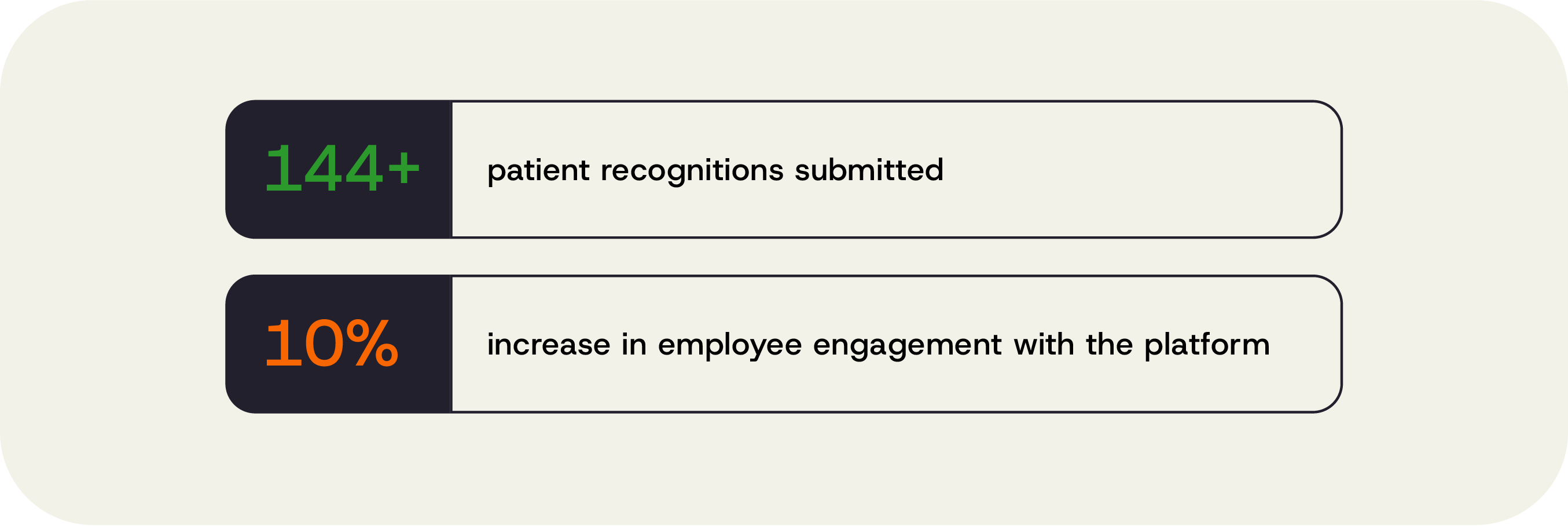
This initiative sparked a “pay it forward” culture where recognised employees went on to recognise others — a ripple effect of appreciation that strengthened community across roles. Recognition didn’t just say “thank you.” It said, your work has meaning far beyond these walls.
Your path to building a culture of appreciation
A culture of appreciation doesn’t require a massive overhaul — just a clear, repeatable plan that helps people build recognition into the rhythm of work.
1. Start with clarity
Identify where recognition is happening today and where it isn’t. This helps you see which teams need support and which behaviours you want to reinforce.
2. Align recognition to values
Tie every recognition moment to the behaviours and values you want more of. This turns appreciation into a driver of culture, not just
a feel‐good gesture.
3. Use anchor moments to spark momentum
Employee Appreciation Week, anniversaries, and major milestones give you perfect high‐energy touchpoints to activate recognition habits.
4. Get leaders to go first
A visible message or recognition upload from leadership sets the tone and shows appreciation is a priority.
5. Build simple daily and weekly habits
Encourage one recognition a week from every employee (and especially every manager). Frequency is what shapes culture.
6. Run small campaigns to reinforce behaviours
Quarterly or monthly nudges — like challenges, external recognition pushes, or gifting moments — help keep appreciation top of mind.
7. Make recognition effortless
Use mobile, integrations, QR codes, gifting, points, and bulk uploads to remove friction. When recognition is easy, people do it more often.
8. Measure and adjust
Track what’s working, where engagement spikes, and where gaps appear. Celebrate the progress and refine as you go.
Everyone deserves to feel seen
At the heart of every thriving organisation is a simple truth: people want to feel seen, heard, and appreciated. Recognition is how you make that happen — not once a year, not during a single campaign, but every day, in meaningful, human ways.
When appreciation becomes a habit, it strengthens everything it touches: engagement, belonging, trust, performance, and loyalty. It gives employees a reason to stay, a reason to care, and a reason to bring their best. And it gives leaders a powerful, practical lever to shape culture with intention.
The path forward isn’t complicated. Start small. Be consistent. Celebrate the moments that matter. And build the systems that help those moments scale.
Because when every employee feels seen, your culture shifts. When they feel valued, your business grows. And when they feel appreciated — truly appreciated — everything changes.
Ready to turn recognition into a daily habit that drives real results?