Table of contents
Create a culture that means business™
Schedule a demo with an Achievers solution expert today.


 Copy URL
In Australia, employee engagement programs are quickly becoming a topic of conversation — because the signals from employees are hard to ignore.
Research from the 2026 APAC Engagement and Retention Report found that only 31% of employees in Australia say their work feels meaningful, and just 17% feel connected to their manager. That’s a signal that HR can’t afford to ignore.
In Australia, engagement challenges aren’t driven by unrealistic employee demands. They stem from gaps in recognition, clarity, connection, and support — especially in day‑to‑day work. When employees don’t feel seen, heard, or valued, performance and loyalty quickly disappear.
This guide breaks down what matters in Australia and the practical programs that can help move engagement forward.
Why engagement programs matter in Australia right now
Engagement programs matter because they exist to solve real problems. Right now, Australian organisations are facing several they can’t ignore. Recent research from the Achievers Workforce Institute (AWI) shows that engagement challenges in Australia aren’t symbolic — they show up in how employees think, feel, and perform at work every day.
Some of the key insights to pay attention to include:
- Only 21% of employees feel their ideas are valued, signalling weak employee voice and limited psychological safety.
- Just 24% say their organisation supports their wellbeing, despite growing expectations around sustainable work and mental health.
- Only 21% feel supported in their growth, pointing to stalled development and unclear career paths.
- 28% say recognition of their skills would increase their desire to stay, underscoring recognition as a critical retention lever.
Together, these signals paint a clear picture: employees want to stay and grow in their current jobs, but they aren’t getting the recognition, support, and clarity they need to do their best work. Investing in an engagement program can help bridge those gaps by reinforcing what matters most in day‑to‑day work.
Employee engagement programs are most effective when they provide actionable insight alongside employee feedback. Discover the connection between recognition and business results in Brandon Hall Group’s analysis of how recognition influences retention, performance, and workforce alignment.
What to consider when designing engagement programs in Australia
Designing employee engagement programs in Australia requires more than good intentions. Programs need to work within a highly regulated employment environment, reflect local expectations around fairness and wellbeing, and build trust with employees.
Here’s what to consider:
Employee engagement within the Fair Work system
Australia’s workplace system places a strong emphasis on fairness, consistency, and minimum employment standards. Engagement programs should complement — not conflict with — obligations under the National Employment Standards and applicable awards or agreements. That means recognition and rewards should feel equitable, transparent, and defensible across roles, locations, and work types.
Right to disconnect and sustainable engagement
The right to disconnect reinforces the importance of healthy boundaries at work. Engagement programs should support connection and recognition without creating pressure to be “always on.” Sustainable engagement is built when employees feel valued during working hours, not when participation depends on after‑hours availability or constant responsiveness.
Employee data, privacy, and trust
Engagement programs rely on employee data — from surveys and feedback to recognition activity and analytics. In Australia, trust is critical. Employees are more likely to participate when organisations are clear about how data is collected, used, and protected, and when feedback mechanisms feel safe, respectful, and genuinely confidential.
Wellbeing, psychosocial risk, and safe work design
Wellbeing is no longer separate from workplace safety. Good work design considers psychosocial risks such as workload, role clarity, and support. Engagement programs should reinforce wellbeing through recognition, manageable expectations, and supportive leadership — not simply offer surface‑level perks that ignore underlying risks.
Rewards, recognition, and tax considerations
Recognition and rewards can be powerful engagement tools, but they need to be designed with care. In Australia, some rewards may have tax implications, and not all recognition needs to be monetary to make a real impact. Clear guidelines help organisations balance meaningful appreciation with responsible, compliant reward practices.
14 employee engagement programs Australian organisations can run
Strong employee engagement programs focus on what employees experience day to day — how work is recognised, how people connect, and how support shows up. These examples highlight practical approaches organisations can use to strengthen engagement where it matters most.
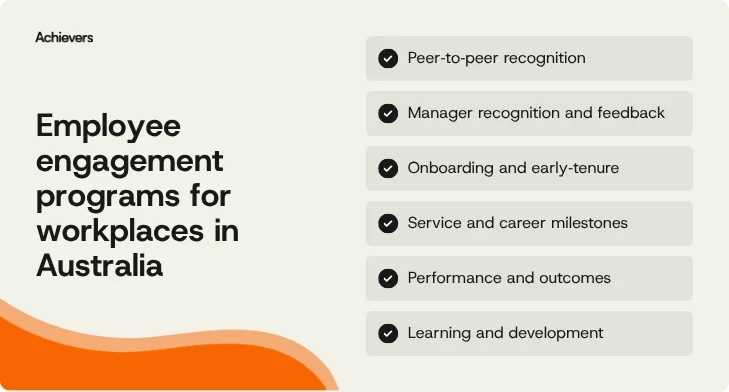
1. Peer‑to‑peer recognition programs
Peer‑to‑peer recognition programs give employees the ability to acknowledge each other’s contributions in real time, not just during formal review cycles. In Australian workplaces, where humility and teamwork are often valued over self‑promotion, this type of recognition helps surface good work that might otherwise go unnoticed.
When recognition flows across teams and roles, it strengthens connection, reinforces positive behaviours, and helps employees feel seen by the rest of the organisation — not just their manager.
2. Manager‑led recognition and feedback programs
Managers play an undeniable role in how employees experience work day to day. Manager‑led recognition and feedback programs help ensure appreciation, coaching, and clarity are consistent — not dependent on individual leadership styles.
These programs help turn good intentions into regular habits. When managers recognise effort, provide clear feedback, and acknowledge progress, employees feel supported instead of just managed.
3. Onboarding and early‑tenure programs
The first few months in a role shape how employees view their future with an organisation. Onboarding and early‑tenure engagement programs focus on helping new hires feel welcomed, supported, and confident — not just informed.
These programs are especially important for establishing role clarity, connection to values, and early recognition. When people feel seen and valued early on, they’re more likely to engage, ask questions, and invest in building long‑term relationships at work.
4. Service milestone and career moment programs
Service milestones and career celebrations — such as promotions, role changes, or skill achievements — are natural opportunities to reinforce belonging and appreciation. These programs move recognition beyond tenure alone and acknowledge the journey employees take over time.
In a market where loyalty can’t be assumed, recognising these moments helps employees feel appreciated for the journey they’re on, not just the results they deliver. It reinforces belonging and reminds people that their development and effort haven’t gone unnoticed.
5. Values‑based programs
Values‑based programs connect everyday work to what the organisation stands for. Recognition tied to values helps translate abstract statements into visible, repeatable behaviours employees can understand and act on.
When values are reinforced through real examples, they become part of how work gets done. This clarity builds alignment and fairness, while helping employees feel proud of how they contribute to the bigger picture.
6. Performance and outcomes programs
Performance and outcomes programs recognise employees for delivering results, achieving goals, or contributing to key business outcomes. These programs work best when recognition goes beyond end‑of‑year ratings and shows up consistently alongside the work itself.
When performance is recognised in the moment, and tied to clear outcomes, employees gain confidence in what’s expected and how their efforts make an impact.
7. Learning and development programs
Learning and development programs support skill‑building, career progression, and long‑term employability. Recognising learning — whether it’s completing training, developing new skills, or applying knowledge on the job — helps reinforce growth as part of everyday work.
When effort and curiosity are acknowledged, employees feel encouraged to keep developing, not stuck waiting for the “next step.”
8. Mentoring and career development programs
Mentoring and career development programs create space for guidance, connection, and long‑term thinking. They help employees see possibilities beyond their current role and feel supported as they navigate change.
When people feel invested in — through conversations, coaching, and shared experience — engagement becomes more personal and more resilient.
9. Wellbeing and mental health engagement programs
Wellbeing and mental health programs support employees across physical, mental, and emotional dimensions of work. In Australia, expectations around wellbeing are growing — but surface‑level initiatives alone aren’t enough to build trust.
Effective programs reinforce wellbeing through everyday actions: manageable workloads, supportive leadership, and recognition that acknowledges effort, not just outcomes.
10. Right‑to‑disconnect‑friendly communication
Right-to-disconnect (RTD) programs focus on how and when work communication happens. Rather than limiting connection, they help create healthier, more sustainable ways of working.
Clear norms around availability, recognition during work hours, and respect for personal time help employees feel trusted and valued. When engagement doesn’t depend on being constantly reachable, people are more present, more focused, and more likely to bring their full energy to the work that matters.
11. Employee voice and feedback programs
Employee voice and feedback programs give people regular opportunities to share ideas, raise concerns, and influence decisions that affect their work. These programs help address low perceptions of psychological safety and limited confidence that feedback leads to action.
Even small changes, clearly communicated, reinforce that speaking up is worthwhile and that employees are genuinely heard.
12. Internal communication and connection programs
Internal communication and connection programs focus on how information flows across the organisation — from leadership updates to team‑level collaboration. In distributed and hybrid workplaces, gaps in communication can quickly lead to confusion, isolation, and disengagement.
Clear, consistent communication helps employees feel informed and included, not left guessing.
13. Social connection and community impact programs
Social connection and community impact programs create opportunities for employees to build relationships and contribute beyond just their day‑to‑day tasks. This might include team‑based activities, volunteering, or causes that align with shared values.
When people feel part of a community and are proud of what they contribute together, engagement becomes more personal and lasts longer.
14. Innovation and continuous improvement programs
Innovation and continuous improvement programs encourage employees to share ideas, challenge existing ways of working, and contribute to making things better over time.
This reinforces a organisational culture where curiosity is welcomed, progress is shared, and people feel confident that their thinking can shape the future of the organisation.
How to build an employee engagement program and strategy that drives results
Building an employee engagement program and plan starts with understanding where engagement is breaking down and knowing how to address it.
Here’s how to get started:
Align engagement programs to business and workforce outcomes
Effective engagement starts with clarity on why the program exists. Whether the goal is improving retention, strengthening manager effectiveness, supporting wellbeing, or improving productivity performance, programs should be clearly tied to outcomes leaders and employees care about.
Identify engagement gaps using employee feedback and data
Satisfaction surveys, pulse surveys, and feedback channels help organisations understand where employees feel supported — and where they don’t. Acting on feedback matters just as much as collecting it. Insight becomes engagement when employees see change follow their input.
Define success measures before launching programs
Clear measures help engagement programs stay focused and credible. Participation, consistency, manager adoption, and employee sentiment all provide signals of what’s working. Defining success upfront ensures programs can grow and develop based on evidence, not assumptions.
Enable managers to deliver engagement consistently
Engagement programs are far more effective when managers are equipped with clear expectations, simple tools, and ongoing support. Right now, only 17% of employees feel connected to their manager — a gap that has real consequences for trust, performance, and retention. When leaders know how to recognise, communicate, and support their teams consistently, engagement becomes effortless instead of an extra task.
What to look for in an employee engagement platform in Australia
Engagement programs don’t live on their own — they rely on the systems that support them. The right engagement platform brings programs to life by making recognition, feedback, and connection consistent, visible, and fair across the business.
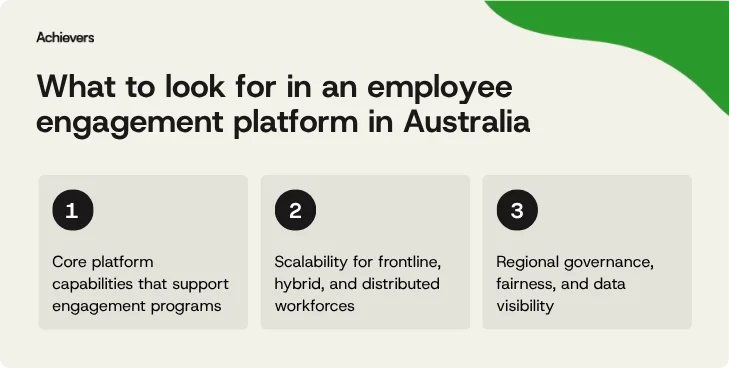
Here’s what to look for in an engagement platform:
Core platform capabilities that support engagement programs
A great engagement platform should support the full lifecycle of engagement — from recognition and feedback to communication and insight. Look for capabilities that allow employees to recognise each other easily, managers to reinforce effort and progress, and organisations to connect engagement and recognition back to values, goals, and behaviours.
Scalability for frontline, hybrid, and distributed workforces
A strong platform should be accessible to frontline employees, desk‑based teams, and remote workers alike — without creating different experiences for different groups. Simple access, intuitive use, and flexibility across roles and locations are essential if engagement programs are meant to reach everyone, not just head office.
Governance, fairness, and data visibility
Fairness and transparency are critical in Australian workplaces. Platforms should support clear rules around recognition, consistent participation across teams, and visibility into how programs are being used. The right data helps organisations identify gaps, understand manager behaviours, and improve engagement over time — while still respecting employee privacy and trust.
This article provides general information only and does not constitute legal or tax advice. Requirements under local guidelines may vary. Consult qualified advisors and official agencies.
How Achievers supports employee engagement programs in Australia
Employee engagement programs only work when they’re supported by a platform designed to make recognition frequent, meaningful, and fair — at scale. Achievers brings together recognition, rewards, and insights in a way that helps organisations turn everyday moments into lasting impact.
Here’s what sets Achievers apart:
- Frequent, meaningful recognition that drives real behaviour change: Achievers leads the industry in recognition frequency, with users recognising 2x more often than on other platforms. That frequency matters — it’s how recognition becomes a habit, not a one‑off gesture, and how engagement shows up consistently in day‑to‑day work.
- Recognition built into the flow of work: With enterprise‑grade software integrations across tools employees already use — including Microsoft Teams, Outlook, Slack, and Workday — recognition happens where work happens. This makes it easier for managers and peers to acknowledge effort in the moment, without adding friction or extra steps.
- Designed for fairness, inclusion, and global scale: Achievers supports 4M+ employees across 164 countries, with a global rewards marketplace spanning nearly 190 countries. Features like localised rewards, purchase power parity, and inclusion‑focused design help ensure recognition feels equitable — no matter where or how employees work.
- Support that turns programs into outcomes: Achievers pairs its platform with a comprehensive success and support model, including dedicated customer strategy, research‑backed programs, and workforce science from AWI. The result isn’t just adoption — but sustained engagement that drives retention, performance, and culture.
Turning engagement programs into everyday impact
Employee engagement in Australia isn’t struggling because people expect too much. It’s struggling because recognition, connection, clarity, and support aren’t showing up consistently in everyday work. The programs outlined here work because they address those gaps directly — through meaningful recognition, stronger manager support, employee voice, and sustainable ways of working.
But intent alone isn’t enough. Employee engagement programs only make an impact when they’re intentional, well‑supported, and embedded into how work actually gets done.
The next step is choosing a partner that helps turn these programs into lasting results.

Employee engagement programs in Australia FAQs
Key insights
- Fewer than one‑third of employees in Australia finding their work meaningful and even fewer feeling connected to their manager.
- Recognition, growth, wellbeing, and employee voice remain the biggest gaps — and they’re directly influencing whether people stay, perform, and invest in their work.
- The organisations making progress are focusing less on perks and more on practical engagement programs that reinforce recognition, connection, and support in everyday work.