Table of contents
Create a culture that means business™
Schedule a demo with an Achievers solution expert today.


 Copy URL
Organisations across the UK are facing a recognition problem. According to research from the UK State of Recognition Report, only 23% of employees feel meaningfully appreciated, and almost 60% are already looking for new roles. They’re asking for more, and businesses need to deliver. Introducing recognition awards won’t solve everything, but they can turn appreciation from something accidental into something intentional — the kind of acknowledgement people actually feel.
And if the idea of “awards” conjures up dusty plaques and awkward speeches, fear not. The modern version looks very different — more human, more frequent, and much better at building the culture that drives results and people.
Let’s dive into the employee recognition awards and ideas that can make a real difference to your culture.
What are employee recognition awards?
Employee recognition awards are formal, structured ways of celebrating the successes and behaviours that positively impact your organisation. They take appreciation beyond the occasional thank-you message by making staff contributions visible, intentional, and easy for everyone to understand. Think of awards as the “bigger moments” of recognition — the ones you use to spotlight exceptional work, reinforce your values, or signal what good looks like at scale.
What are the benefits of employee recognition awards in the UK?
The benefits of staff recognition awards are clearer than they’ve ever been, proving that sometimes the smallest initiatives can have the biggest impact.
Key benefits include:
Improved engagement and motivation
Recognition awards boost engagement by helping employees feel genuinely appreciated — something that remains rare in the UK, where only 25% feel their ideas are valued at work. When teams see their contributions called out publicly and purposefully, they’re more likely to bring energy and ownership to their work. That creates motivation in a way no “quick favour” or rushed Slack message ever could.
Stronger cultural alignment
Awards help define what “great work” looks like in your organisation by celebrating the behaviours that reflect your values. They take culture out of posters and PowerPoints and put it directly into everyday working life.
Higher retention and lower burnout
A strong culture of appreciation is directly linked to lower burnout at work, with companies that get this right seeing an 87% lower likelihood of burnout among employees. Recognition awards play a big role here: they help people feel valued, connected, and supported, instead of feeling like they’re on an island alone.
Better performance and behavioural reinforcement
Awards shine a light on the contributions that deserve to be scaled across the business. Think of them as gentle nudges that help your culture grow in the right direction, minus the cliché and overused “we’re all on a journey” speeches.
Deeper connection and belonging
Awards create shared moments of celebration that strengthen relationships across teams. They remind employees they’re part of something bigger than their to‑do list. Even small, thoughtful awards can help people feel less like isolated contributors and more like connected members of a team that actually sees them.
25 employee recognition award ideas for UK organisations
If you’re ready to recognise the people who keep your organisation moving, here are 25 award ideas that land well, mean something, and won’t gather dust on a shelf.
Performance and achievement awards
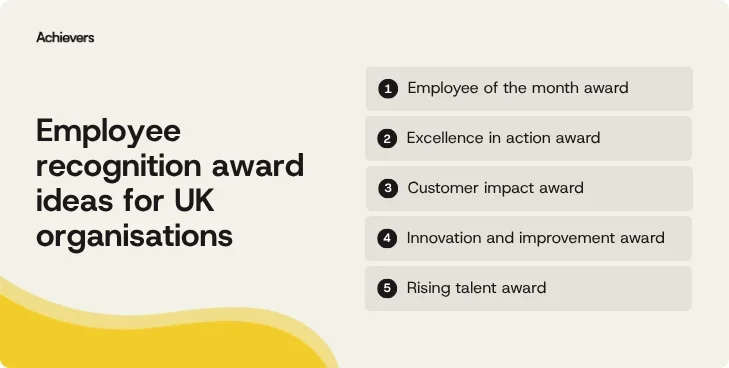
1. Employee of the month/quarter/year
This award recognises employees who consistently deliver brilliant work and make a clear, positive impact. It’s your chance to regularly spotlight the people raising the bar and show everyone what great performance really looks like in your organisation.
2. Excellence in action awards
This award celebrates employees who deliver exceptional results through effort, skill, or determination. It highlights the behaviours you want others to emulate — not by shouting about perfection, but by shining a light on work that truly made a difference.
3. Customer impact awards
This award honours employees who elevate the customer experience and create lasting value through care, expertise, or service. It signals the importance of customer‑first thinking and helps teams understand the real‑world impact of their work.
4. Innovation and improvement awards
This award recognises the people who bring fresh ideas, solve problems creatively, or make processes better. It encourages a culture where progress is celebrated — even when it starts with a single smart tweak rather than a grand transformation.
5. Problem‑solver of the years
This award spotlights employees who tackle challenges with clarity, creativity, and calm. It reinforces the value of resilience and resourcefulness, especially in moments when the business needs steady hands and sharp thinking.
6. Project excellence awards
This award acknowledges outstanding execution on a project, from planning to delivery. It reinforces accountability, collaboration, and follow‑through, showing teams that well‑led projects are worth celebrating, not just completing.
7. Continuous improvement awards
This award recognises employees committed to refining, optimising, and elevating how work gets done. It reinforces a growth mindset and reminds teams that improvement is a habit that strengthens culture long-term.
8. Ahead of the curve awards
This award celebrates employees who anticipate trends, spot risks early, or act before others realise action is needed. It rewards people who stay one step ahead and encourages a culture where being proactive is just as valued as being productive.
9. Engagement excellence awards
This award honours employees who help lift morale, build connection, and keep teams engaged through their everyday actions. It signals that engagement is more than an HR metric — it’s shaped by people who show up with energy, intent, and care.
Growth, learning & future‑ready awards
10. Rising talent awards
This award recognises employees who show exceptional potential and make a strong impact early in their journey. It celebrates momentum and makes it clear to everyone that growth isn’t just noticed, it’s nurtured.
11. Coaching champion awards
This award honours the people who lift others up. The colleagues who coach, guide, and help teammates grow with confidence. It reinforces that great leaders aren’t just focused on delivery; they’re invested in developing people.
12. Knowledge sharing champion awards
This award celebrates employees who freely and openly share what they know so others can succeed. It’s a reminder that a strong team is built on generosity and collective learning.
13. Top‑performing team awards
This award celebrates teams that deliver outstanding results together. It reinforces that your biggest wins come from strong collaboration, not solo effort.
Culture, values & belonging awards
14. Living our values awards
This award recognises employees who bring your values to life through their everyday actions. It shows the whole organisation what your culture looks like in practice. Not in posters, but in real behaviour people can follow.
15. Inclusion and belonging champions
This award honours people who help colleagues feel welcomed, respected, and included. They’re the ones who create space for others, making work feel safer, warmer, and easier to show up to.
16. Culture connector awards
This award recognises employees who naturally bring people together and help teams feel more connected. They bridge gaps across functions or locations and create the sense of community every workplace needs.
17. Everyday legend awards
This award celebrates the colleagues who make work better in small, consistent ways that often fly under the radar. They’re the quiet heartbeat of your culture — steady, supportive, and genuinely impactful.
18. Wellness warrior awards
This award recognises employees who champion wellbeing and look out for the people around them. They model healthier habits and remind everyone that looking after each other is part of doing great work.
19. Safety and care awards
This award honours those who keep safety, care, and responsibility front of mind. They create an environment where people feel supported and able to do their jobs without worry.
20. People‑first leader awards
This award recognises leaders who listen well, build trust in the workplace, and put their people at the centre of how they make decisions. Their teams feel supported, motivated, and understood — and it shows.
21. Coaching champion awards
This award celebrates employees who help others grow through thoughtful guidance and everyday encouragement. They build confidence across the team and make development feel both accessible and natural.
Collaboration & teamwork awards
22. Collaboration in action awards
This award recognises people who work seamlessly with others to get things done. They make collaboration feel easy, remove roadblocks, and help teams move forward together instead of in silos.
23. Peer recognition awards
This award celebrates the colleagues who earn genuine appreciation from the people working right beside them. It highlights everyday impact — the help, encouragement, and teamwork that peers never forget.
24. Behind‑the‑scenes star awards
This award honours the people who quietly keep everything running smoothly, even if their hard work isn’t always visible. They’re the steady hands and problem‑solvers who make the whole team better.
25. Top‑performing team awards
This award recognises teams that deliver exceptional results by working together. It shows that great outcomes come from trust, communication, and the willingness to pitch in where it counts.
How to create an effective UK employee recognition awards programme
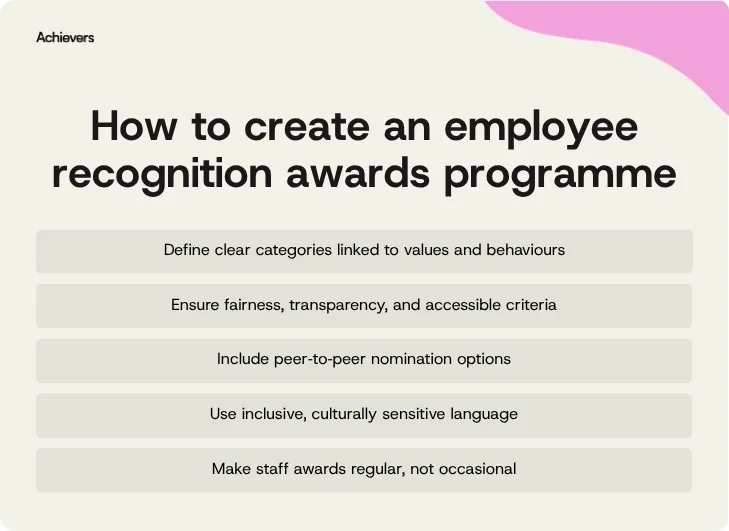
Designing a recognition awards programme doesn’t have to be complicated, but it does need to be intentional. Here’s how to build one that supports your culture and gives employees recognition they can genuinely feel:
1. Define clear categories linked to values and behaviours
Start by choosing award categories that mirror the values and behaviours your organisation wants to reinforce. When categories align with what you expect from employees, awards become a practical way to show what good looks like across the company.
2. Ensure fairness, transparency, and accessible criteria
In the UK, fairness isn’t just a cultural expectation — it’s a legal one. Set simple, transparent criteria for each award and make the rules accessible to everyone. This helps avoid bias, reinforces trust, and ensures your programme reflects Equality Act principles.
3. Include peer‑to‑peer nomination options
Peer recognition captures the everyday contributions managers may not see. Opening nominations to colleagues makes your programme more democratic, more inclusive, and more reflective of how work really gets done.
4. Use inclusive, culturally sensitive language
Make sure award titles and descriptions resonate across different roles, identities, and backgrounds. Recognition should feel welcoming, not exclusive, so choose language that celebrates impact without relying on jargon or inside jokes.
5. Make awards regular, not occasional
Regular quarterly or monthly cycles create rhythm, momentum, and more opportunities to celebrate meaningful work. Consistency keeps recognition top‑of‑mind and helps build habits across teams.
6. Use digital platforms for scalability and consistency
Digital platforms keep recognition reachable for hybrid and dispersed teams and make the whole process feel less like admin. With nominations, approvals, and updates in one place, they also act as the backbone of your wider reward scheme, keeping everything consistent and easy to manage.
7. Measure engagement, turnover, and recognition impact
Track participation, recognition frequency, and engagement signals to see what’s working. Look for trends across teams and demographics, and use the insights to refine future awards. The strongest awards and recognition programmes evolve with your people.
UK tax considerations for employee recognition awards
Designing awards is one thing — navigating HMRC rules is another. Here are the key points UK employers should keep in mind when recognising employees:
- Non‑cash long‑service awards can be tax‑exempt when they meet HMRC rules: at least 20 years of service, worth under £50 per year of service, and no similar award given in the last 10 years.
- Non‑cash vouchers can still be taxable unless they fall under specific exemptions. If the voucher can be exchanged for goods only (not cash) and isn’t part of a salary sacrifice scheme, different NIC rules apply.
- Many UK employers prefer points‑based or non‑monetary recognition because points systems aren’t cash or cash‑equivalent vouchers. They allow employers to recognise people meaningfully while reducing tax exposure and admin load.
- Always provide employees with clear guidance and link to HMRC’s own rules, particularly the GOV.UK page.
Recognition awards shape culture — not just moments
A recognition award can mark a major milestone, but it can also do so much more. Awards can shape the culture employees feel when they walk into the office or log on from their desks at home. And when employees feel seen, valued, and genuinely appreciated, engagement lifts, belonging grows, and those talent retention challenges stop feeling like an uphill battle. That’s the ripple effect of getting recognition right.
If you’re ready to build a programme that brings your culture to life every day, not just during team meetings, it’s time to see what Achievers can do for your business.

Employee recognition awards in the UK FAQs
Key insights
- Recognition awards turn appreciation into something visible and consistent, helping UK employees feel genuinely seen, valued, and connected.
- The right awards reinforce the behaviours and values that shape culture — lifting engagement, strengthening belonging, and reducing burnout.
- A structured recognition awards programme gives organisations a clearer, fairer, more scalable way to celebrate impact and build a culture people want to stay in.