Table of contents
Create a culture that means business™
Schedule a demo with an Achievers solution expert today.


 Copy URL
Recognition programmes play a bigger role in UK organisations than many leaders realise. Today, too many employees simply don’t feel appreciated, and it’s costing companies real momentum. In fact, research from the UK State of Recognition Report tells us 59% of employees are currently job hunting, a clear sign that appreciation gaps are turning into business risks.
Sure, sending an occasional thank‑you message is a great start, but it’s not enough on its own to build connection in fast‑moving, hybrid workplaces. What teams really need is recognition that’s consistent, meaningful, and tied to what drives performance.
The good news? Recognition isn’t complicated — it just needs to be done right. Keep reading to learn why an employee recognition programme is the first step to a more connected company, and how to get started.
What is an employee recognition programme?
A recognition programme is a way for employees and leaders to recognise each other’s work, their impact, and the behaviours that make organisations successful. Instead of relying on quarterly thank‑yous or end‑of‑year awards, it creates a place where appreciation can happen publicly and in the moment.
Done well, a recognition programme gives everyone a shared understanding of what great looks like, making recognition easier, more meaningful, and far more connected to the way your company actually works.
What are the types of recognition?
Recognition comes in many forms, and the most effective programmes use a mix of approaches to keep appreciation visible, meaningful, and accessible to everyone.
Here’s a simple breakdown of the types of recognition every organisation should consider:
Peer recognition
Peer recognition is when colleagues appreciate each other’s contributions, from quick shout‑outs to values‑tagged messages and public praise. It strengthens connection where it matters most — between the people who see the work up close. And the best part? No one knows how hard the job actually was more than the person sitting next to you.
Manager-led recognition
Manager‑led recognition focuses on praise, coaching acknowledgements, and celebrating progress. Because managers influence performance more than anyone else, their recognition carries weight. Done well, it reinforces expectations, clarifies priorities, and boosts confidence. Done poorly, well, that’s usually when employees start updating their CVs.
Milestone recognition
Milestone recognition celebrates meaningful career moments, from work anniversaries to promotions, onboarding welcomes, or project completions. These moments help employees feel seen throughout their journey, not just when they hit big goals. It’s a simple way to remind people their time, loyalty, and growth don’t go unnoticed — even if they forget how long they’ve actually been here.
Awards and nominations
Recognition awards and nominations highlight standout work through structured, criteria‑based programmes. They shine a spotlight on exceptional work and help reinforce the behaviours organisations want to scale. With a good process, they’re inspiring and fair. With a bad one, let’s just say people remember who won, and who definitely shouldn’t have.
Monetary recognition
Monetary recognition uses points, bonuses, gift cards, or financial rewards to reinforce high‑impact behaviours. It’s most effective when it supports — not replaces — meaningful messages. The money gets their attention; the recognition gets their commitment. Think of it as petrol, not the whole engine.
Non‑monetary recognition
Non‑monetary recognition includes personalised notes, public shout‑outs, spotlight moments, development opportunities, or a simple handwritten thank‑you. These small gestures often carry outsized emotional impact because they show genuine thought and effort. Sometimes, the thing people remember most isn’t the gift card — it’s the line in the message that made them feel understood.
What does a successful recognition programme look like?
A successful recognition programme is about noticing the right behaviours at the right time and helping people feel connected to the work they do every day.
Forget fancy words or grand gestures, here’s what a successful programme should include:
Frequent, meaningful, behaviour-based messages
Everyday appreciation tied to your company values helps employees understand what great work looks like and why it matters. Meaningful often means specific — naming the action, the impact, and why it mattered. And the best part? No one needs a paragraph; a genuine two‑line message often does the job better.
Manager-led and peer-driven recognition
Managers play a critical role in reinforcing expectations and celebrating progress, but peers often see the day‑to‑day effort managers miss. In the UK, where many managers hesitate to “overpraise,” gentle nudges and clear examples help build consistency. Peers, meanwhile, have no trouble spotting the little wins — they just need the tools to share them.
Non‑monetary and monetary appreciation
Social recognition builds culture, and monetary recognition reinforces those behaviours that help drive businesses forward. But it’s a balance — lean too hard into cash, and it feels transactional. Skip rewards entirely, and you miss chances to motivate. Think of rewards as the exclamation point, not the whole sentence.
Moments that matter
Milestones like onboarding, role changes, anniversaries, and big project completions create a sense of momentum and community. These touchpoints remind people that their contributions and their journey matter — especially when everything else is moving fast. And if you’ve ever had a forgotten work anniversary, you know exactly why these moments matter more than some leaders might like to admit.
How to build a recognition programme for UK organisations
Recognition programmes are about shaping behaviour, strengthening culture, and driving real business results, not just ticking a box.
Here’s how companies in the UK can build the right programme:
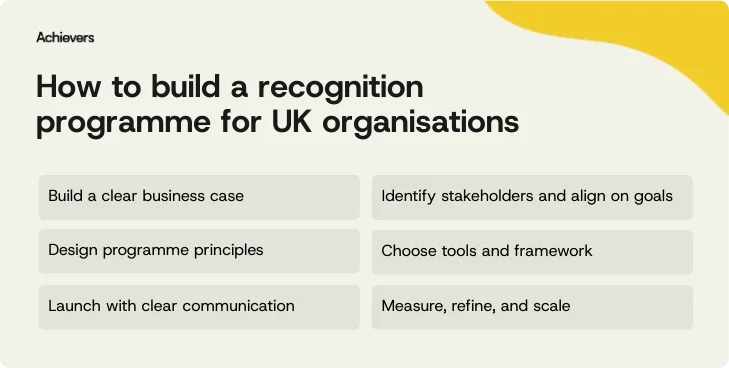
1. Build your business case
Show why recognition matters and how it directly supports your organisation’s goals.
- Link recognition to business outcomes: Connect recognition directly to engagement, retention, productivity, and cultural alignment. When appreciation is frequent and meaningful, productivity and performance improve — not by accident, but by design.
- Highlight the risks you’re reducing: Turnover, disengagement, low trust, and inconsistent employee experiences are costly and can throw teams off balance. A recognition programme directly addresses these risks by reinforcing belonging and clarity at scale.
- Show the opportunities you unlock: A structured approach creates more fairness, better alignment to values, and a more connected, resilient workforce. It also gives leaders a predictable way to reinforce the behaviours that drive results.
- Use one strong data point to add weight: Use workforce data to back up your ask. For example, research from Achievers Workforce Institute found that 38% of UK workers say recognition would inspire higher productivity. That’s as clear a connection between appreciation and outcomes as it gets.
- Identify your budget early: Factor in rewards, platform support, and programme ownership. A sustainable programme has intention behind it, not leftover budget and hopeful guesses.
2. Identify stakeholders and align on goals
A successful recognition programme needs champions across the organisation — not just HR.
- Involve your core stakeholders: Bring HR, people leaders, finance, internal communications, and DEI into the discussion from day one. Each group plays a different role, from strategy to governance to day‑to‑day visibility.
- Align on the purpose of the programme: Make sure everyone agrees on why the programme exists. Is it to strengthen connection? Reinforce culture? Improve manager habits? Boost motivation? Clarity here prevents the programme from becoming “all things to all people” — or worse, nothing to anyone.
- Define what success looks like together: Agree on the behaviours you want to reinforce and the outcomes you expect to influence — engagement, retention, fairness, or connection. This keeps the programme grounded in impact, not preference.
- Set expectations for leaders: Managers and people leaders typically need guidance, nudges, and examples to recognise consistently. Getting their buy‑in early ensures they’re not just aware of the programme — they’re also accountable for making it work.
3. Design programme principles
Once your goals are clear and your stakeholders are aligned, the next step is to define the principles that will shape your recognition programme.
- Values alignment: Build your programme around the behaviours that reflect your company’s values. When every recognition ties back to what “good” looks like, employees get clarity on what truly matters — and what they should do more of.
- Recognition frequency: Frequent appreciation reinforces purpose, boosts motivation, and helps people feel connected to their work. If it only happens once a quarter, it’s not frequency — it’s a reminder you forgot.
- Channel usage: Make recognition easy by meeting employees where they already are, integrated across Microsoft Teams, your HRIS tools, mobile, and your recognition platform. The more accessible it is, the more naturally it becomes part of daily work — not something people have to “go do.”
- Equity and standardisation across teams: Recognition should feel fair, no matter who you work for or where you sit in the organisation. Set simple standards to ensure consistency in tone, frequency, and visibility.
4. Choose your programme tools and framework
Once your principles are set, it’s time to choose the tools that will actually make recognition easy, consistent, and visible across the organisation.
- Integrations that meet people where they work: Look for tools that connect seamlessly with systems like Workday, Zoom, and Slack. When recognition lives inside everyday workflows, it becomes effortless. No extra tabs, no “I’ll do it later,” just appreciation where work actually happens.
- Ease of use for managers: Managers need simple tools, clear nudges, and straightforward visibility into how often their teams are recognising. Toolkits, prompts, and dashboards help managers recognise more consistently — especially helpful in workplaces where many leaders don’t want to “overdo it” (spoiler: they won’t).
- Consistency and fairness through insights: Choose a platform that provides reporting and behavioural insights so you can spot gaps, prevent favouritism, and ensure recognition reaches everyone, from HR to the people on the frontlines. The data helps you build a programme that’s not only well‑used, but trusted.
5. Launch your programme with clear communication
A great recognition programme lives or dies by how well it’s introduced. Clear, transparent communication sets the tone from day one.
- Explain the “why,” not just the “how”: Show employees the value: clearer expectations, stronger connection, and a more meaningful workday. When people understand why the programme exists, they’re far more likely to use it, and use it well.
- Avoid over‑hyped messaging: Employees don’t respond to buzzwords or big promises. Keep the launch honest, practical, and grounded in real outcomes. A little sincerity goes much further than a glossy slogan.
- Provide examples of ideal recognitions: Give employees clear examples of what great recognition looks like: specific, sincere, and tied to real behaviours. It removes guesswork, builds confidence, and helps everyone recognise in a way that actually feels meaningful.
6. Support your managers with recognition ideas and examples
Managers have a real influence on how connected and motivated employees feel — but they’re also the group most likely to need structure, guidance, and support to recognise consistently. Especially when only 29% of staff trust their leaders.
- Provide recognition training: Help managers understand what “good” recognition looks like: specific, behaviour‑based, and tied to impact. A little training goes a long way in turning hesitant managers into confident ones.
- Offer templates, nudges, check‑ins, and examples: Give managers tools that make recognition easier day-to-day — prompts, ready‑to‑use messages, and simple reminders. These reduce the friction and guesswork that usually stop recognition from happening at all.
- Reinforce early wins to build habits: Celebrate when managers get it right. Positive reinforcement helps recognition become a habit, not a heroic effort.
7. Measure, refine, and scale your programme
A recognition programme isn’t something you set and forget about. It needs to be continuously tested and refined, like the recipe for the perfect Sunday roast.
- Monitor recognition frequency: Frequent, meaningful recognition is what drives motivation and connection in the workplace. Keep an eye on how often appreciation is happening, and how often it isn’t.
- Track participation: Look at who’s giving and receiving recognition. High participation signals a healthy culture; low participation tells you where support or communication is needed.
- Review manager activity: Managers shape most of the employee experience. Visibility into their recognition habits helps you spot gaps, coach effectively, and build consistency.
- Watch for movement in retention and engagement: Over time, recognition should influence how connected, motivated, and loyal employees feel. Look for shifts, even small ones, to show impact.
- Embed regular reviews: Schedule regular check‑ins to review data, adjust your strategy, and keep the programme feeling fresh. It maintains fairness, momentum, and a sense that recognition is growing with your organisation — not collecting dust.
Benefits of employee recognition programmes
A great recognition programme can solve real business problems. When appreciation becomes a habit (and not a once‑a‑year event), organisations see stronger connection, higher motivation, and those talent retention challenges become a thing of the past.
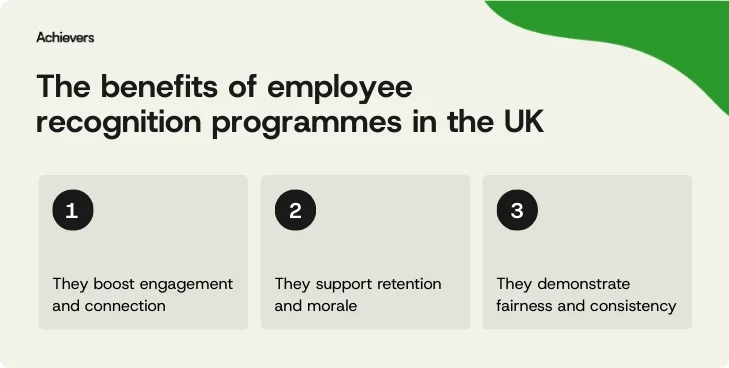
Here are three key benefits of recognition programmes for UK teams, and what employees in the region are really saying:
Recognition programmes strengthen engagement and connection
Recognition is one of the most direct ways to influence how motivated people feel at work. In fact, 84% of employees say recognition affects their motivation to succeed, which means it deserves a permanent spot on your radar.
When appreciation is regular and meaningful, it reinforces purpose, strengthens relationships, and builds the kind of everyday connection people need to feel like they belong at work.
Recognition programmes support retention and morale
When recognition becomes frequent, motivation improves — and job‑hunting drops. That’s critical in a market defined by shortages and uncertainty. Research from the UK Engagement and Retention Report shows that a third of employees are planning to job hunt in 2026, with many more unsure if they’ll stay.
A strong recognition programme helps close that confidence gap. When you recognise people consistently and meaningfully, you give them more than a paycheck to think about when that recruiter message lands in their inbox.
Recognition programmes demonstrate fairness and consistency
Employees want recognition to feel fair, not dependent on which manager remembers to say thank you. A programme adds transparency and shared standards, so appreciation is based on behaviour — not bias, convenience, or who shouts loudest.
It creates consistency across team members and removes the guesswork, which employees tend to notice (and appreciate) more than they admit.
Common programme challenges — and how to avoid them
Even the best programmes hit a few bumps. Here are the most common challenges, and the simplest ways to stay ahead of them:
- Inconsistent participation: This usually means employees aren’t sure when or how to recognise. Solve it with prompts, examples, and a bit of manager modelling — people follow the behaviour they see.
- Recognition that feels generic or insincere: Vague praise is as useful as a cold cup of tea — it exists, but it’s not warming anyone’s motivation. Offer templates and examples that tie recognition to real behaviours so the message actually means something.
- Over‑reliance on rewards and schemes: If everything comes with points attached, recognition starts to feel transactional. Lead with meaningful messages and let rewards amplify, not replace, appreciation.
- Lack of visibility or fairness checks: Without good reporting, gaps go unnoticed. Use dashboards and insights to ensure recognition is fair across teams, and doesn’t depend on who you happen to work for.
Examples of a successful recognition programme in the UK
Across EMEA, organisations are using Achievers to build recognition programmes that actually move the needle on engagement, connection, and the everyday behaviours that drive performance.
Here are two success stories that show what “good” looks like in practice:
Schneider Electric
Schneider Electric set out to strengthen engagement and increase recognition frequency across its 140,000‑person global workforce, focusing on scaling non‑monetary recognition. To make this accessible across 100+ countries, they launched a global non‑monetary recognition campaign and ran six masterclass webinars — helping management and staff understand not just how to recognise, but why it matters in the first place.
The results:
- 500,000 recognitions sent
- Over 1M recognitions received
- A 63% jump in engagement
- A 158% increase in non‑monetary recognition
- €10M savings in programme costs.
Schnieder Electric’s story is a clear reminder that when you give people the confidence, tools, and permission to recognise, good things scale quickly.
Criteo
Criteo set out to build a more consistent, global way to recognise innovation across their teams. With employees spread across multiple regions, they needed a programme that made it easy for everyone to celebrate great ideas — and to make recognition feel like an everyday habit rather than something reserved for standout moments. They launched Spotlight, powered by Achievers, to put innovation‑driven recognition front and centre for every employee.
The impact:
- Over 3,000 recognition moments in the first year
- A 96% platform activation rate
- A 17‑point increase in employee happiness
Criteo’s story is a powerful example of what happens when recognition is visible, accessible, and genuinely connected to the behaviours an organisation wants more of — people don’t just participate, they lift each other up.
From programme to practice: How Achievers makes recognition work for UK teams
In workforces across the UK, clarity is low, connection is fragile, and job‑hunting intentions are rising. The problem is that employees aren’t disengaging because they don’t care — they’re disengaging because they don’t feel seen. The solution is recognition.
That’s where Achievers excels. With the highest recognition frequency in the industry and data‑driven tools built for global teams, Achievers turns recognition from a good idea into a proven driver of engagement, retention, and belonging.
Start small, build simple habits, and scale intentionally. That’s how Achievers turns recognition into results.
Employee recognition programmes in the UK FAQs
Key insights
- With UK employees feeling unseen and disengaged, consistent recognition is one of the fastest ways to boost clarity, connection, and performance.
- The most effective programmes make recognition easy, fair, and frequent — shaping behaviour and building culture one small moment at a time.
- Achievers helps UK organisations start small, build strong habits, and scale recognition in ways that deliver measurable results.