Maximizing returns: 3 methods to evaluate HR technology ROI

Most HR leaders know HR tech adds value to the business and is key to improving employee experience, but few know how to quantify it.
Two out of three believe that if they don’t take action to improve HR’s approach to technology, their function’s effectiveness will decrease. At the same time, most companies are in austerity mode, with HR being asked to do more with less.
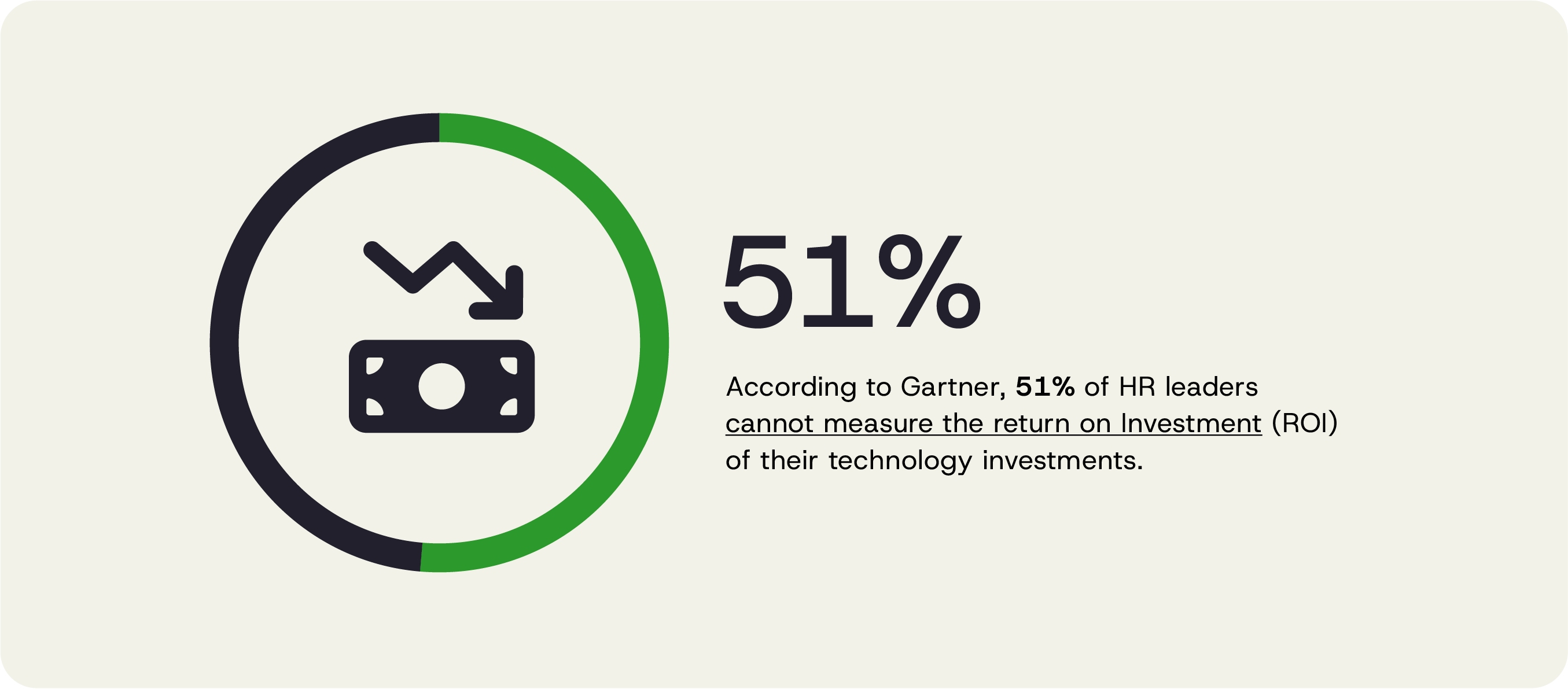
According to Gartner, 51% of HR leaders cannot measure the return on investment (ROI) of their technology investments.
Fortunately, HR leaders have access to better tools than ever — including employee recognition software, skills intelligence platforms and AI-powered data analytics — that support everything from internal mobility and skill development to retention and engagement. However, unlocking their full value requires HR leaders to rethink how they present a business case.
This guide offers a path for navigating these constraints, helping you maximise the impact of your HR tech solutions and build a strong case for investment.
Barriers in the way of realising returns
Despite HR’s expanding role in driving business impact, proving the ROI of HR tech remains a challenge. HR has faced challenges with trying to showcase how their investments impact the dollars and cents of the business for many reasons — whether that’s technological barriers or cultural
resistance not addressed during implementation.
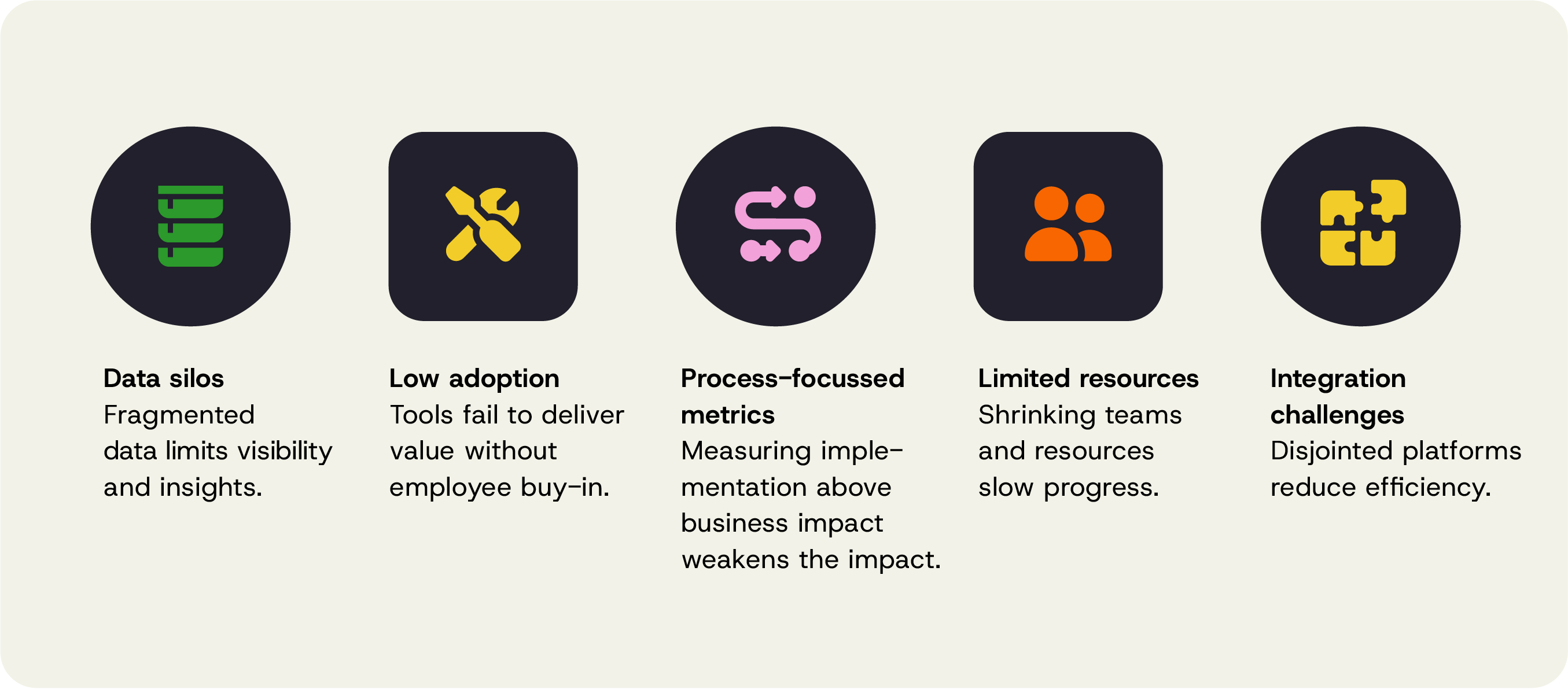
Common obstacles faced by HR include:
- Data silos: Fragmented data limits visibility and insights
- Low adoption: Tools fail to deliver value without employee buy-in
- Process-focused metrics: Measuring implementation above business impact weakens the impact
- Limited resources: Shrinking teams and resources slow progress
- Integration challenges: Disjointed platforms reduce efficiency
To overcome these challenges and maximise HR tech’s value, HR leaders need a strategic approach to evaluating, aligning, and proving ROI. Here’s how to do it.
3 methods to evaluate HR technology ROI
Set the foundation to increase HR tech’s valuation
To bridge the gap, HR leaders must align with key stakeholders and define what value looks like for the organisation.
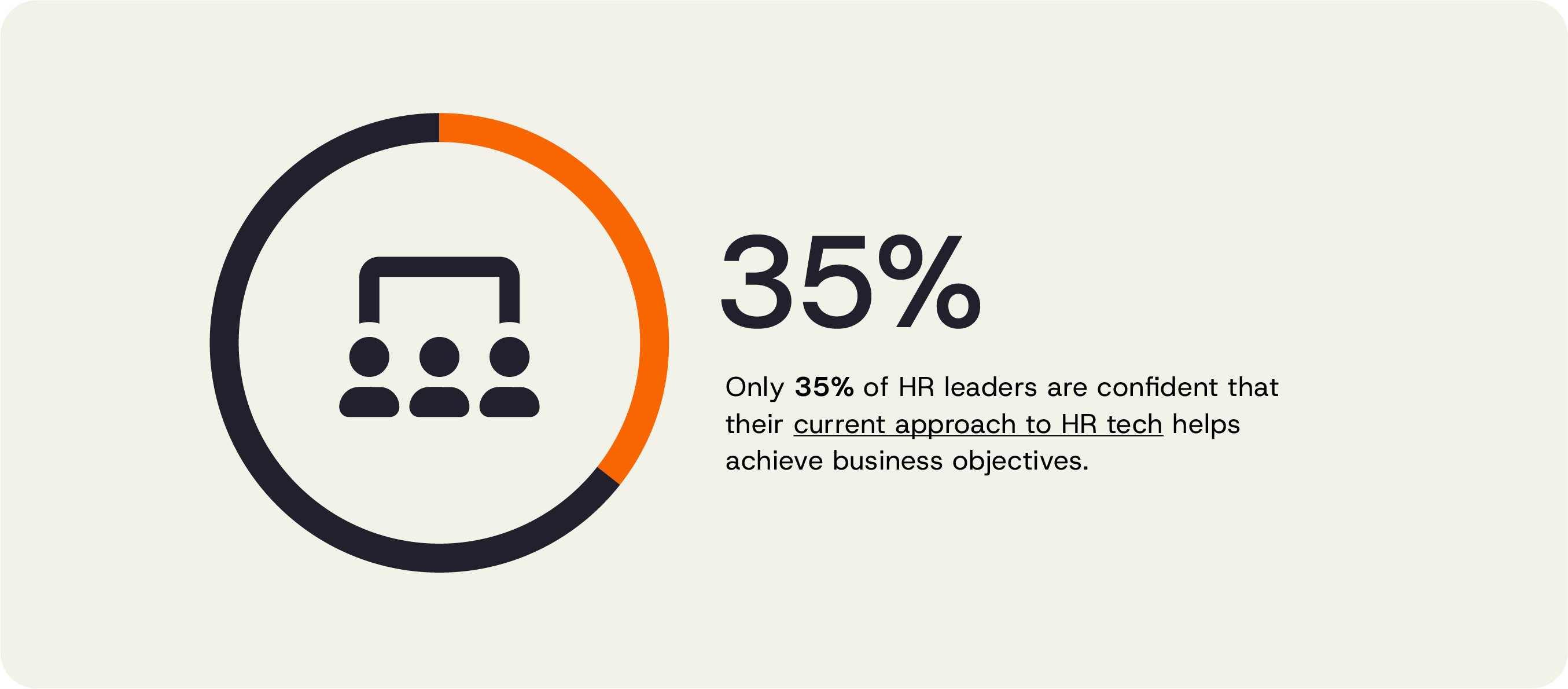
Only 35% of HR leaders are confident that their current approach to HR tech helps achieve business objectives.
This shift presents an opportunity for HR to demonstrate the true value of its investments.
Begin by linking your HR tech solutions to broader business objectives. This doesn’t mean dismissing intangible benefits, such as improving culture or standardising employee experience. Instead, ensure quantifiable performance or cost-saving outcomes that impact the bottom line are also identified, allowing you to measure both qualitative and quantitative success.
After the goals are clear, take inventory of your existing HR tech stack. Assess what problem each tool aims to solve, where it has fallen short, and any overlooked benefits. If there’s no clear connection, proving value later will be an uphill battle.
For example, Yardley explains that your applicant tracking system (ATS) can be more than a hiring tool — it can provide insights that improve workforce planning. A strong ATS helps HR leaders understand who is applying for roles, what skills are in demand, and how salary expectations compare to market trends. These insights can help HR leaders make better hiring decisions.
Similarly, recognition software is more than acknowledging achievements — it can uncover skills that are often difficult to define or track. Recognition data can also identify employees’ strengths and reveal the skills their peers value most. Access to this data enables HR leaders (and managers) to make more strategic decisions about internal mobility and workforce planning.
Analysing your current HR tech stack and aligning your solutions to business needs — including those that might be less obvious — makes highlighting ROI and addressing gaps in your tech stack easier.
Bring HR tech’s value to the surface
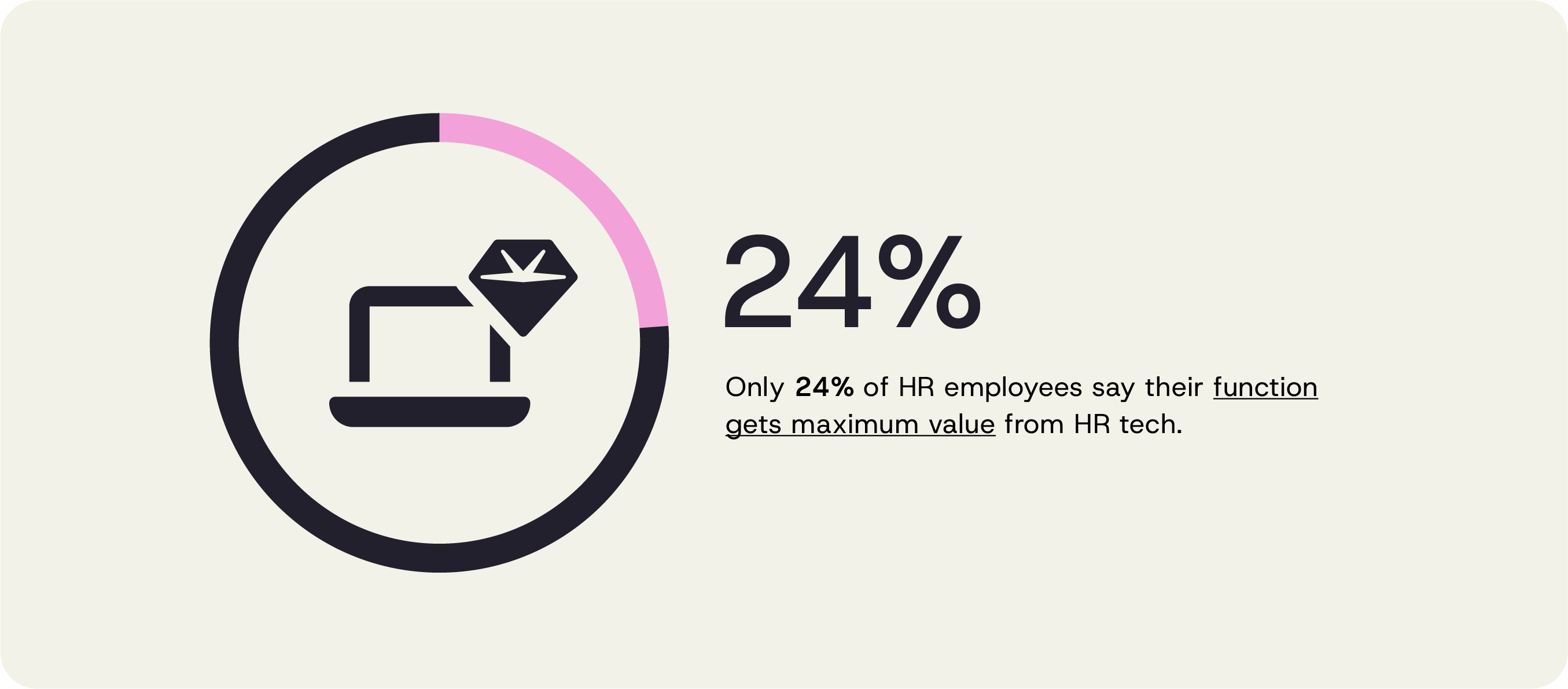
Only 24% of HR employees say their function gets maximum value from HR tech. To maximise value, HR leaders need more buy-in, not just from leadership but from employees. However, without embedding HR tech into the culture, organisations will see low adoption because HR technology doesn’t work if people aren’t using it.
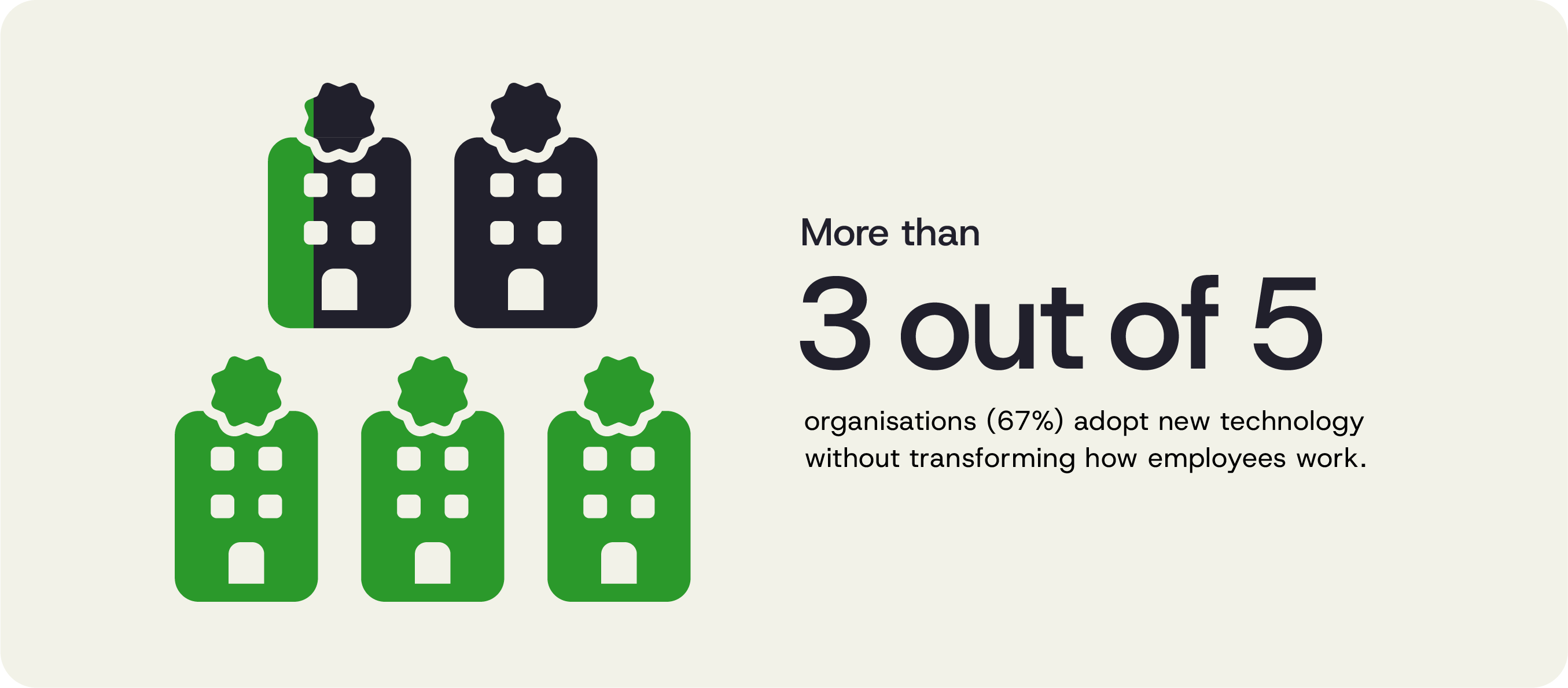
More than three out of five organisations (67%) adopt new technology without transforming how employees work.
To embed HR tech into the business, Yardley advises HR leaders to reframe how they think of HR tech.
You’re more likely to drive value when you can show how HR tech supports how people work, collaborate, and lead at every level. Beyond presenting value to leaders, show the value to employees. “For organisations struggling to get buy-in across employees, question the lens of how you’re applying the technology, because there’s business success to be had by focusing on what employees need most,” Yardley says.
1. Gather and report back feedback
Gather insights from employees on how HR tools improve their experiences and where they’re stifled.
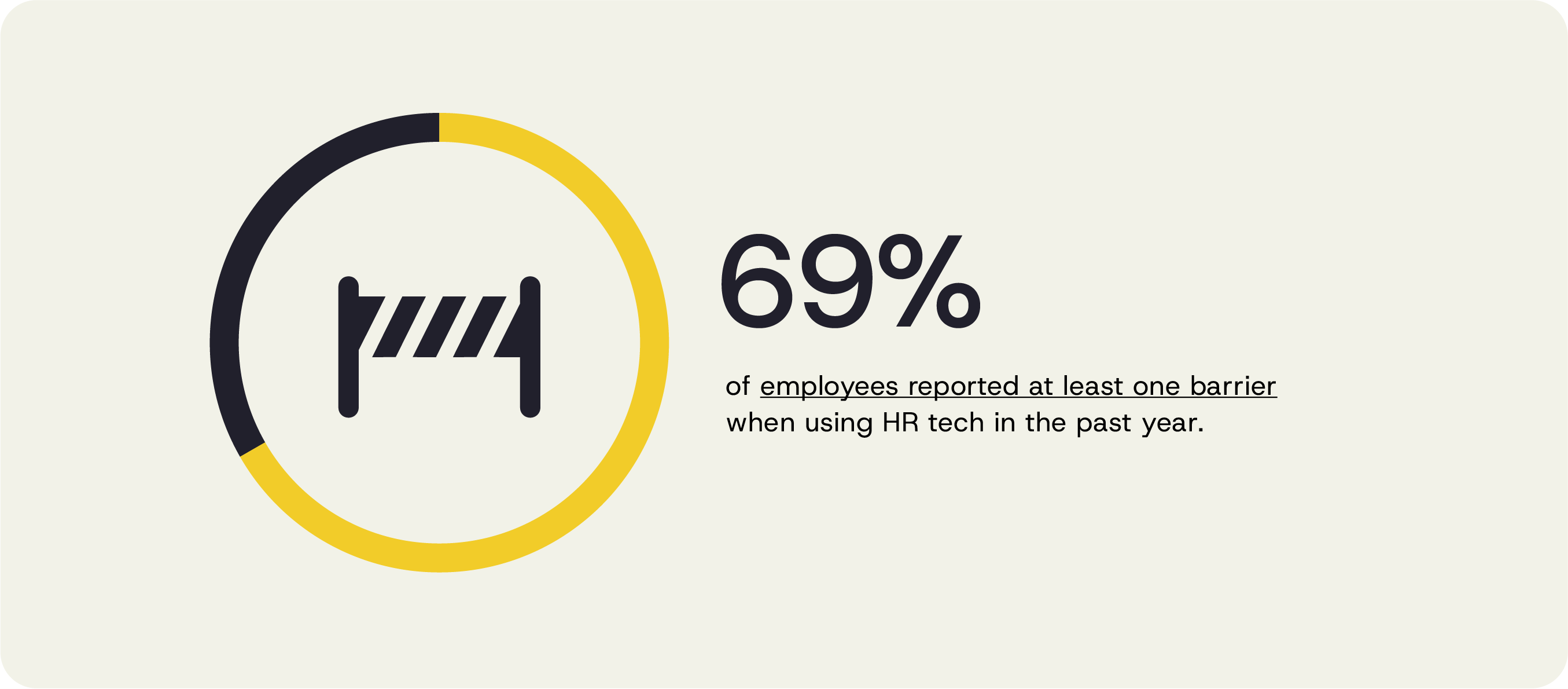
69% of employees reported at least one barrier when using HR tech in the last year.
Employee listening tools are useful in uncovering hidden insights. Report what you hear, connect it to your tools, and emphasise plans to improve the employee experience. Doing so creates better alignment, leading to higher adoption and engagement.
2. Include a social aspect
Having a social element humanises HR tech, boosts connection, and improves engagement. Take recognition software as an example. When recognition includes a social element, employees see what behaviours get recognised and what’s impactful to the business, boosting their momentum to contribute.
3. Consider A/B testing
Use this method to highlight how HR tech improves employee experiences and to test whether the things you value are carried through. To put this into perspective, here’s a real-world example of a call center struggling with poor customer service:
The company had an incentive programme rewarding representatives with micro-bonuses for high Net Promoter Score (NPS), paid at the end of each quarter. Using Achievers’ recognition platform, the organisation ran a targeted campaign recognising and rewarding employees in real time for high NPS scores. Within 60 days, customer satisfaction scores rose by 18 points and employees immediately saw the impact in their news feeds and bank accounts.
Once employees recognise the value and wildly adopt the tools, the hill to climb when demonstrating ROI to leaders becomes much smaller.
Demonstrate ROI through business transformation
Correlate your programme-level data back to broader business goals, be it productivity, safety scores, customer service, or quality control. Harvey suggests benchmarking against your internal data and tracking it over time, noting that you’re more likely to get actionable insights this way instead of benchmarking against industry standards.
When presenting your data, pair it with storytelling.
Challenge
Solution
Result
From there, consider the following ideas to demonstrate ROI:
Think: Usage rates and employee sentiment
The right HR tech tools can help you go from reactive to proactive to workplace challenges. Lean into data from employee listening tools and segment data to identify trends among locations or departments. For example, Harvey points to one global manufacturer that saw that one of the top predictors of disengagement and “intent to leave” was a lack of recognition. They invested in recognition software to curb the issue.
By tracking engagement scores before and after adoption, they saw engagement rise and voluntary attrition drop by 14%.
Of course, Harvey notes that some teams are more well-resourced than others and have analytics teams to map out correlations. That’s where tapping
into tools like AI and predictive analytics can help streamline efforts.
Generative AI (GenAI) presents new opportunities for HR leaders to simplify quantifying the impact of their HR tech tools. AI-powered data analytics makes drawing connections between HR investments and broader business goals easier — provided you supply it with the right data. With the correct prompts, AI tools can analyse the influence of point solutions on key outcomes such as engagement, productivity, and career progression.
Prompt to find correlations between L&D platforms and promotability
What is the correlation between employees who engage with our L&D platform at least once per month (attached) and their advancement within the organisation (attached)? What trends emerge regarding how learning frequency impacts career progression across departments, seniority levels, and teams? How can we use these insights to strengthen talent development strategies?
To read the complete ebook, download your copy now.
“HR hasn’t historically been great at presenting business data. But leaders today are more interested in HR’s impact, and HR professionals are becoming better equipped to influence business outcomes.”
Hannah Yardley
Chief People and Culture Officer, Achievers
“We often buy tools for one thing and fail to uncover hidden value.”
Hannah Yardley
Chief People and Culture Officer, Achievers
“HR tech is a misnomer. It’s not just HR tech — it’s business tech. To truly embed it into your culture, it must be an organizational tool.”
Hannah Yardley
Chief People and Culture Officer, Achievers
“Stories are compelling data — they’re one of those data points people spark up and listen to.”
Hannah Yardley
Chief People and Culture Officer, Achievers
“Strong adoption in one department is good data, but broader adoption across an organization is great data because you’re able to see the cross-functional impact.”
Hannah Yardley
Chief People and Culture Officer, Achievers
“The best solutions will enable you to pull data from other sources — like your HRIS — and correlate data, which is key if you want to show the echo effect.”
Hannah Yardley
Chief People and Culture Officer, Achievers