Table of contents
Create a culture that means business™
Schedule a demo with an Achievers solution expert today.


 Copy URL
Want to know how to build trust in the workplace? Start by treating it like what it is — essential. Trust is the foundation for everything that makes a workplace work: collaboration, loyalty, performance, culture. But trust doesn’t show up overnight. It’s built through small, consistent actions, clear communication, follow-through, and a willingness to be honest with each other.
Still, many companies miss the mark and trust has taken a hit. Over 55% of Singapore workers lack trusted relationships with employers, citing feelings of isolation, disrespect, or being undervalued. Key drivers of this distrust include psychological safety, lack of transparent communication, and fear of reprisal when voicing concerns.
The good news? Trust is something you can build, shape, and strengthen. Let’s look at 11 ways to make it part of your everyday culture.
11 tips for building trust in the workplace
Globally, there’s a confidence crisis. An increasing number of people are worried that leaders are not truthful. A recent survey revealed that 68% of respondents say they are worried that business leaders purposely mislead people, a 12-point increase from just a few years ago.
Building — and rebuilding— trust takes time. But the payoff is worth it. When employees trust their leaders (and each other), they feel safer, speak up more, and stay longer. So how do you build that kind of organisational culture? It starts with small, intentional actions that add up over time.
Here are 11 ways to turn trust from a buzzword into a workplace norm.
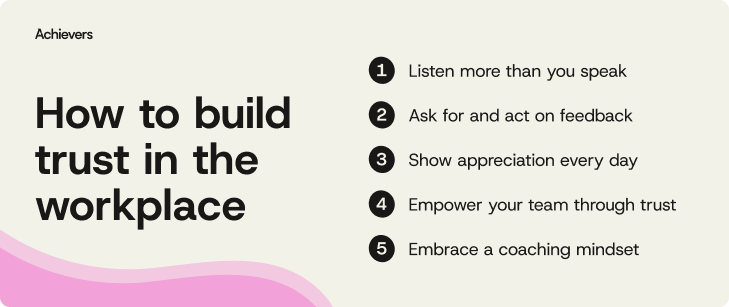
1. Listen more than you speak
Creating a culture of trust means giving employees space to speak — and actually hearing them when they do. That means putting away distractions, asking thoughtful questions, and letting them finish their thoughts before jumping in. And when feedback comes your way, accept it without getting defensive. When employees know you’ll genuinely listen, they’ll speak up more often.
2. Ask for and act on feedback
Gathering feedback is easy. Acting on it? That’s where trust is built. Use tools like surveys or pulse checks to gather insights, then share what you learned and how you’re responding. Even small follow-ups show you’re listening. It’s not about fixing everything — it’s about showing you care. Closing the loop turns feedback from a formality into a conversation, and a conversation into a culture of trust.
3. Show appreciation every day
Trust and recognition go hand in hand. Employees want to feel seen — and valued. A quick thank-you, public praise, or a note of appreciation through an employee recognition platform can go a long way. Recognition builds psychological safety and shows employees their contributions matter. The more often people feel appreciated, the more likely they are to step up, speak up, and invest in the team.
4. Empower your team by trusting them
Trust your people — and let them know it. Give employees space to lead, speak up, and shape decisions. Invite them into conversations beyond their usual scope. The more autonomy you offer, the more accountability they’ll take. Micromanaging only signals doubt. Instead, support without hovering. Step back just enough to show: “I trust you to do great work — and I’ll support you when you need it.”
5. Embrace a coaching mindset
Great leaders don’t just manage — they coach. That means asking thoughtful questions, giving feedback with empathy, and supporting growth over time. Coaching creates a culture where employees feel seen and supported, especially when challenges come up. It’s not about having all the answers — it’s about helping people find their own. And it works:
In Singapore, employees coached by managers show higher performance, increased job satisfaction, and improved retention. Coaching fosters a culture of continuous learning, boosting engagement and productivity, with 65% of employees reporting improved professional skills. Good for employees, it also helps organisations adapt to challenging environments and has led to a 13% increase in employees reporting improved performance.
Yet, according to Achievers Workforce Institute research, only 15% of employees receive the coaching they feel they need to be more effective.
6. Practice consistency
People trust what they can count on. Be reliable in your actions, decisions, and communication. That means showing up the same way — no matter the situation — and following through on what you say. Even your mood can affect trust. If your team never knows what to expect, they’ll hold back. Stay steady, lead by example, and show your team they can rely on you.
7. Focus on non-verbal communication and soft skills
Trust isn’t just in what you say — it’s how you say it. Body language, tone, and eye contact can speak volumes. Be present, show empathy, and use soft skills like patience and curiosity to create safe, open conversations. Authenticity matters here. If your words and actions don’t match, people notice — and trust fades. Be real, be human, and trust will follow.
8. Create an inclusive culture
Belonging builds trust. When people feel included, valued, and represented, they’re more likely to engage — and stay. Focus on fair pay, accessible policies, DEIB training, and spaces like employee resource groups (ERGs). Achievers Workforce Institute (AWI) research shows that just 13% of Singaporean employees feel a strong sense of belonging, indicating that there’s work to be done in creating an inclusive culture. Inclusion isn’t just a value — it’s a signal that your workplace is safe, supportive, and built for everyone.
9. Be honest and transparent
Trust thrives on truth. Be upfront — especially during times of change. Share what you know, admit what you don’t, and invite questions. Your team doesn’t need perfection, they need honesty. Transparency builds respect, and respect builds loyalty. Conversations should be two-way: the goal isn’t to talk at people — it’s to talk with them. That’s when trust becomes mutual.
10. Make trust a part of your recognition strategy
Recognition is a trust-builder in disguise. When you repeatedly call out behaviors like teamwork, accountability, and honesty, you reinforce what matters. Peer recognition is just as impactful as praise from leadership — sometimes more. With a platform like Achievers, it’s easy to make recognition part of your daily rhythm. And when recognition becomes routine, so does trust.
11. Use data to build and rebuild trust
Trust isn’t just a gut instinct — it’s measurable. Recognition data shows you where trust is thriving, where it’s lagging, and where silos might be forming. Use those insights to spot trends early and take action. With real-time reporting and behavioural analytics, you can build trust intentionally — and fix fractures before they spread. Because trust shouldn’t be left to chance.
The most effective cultures of recognition create more than positive employee experiences. They generate valuable insight into behaviours, values alignment, and organisational performance. Learn about the future of employee recognition and how leading organisations are transforming recognition into a strategic driver of workforce performance.
Learn how to build trust in the workplace with Achievers
Trust isn’t built on grand gestures — it’s built on everyday actions. When you listen, recognise, and lead with consistency, trust becomes part of your culture. With Achievers, it’s easier to make that happen.
Our platform helps you recognise the behaviours that matter most, track trust-building trends, and reinforce your values at every level. The result? A workplace where employees feel seen, heard, and appreciated — and where trust isn’t just expected, but experienced.
How to build trust in the workplace FAQs
Key insights
- Trust is built through consistent, human-centered behaviours — listening, transparency, recognition, and follow‑through — not quick fixes or grand gestures.
- Small, everyday actions like acting on feedback, showing appreciation, and empowering people are what turn trust from a buzzword into a measurable cultural strength.
- With the right tools and intention, organisations can intentionally build, track, and reinforce trust to create a workplace where employees feel truly seen, heard, and valued.