Table of contents
Create a culture that means business™
Schedule a demo with an Achievers solution expert today.


 Copy URL
Employee recognition has changed. According to recent data from Achievers Workforce Institute’s (AWI) 2026 Engagement and Retention Report: APAC edition, just 15% of employees in Singapore feel appreciated and engaged at work, 16% feel connected to company values, and only 25% understand how their work contributes to the company’s mission.
That means that recognising employees in Australia and across APAC is a must for today’s businesses. For HR leaders today, the most effective and impactful ways to recognise employees are embedded into daily work, aligned to values, and designed to scale.
When organisations get staff recognition right, they do more than boost morale. They reinforce the behaviours that matter most, strengthen culture, and improve engagement and retention. The challenge is knowing how to recognise employees in ways that feel authentic, inclusive, and meaningful across a diverse workforce.
Whether you’re evolving an existing program or exploring new work recognition ideas, recognition should be timely, specific, and accessible to everyone, no matter where or how they work.
Below are 22 proven ways to recognise employees, grouped to help you build and scale a recognition strategy that drives culture and performance.
Why should you recognise employees at work?
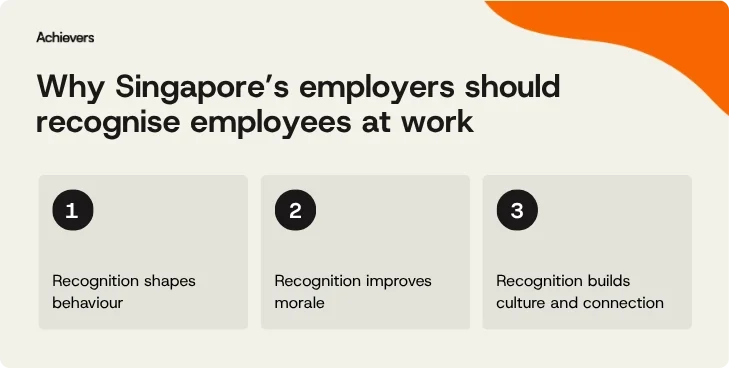
Because recognition shapes behaviour. When you consistently acknowledge effort and impact, you reinforce what success looks like, and make it repeatable. The most effective ways to recognise employees connect daily contributions to company values, helping employees understand how their work matters. Done well, recognising employees increases motivation, strengthens trust, and creates clarity around expectations. It’s one of the simplest, most human ways to influence performance without adding process or pressure.
Just as importantly, staff recognition builds connection. Employees who feel seen are more engaged, more likely to stay, and more willing to go above and beyond. Thoughtful work recognition ideas, whether peer-to-peer or manager-led, create a sense of belonging that pay and perks alone can’t. When organisations invest in meaningful ways to recognise staff, they don’t just improve morale; they build a culture where people want to do their best work, together.
Recognition in the flow of work
One of the biggest barriers to effective staff recognition isn’t intent — it’s friction. When recognition requires extra steps, separate systems, or formal processes, it happens less often and loses impact. That’s why leading organisations focus on how to recognise employees in real time, using the tools and moments that already shape the workday. By embedding recognition directly into daily workflows, appreciation becomes visible, timely, and repeatable — turning recognition into a habit rather than an exception. The most effective work recognition ideas happen where work already happens, making recognition consistent, genuine, and part of how work gets done.
1. Real-time recognition in collaboration tools
One of the simplest ways to recognise employees is directly within tools like Microsoft Teams, Slack, or Outlook. Realtime recognition reinforces positive behaviours in the moment they occur.
2. Live, camera-on shout-outs
Calling out great work during virtual meetings brings visibility to recognition and restores human connection in hybrid environments.
3. Asynchronous video thank-yous
Short video messages allow leaders to recognise employees across time zones while adding sincerity that text alone can’t match.
4. Project and milestone badges
Digital badges tied to key achievements provide visible proof of contribution and help normalise everyday recognition.
5. Recognising effort by protecting time
Publicly granting meeting-free time or focus days is a powerful, often overlooked way to recognise staff for sustained effort.
Peer-to-peer recognition strategies
Peer-to-peer recognition is what turns culture into a shared responsibility. While managers play an important role in how to recognise employees, recognition is most powerful when it flows in every direction. Empowering employees to recognise one another helps surface everyday wins, strengthens connection, and ensures staff recognition reflects how work actually gets done, not just the biggest milestones. These ways to recognise employees make appreciation more inclusive, more frequent, and more closely tied to collaboration, reinforcing peer recognition as the heartbeat of culture.
6. Social recognition feeds
A companywide recognition wall turns individual moments into shared celebrations, strengthening collective culture.
7. Values-based recognition tags
Linking recognition to company values helps employees understand not just what was recognised, but why it mattered.
8. Cross-team appreciation
Encouraging teams to recognise colleagues in other departments breaks down silos and strengthens collaboration.
9. Recognising the helpers
Some of the most impactful staff recognition comes from celebrating those who enable others to succeed behind the scenes.
10. Peer nominations for leadership awards
Being nominated by peers is a powerful form of validation and one of the most meaningful ways to recognise employees.
Manager-led recognition and development
Managers have the greatest day-to-day influence on the employee experience, making their role in staff recognition especially impactful. While systems and peer recognition help build momentum, it’s managers who determine how recognition shows up through feedback, coaching, and acknowledgment of effort.
When managers understand how to recognise employees effectively, recognition becomes a powerful tool for building trust, reinforcing expectations, and supporting growth. These ways to recognise employees help strengthen relationships, improve retention, and create clarity around what great work looks like.
11. Career investment conversations
Recognition isn’t only about past performance — it’s also about signaling belief in an employee’s future.
12. Learning and development rewards
Offering professional development as recognition turns appreciation into a long-term investment.
13. Skip-level visibility moments
A simple note of praise shared upward increases visibility and reinforces that great work is noticed.
14. Recognition preferences by design
Understanding individual recognition preferences ensures staff recognition lands positively and feels authentic.
15. Timely spot bonuses
When used thoughtfully, spot bonuses remain one of the most effective work recognition ideas for exceptional effort.
Celebrating milestones and life moments
Recognition is most meaningful when it reflects the full employee experience, not just completed tasks or performance and productivity metrics. Employees experience work as moments: milestones reached, challenges overcome, personal achievements, and life changes. When organisations focus only on output, they miss powerful opportunities for staff recognition that build trust, loyalty, and belonging.
These ways to recognise employees acknowledge people as individuals, not just contributors, reinforcing that meaningful recognition goes beyond work tasks to celebrate the moments that matter.
16. Recruitment anniversaries
Work anniversaries are critical moments to reaffirm purpose and commitment. More than a generic service award.
17. Day one welcome recognition
Recognising employees from day one validates their choice to join and accelerates belonging.
18. Personal life milestones
Celebrating major life events humanises the workplace and strengthens emotional connection.
Tangible and experiential rewards
Recognition is most effective when it is part of a total rewards program that reflects individual needs, preferences, and lifestyles. What motivates one employee may not resonate with another, which is why the best ways to recognise employees move beyond one-size-fit-s-all rewards. Offering flexible, personalised options, whether that’s tangible items or memorable experiences, makes staff recognition feel more meaningful and inclusive. These ways to recognise staff give employees choice and control, increasing the emotional impact of recognition and ensuring it remains relevant across roles, generations, and geographies.
19. Points-based rewards
Points allow employees to choose rewards that matter to them, making recognition more personal and inclusive.
20. Experiential rewards
Experiences create lasting memories that employees associate with their organisation long after the moment.
21. Purpose-driven giving
Allowing employees to donate rewards to charity connects daily work to broader impact.
Recognising frontline and offline employees
True staff recognition reaches everyone, not just desk-based teams. For frontline and offline employees, recognition must be accessible, visible, and woven into the realities of how and where work gets done. When organisations overlook these roles, they risk creating a two-tier culture that undermines engagement and belonging. These ways to recognise employees focus on meeting frontline workers where they are, ensuring recognising employees feels inclusive, timely, and just as meaningful, regardless of role, location, or access to technology.
22. Mobile-first and physical recognition options
QR codes, kiosks, and on-the-spot recognition cards ensure frontline employees are fully included in recognition programs.
Where Achievers helps bring recognition to life
Sustaining these ways to recognise employees requires the right foundation. Organisations that lead in engagement rely on recognition platforms that integrate into daily work, connect recognition to values, and provide insight into what’s really driving culture.
Achievers enables consistent, meaningful staff recognition at scale, helping organisations embed recognition into how work gets done, not as an afterthought, but as a core cultural practice.
Start recognising your employees with Achievers
The most effective organisations treat recognition as a system, not a moment. Frequent, inclusive recognition reinforces values, strengthens connection, and shapes behaviour over time.
At its core, recognising employees sends a simple but powerful message: I see you. I value your contribution. You belong here. When recognition is woven into everyday work, culture follows, and results do too.

Ways to recognise employees at work FAQs
Key insights
- Effective ways to recognise employees are embedded into daily work, aligned to values, and designed to scale.
- Consistent staff recognition shapes behaviour, strengthens culture, improves engagement, and retention.
- Inclusive recognition builds belonging and drives performance.