Table of contents
Create a culture that means business™
Schedule a demo with an Achievers solution expert today.


 Copy URL
The way organizations manage performance is changing — fast. Annual reviews are out, and continuous enablement is in. Instead of holding feedback for a once-a-year formality, high-performing organizations are shifting toward an always-on performance management process. One that supports people in real time and drives results week after week. The outcome? Faster growth. Stronger engagement. Better retention. And a workplace culture where people feel seen, not judged.
What is a performance management process?
A performance management process is a continuous cycle where organizations set expectations, support professional growth, evaluate outcomes, and recognize progress. It keeps employees aligned to what matters most — and gives them the tools, clarity, and motivation to succeed. When it’s done well, performance management becomes a culture-building engine. When it’s done poorly, it becomes paperwork.
Why traditional performance management falls short
Traditional employee performance reviews try to summarize an entire year in one stressful conversation. That approach creates anxiety, recency bias, and missed opportunities for early intervention. If employees only get feedback once a year, problems go unaddressed — and progress goes unnoticed. Modern performance management does the opposite: It focuses on frequent coaching, real-time recognition, and continuous improvement.
The modern performance management cycle
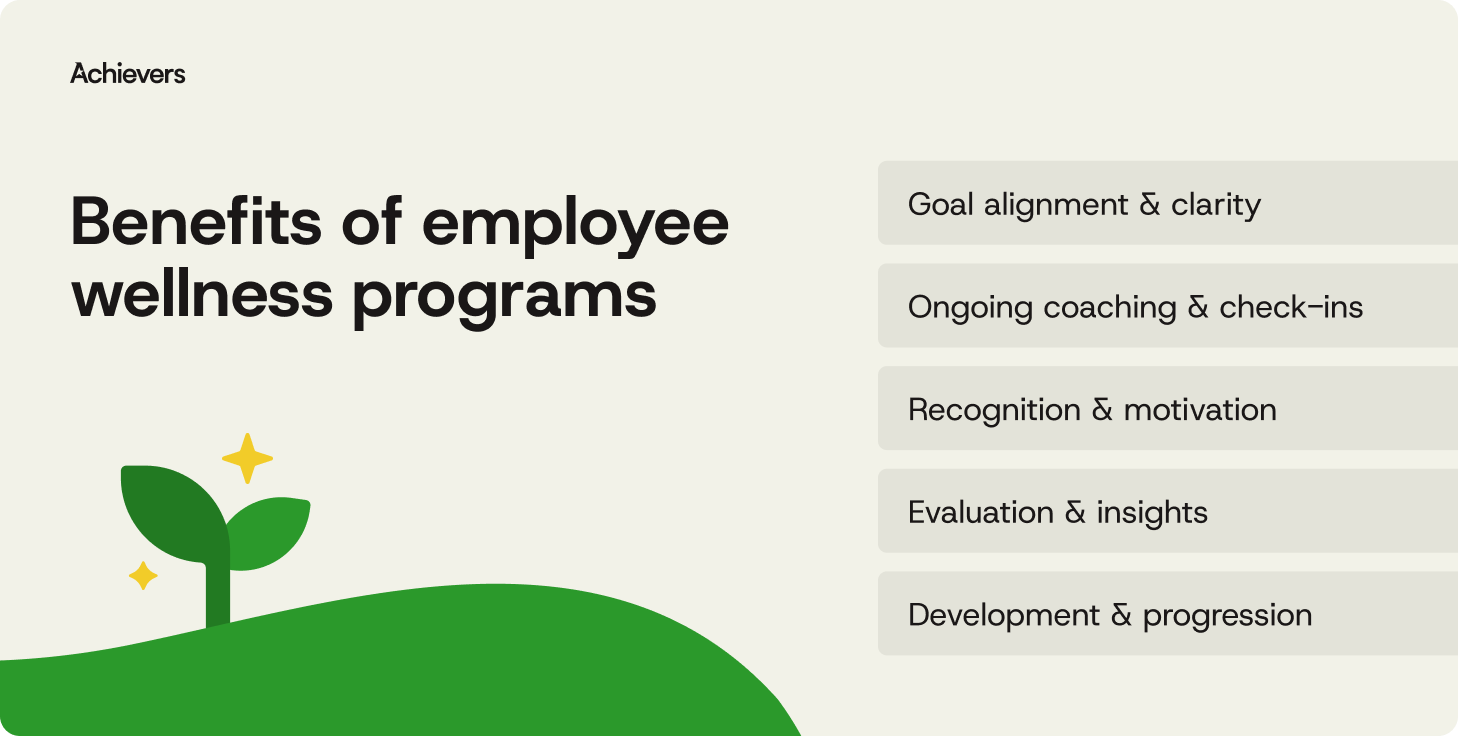
If employee performance is going to improve all year long, it needs more than a single review meeting. It needs a system — one built on clear goals, real coaching, and timely recognition. That system comes to life through five connected stages:
1. Goal alignment
Employees and managers co-create goals and clarify priorities. People understand not just what to achieve, but why it matters.
2. Ongoing coaching and check-ins
Regular conversations uncover roadblocks early and keep momentum going. Talk more, guess less.
3. Recognition and motivation
Positive reinforcement encourages repeat performance. Celebrate wins as they happen — not months later.
4. Evaluation and insights
Structured assessments provide accountability and help leaders see what’s working and what’s not.
5. Development and progression
Employees build skills and explore growth pathways. Careers don’t wait for review season and neither should development.
Core components of effective performance management processes
Strong performance management systems don’t just happen — it has structure behind it. A few key core components include:
- Clarity: Employees know what success looks like and how to get there.
- Fairness: Decisions are based on visible work and clear expectations.
- Visibility: Real-time insights give managers confidence and direction for coaching moments.
- Reinforcement: Recognition ties great work to great outcomes — over and over again.
These components form the foundation of a performance culture. One where employees feel confident in what’s expected, supported in how to get there, and motivated by recognition along the way. When structure supports people, performance follows.
The organizational benefits of performance management done right
Great performance management doesn’t just benefit employees — it directly impacts business outcomes. From higher employee engagement and productivity to stronger retention and agility, organizations that invest in continuous performance enablement see measurable improvements in how work gets done and how results are delivered.
Employees feel supported, developed, and motivated
Frequent coaching and recognition help people feel confident and capable — which fuels better performance.
Productivity increases and focus shifts to high-impact work
Employees spend more time on what matters and less time guessing. When priorities stay visible, so does progress.
Stronger retention through early coaching and continued recognition
People stay where they see a future and where their contributions are appreciated.
Better manager-employee relationships built on trust and transparency
Clear expectations and regular check-ins reduce uncertainty. Communication becomes a strength, not a stressor.
A culture of accountability and continuous improvement
Regular feedback normalizes growth and helps teams raise the bar together.
Continuous performance isn’t just a strategy — it’s a culture upgrade. It creates an environment where employees feel supported, managers feel prepared, and progress feels achievable every single day. The result? Teams who perform better because they’re treated better.
Common performance management challenges and how to fix them
Even strong programs can get stuck. Here’s where companies slip — and how to course-correct:
Challenge: Managers feel unequipped to coach effectively
Without confidence or tools, coaching becomes sporadic and superficial. This leaves employees without the guidance they need to grow and succeed.
Challenge: Check-ins lack structure and accountability
Unstructured conversations lead to missed expectations and unclear progress. Over time, this erodes trust and makes performance management feel like a checkbox exercise.
Challenge: Employees don’t see performance conversations as valuable
When discussions feel punitive, employees disengage instead of improving. This creates a cycle where feedback is ignored and development stalls.
Challenge: Goals remain static even as priorities shift
Fixed goals quickly become irrelevant, eroding alignment and motivation. Employees end up working toward outdated objectives that don’t reflect business realities.
Challenge: Recognition is inconsistent or reserved for a select few
Limited employee recognition undermines morale and creates inequity across teams. When great work goes unnoticed, engagement and retention suffer.
Best practices for continuous performance management
If you want your performance management to improve, it has to be part of daily work — not yearly paperwork. These practices create the conditions for performance to become continuous and for improvement to become expected.
- Make check-ins regular and conversational
- Train leaders as coaches, not just evaluators
- Recognize behaviors aligned to company values
- Update goals as priorities change
- Use data to uncover risks earlier
- Show employees what great looks like — clearly and consistently
Consistency is what turns “intentions” into outcomes. By making performance conversations and recognition a regular part of how work gets done, organizations build habits that strengthen alignment, improve accountability, and accelerate results across the board.
The role of technology in performance enablement
Tools don’t replace conversations — they fuel them. Modern performance platforms should:
- Make progress visible to employees and leaders
- Deliver recognition where people already work
- Turn feedback and survey data into actionable insights
- Support continuous listening (not one giant annual survey)
- Connect recognition and performance outcomes to business results
- Technology doesn’t improve performance alone — but it enables the behaviors that do
How to improve your performance management process
You don’t need a full overhaul to start improving performance — just the right first steps.
Assess current gaps and pain points
Where are employees and managers struggling most? Start there. Take time to review feedback, engagement scores, and missed goals to pinpoint the biggest friction points. Understanding these gaps ensures your improvements target what matters most.
Co-design improvements with employees
People adopt what they help build so involve employees wherever you’re able to. Invite employees into the process through pulse surveys, focus groups, or pilot committees. Their input makes solutions practical and builds trust in the changes ahead.
Pilot new performance habits
Test with a willing group and scale what sticks. Start small with one team or department to trial new practices like structured check-ins or refreshed goal setting. Gather feedback, refine, and expand gradually for smoother adoption.
Adopt technology that simplifies the process
Performance enablement should work in the background — not weigh people down. Choose tools that automate reminders, centralize goals, and make recognition easy. The right technology should remove administrative burdens, so managers and employees can focus on meaningful conversations.
Continuously measure progress and iterate
Small adjustments add up quickly so always measure progress, and make changes as needed. Track adoption rates, engagement scores, and frequency of recognition to see what’s working. Use these insights to fine-tune your approach and keep momentum strong.
The future of performance starts now
Improving performance management doesn’t require a massive overhaul — just intentional steps that make the process more human, more agile, and more impactful. When organizations focus on structured conversations, dynamic goals, and everyday recognition, they create a culture where people feel supported and motivated to do their best work.
At Achievers, we know that recognition and feedback aren’t extras — they’re essential to performance. By embedding these practices into daily workflows, companies can turn performance conversations into opportunities for growth and belonging, not just evaluations.
FAQs
Key insights
- Continuous performance enablement boosts engagement, productivity, and retention by supporting employees in real time — not just once a year.
- Clear goals, frequent coaching, and regular recognition create a performance culture where people understand expectations and feel motivated to grow.
- Technology fuels better performance habits by making feedback, insights, and recognition easier to deliver and track.
Solution: Provide training, prompts, and insights that make coaching easier to deliver and easier to sustain.
Solution: Use templates and shared goals to keep conversations focused, repeatable, and measurable.
Solution: Make discussions future-focused and recognition-rich, not scorecards on last quarter’s mistakes.
Solution: Refresh goals quarterly or whenever business conditions demand it — agility beats rigidity.
Solution: Embed recognition into everyday workflows, empowering everyone to celebrate great work.