Table of contents
Create a culture that means business™
Schedule a demo with an Achievers solution expert today.


 Copy URL
On September 21, 2026, World Gratitude Day offers a moment to pause and remember something we often rush past at work — people do better when they feel valued. And the timing couldn’t be better. According to our latest Engagement and Retention Report, only 26% of employees are engaged in their work — a sign that many aren’t feeling nearly as valued as they should.
Gratitude can change that. Employees who feel recognized are more connected, more committed, and far more likely to bring their best energy to the workday. But gratitude doesn’t become culture on its own. It needs repetition, intention, and a little leadership follow-through.
Let’s break down what World Gratitude Day is, why it matters, and how to turn one day of appreciation into a year-round habit worth keeping.
What is World Gratitude Day?
World Gratitude Day is a day that offers a global reminder to slow down and acknowledge the people who make our lives — and our work — better. At its core, the day encourages individuals, teams, and entire communities to intentionally recognize what (and who) they’re thankful for.
When is World Gratitude Day?
World Gratitude Day is observed every year on September 21, which means it falls on a Monday in 2026. Unlike holidays that shift dates, this one happens on the same day each year to create a consistent global moment for recognizing the people and experiences we’re grateful for.
What is the theme of World Gratitude Day?
While there isn’t a core theme for World Gratitude Day, the day encourages people everywhere to acknowledge what’s working — and who’s making things better — as a way to build resilience and strengthen connection. It’s less about a formal theme and more about a mindset that makes work (and life) feel a little more human.
How did World Gratitude Day start?
World Gratitude Day began in 1965 during a Thanksgiving dinner at the United Nations building in Hawaii, where Sri Chinmoy and the Peace Meditations at the United Nations proposed the idea of a global day devoted to gratitude. The concept resonated, and the first official celebration took place on September 21, 1966.
Why is World Gratitude Day important?
In the workplace, World Gratitude Day is important because it gives organizations a clear moment to focus on something employees want more of — genuine appreciation. It’s also an opportunity to address gaps that directly affect engagement and retention.
Here’s why the day matters:
- It creates a global pause to intentionally recognize people: The day encourages teams to slow down and acknowledge the people who make work possible.
- It highlights a real employee experience gap: Many employees don’t feel consistently appreciated, which contributes to disengagement, low morale, and higher turnover risk.
- It reinforces what the data tells us: According to Achievers Workforce Institute (AWI), employees who feel appreciated are much more likely to feel connected, engaged, and committed to their organization.
- It helps reset recognition habits: Frequent appreciation builds belonging, and belonging boosts performance and productivity. World Gratitude Day is a simple, annual cue to rebuild those habits with intention.
6 ways to celebrate World Gratitude Day in the workplace
There’s no one right way to celebrate World Gratitude Day, but the most meaningful ideas are the ones that help employees feel genuinely seen.
Here are six simple ways to bring gratitude to life across your workplace:
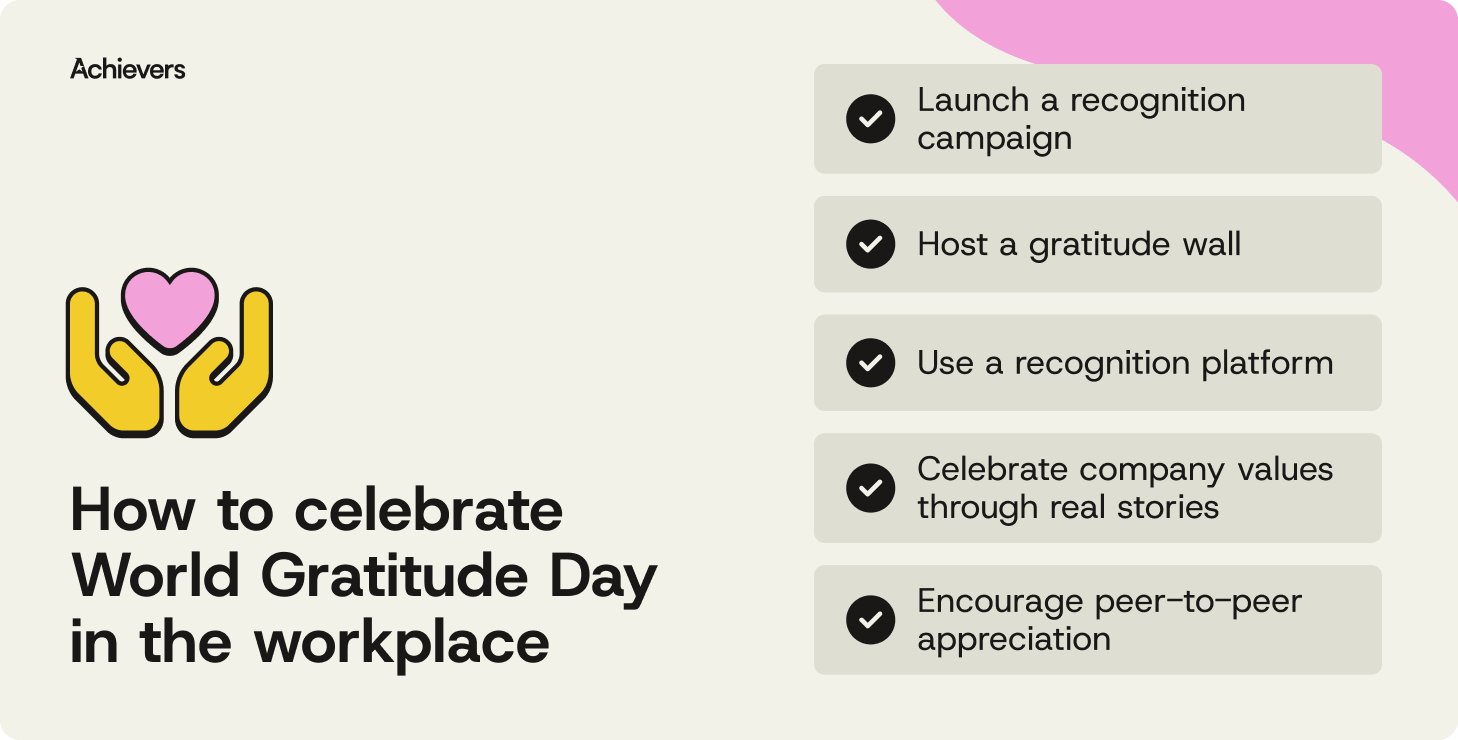
1. Launch a recognition campaign
Kick off a simple, high-visibility campaign inviting employees to participate in peer-to-peer recognition by highlighting those who bring company values to life. Automated prompts or ready-made templates help keep the momentum going. Because the easier recognition is, the more people actually do it.
2. Host a gratitude wall — digital or physical
Create a shared space for employee appreciation across teams. A social-style feed or mobile-friendly posting option gives everyone a chance to participate, whether they’re in-office, hybrid, or rarely within five feet of a conference room.
3. Celebrate company values through real stories
Spotlight moments that show what great work looks like in practice. These stories make people feel seen, and they quietly reinforce the behaviors that move culture, and performance, in the right direction.
4. Empower managers with gratitude toolkits
Give managers prompts, templates, and small nudges to help them recognize more consistently. It matters: AWI’s State of Recognition Report tells us that employees recognized by their managers are 19x more likely to trust them and 16.5x more likely to recommend their company. Even better, simple tools and real-time insights help managers build habits that actually stick.
5. Encourage peer-to-peer appreciation
Recognition shouldn’t rely on job titles. Create ways for teammates to appreciate each other for collaboration, support, and small wins. Non-monetary appreciation still packs a punch — especially when it’s quick, personal, and shared where others can see the impact.
6. Use recognition tools to amplify the day
Make it easier for people to participate by using tools like recognition platforms that support recognition in the moment, on any device, with helpful nudges and visibility across teams. When appreciation is simple, consistent, and accessible to everyone, World Gratitude Day becomes more than a moment — it becomes the start of a recognition habit that lasts all year.
How gratitude shapes performance at work
Gratitude might feel simple, but it has real power in the workplace. Being recognized tells employees, This matters. Do more of this. When people know their work is seen and valued, they naturally lean into the actions that drive results.
Here’s how gratitude shows up in performance:
- It reinforces the right behaviors: People repeat what gets noticed. When recognition is specific and meaningful, it does a bit of quiet coaching — nudging people toward the behaviors that drive culture and performance. AWI’s State of Recognition Report shows employees who are recognized weekly are 2.6x more likely to be their most productive selves.
- It gives clarity around what “good work” looks like: Gratitude helps employees understand what’s expected and where they’re having impact. AWI research shows meaningfully recognized employees are more likely to feel informed, aligned, and clear on priorities.
- It creates momentum for better work: Small, consistent moments of appreciation fuel motivation and follow-through. Give it a little time, and those small moments of appreciation start to add up in a big way across teams.
- It fills a very real gap: Only one in three U.S. workers strongly agree they received praise for doing good work, according to Gallup. That’s a big opportunity — and one that organizations can address with simple, consistent habits.
Where gratitude goes from here
World Gratitude Day is a great moment to pause, appreciate, and reset — but it’s only the beginning. The real impact comes from what happens after September 21, when teams return to their routines and the novelty fades. That’s where leaders have an opportunity.
HR teams and managers can use this day as a catalyst to build the habits that make gratitude part of the everyday experience: noticing great work, naming it, and reinforcing the behaviors that help people do their best.
At Achievers, we’ve seen how consistent recognition transforms culture. Because when employees feel seen and appreciated, everything — and everyone — works better.
World Gratitude Day FAQs