Across EMEA, change isn’t arriving in waves. It’s constant, overlapping, and often unresolved.
AI initiatives are moving forward. Structures are shifting. Expectations are changing mid‑stream. But for many employees, clarity and confidence aren’t keeping pace with the speed of transformation.
The consequence isn’t resistance. It’s hesitation. Slower adoption. And a widening gap between leadership intent and employee readiness.
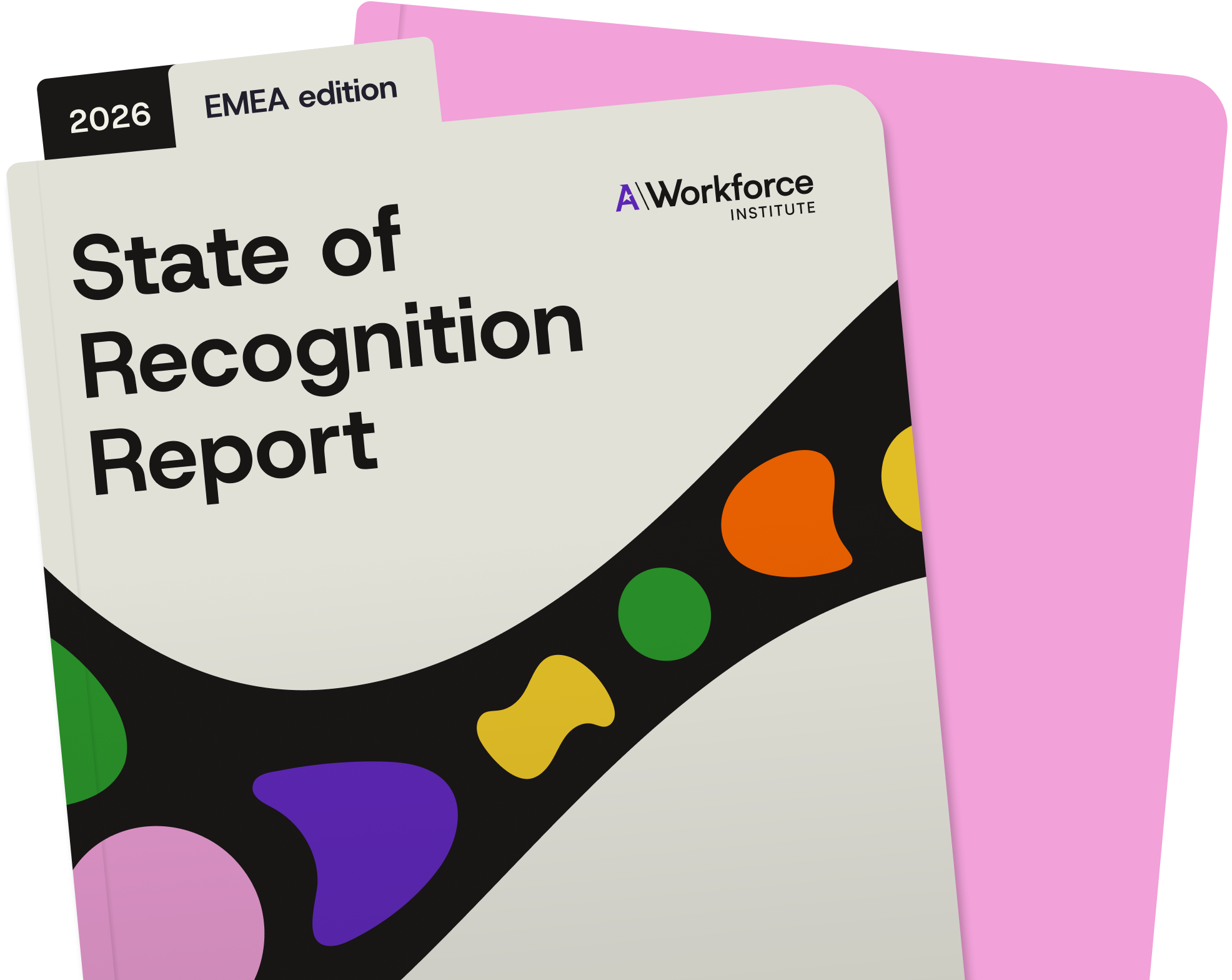
The 2026 State of Recognition Report: EMEA edition from Achievers Workforce Institute (AWI) examines why that gap continues to grow — and what actually helps close it. The answer isn’t more messaging or tighter frameworks. It’s recognition.
When recognition is consistent and meaningful, it reinforces the behaviours organisations rely on during uncertainty. It builds trust when answers are incomplete. It provides direction when communication breaks down. And it helps employees engage with AI and change in ways that feel grounded, human, and legitimate.
Across the UK, France, and Germany, the data points to a workforce that wants to adapt — but needs stronger reinforcement to do so with confidence. Employees aren’t pushing back on change itself. They’re reacting to inconsistency, unclear priorities, and fragile trust.
This year’s report explores how recognition addresses those pressure points.
It shows how recognition reshapes manager‑employee relationships during disruption. How it translates values and purpose into visible, everyday behaviour. And how it supports AI adoption by reinforcing learning, judgment, and progress — rather than relying on outcomes alone.
If you’re navigating transformation in EMEA, this report isn’t about whether recognition matters. It’s about how its absence slows change — and how its presence accelerates readiness.
EMEA data highlights: What the numbers reveal about readiness
The 2026 State of Recognition Report: EMEA edition reveals where confidence is breaking down — and where recognition consistently restores it.
Here’s a snapshot of what the data shows:
- Employees who receive weekly recognition are 5x more likely to trust their manager, 6.3x more likely to feel a strong sense of belonging, and 3x more likely to understand how their work connects to organisational strategy
- 18% feel supported in adapting to AI and new technology
- 20% feel informed when organisational changes affect their role
- 27% report a strong sense of belonging at work
- 29% feel known as an individual
- 69% say recognition makes them more likely to stay during periods of change
- 71% trust recognition more when it comes from a person rather than AI
- 91% say recognition increases their willingness to support organisational change
- 92% say they would put in additional effort if recognition were more frequent
What’s inside the full report
The 2026 State of Recognition Report: EMEA edition moves beyond engagement scores to examine how recognition shapes behaviour when trust, clarity, and confidence are under strain.
Inside the report, you’ll learn:
- Why AI transformation stalls when behaviour isn’t reinforced — and how recognition fills that gap
- How credibility determines whether recognition accelerates or undermines change
- Why managers play an outsized role in readiness — and where recognition exposes inconsistency
- How belonging stabilises teams when clarity collapses
- Where AI can support recognition — and where human delivery is non‑negotiable
- What HR and people leaders can do now to turn recognition into a core element of change infrastructure
This report is designed for leaders who recognise that transformation succeeds only when employees feel seen, trusted, and supported — not just informed.
Download the full 2026 State of Recognition Report: EMEA edition to explore the data, understand regional dynamics, and see how recognition becomes a practical lever for AI adoption, credibility, and sustained change readiness.