Table of contents
Create a culture that means business™
Schedule a demo with an Achievers solution expert today.


 Copy URL
Peer‑to‑peer recognition software has become essential for UK organisations that want recognition to reflect how work actually gets done today. In modern UK workplaces, where hybrid working, flexible hours, and dispersed teams are now the norm — manager‑led recognition alone can’t keep pace with the everyday collaboration that keeps work moving.
That gap matters. The 2026 Engagement and Retention Report: EMEA edition shows that just 23% of employees feel appreciated at work, and only around one in five feel connected to their manager or organisation. Fewer still can see a clear future with their employer. The data is clear: when appreciation is missing, engagement, performance, and retention quietly erode.
Peers are uniquely positioned to close that gap. Colleagues see the moments leaders don’t always catch — the teammate who stepped in to help before a deadline, the cross‑team collaboration that avoided rework, the steady reliability that keeps projects on track. When those moments are recognised visibly and consistently, appreciation stops being occasional and starts becoming cultural.
That’s where peer‑to‑peer recognition software comes in. In this guide, we’ll explore what peer‑to‑peer recognition software really is, why it matters for UK hybrid and remote teams, and how different platforms compare when it comes to turning appreciation into measurable impact.
What is peer‑to‑peer recognition software?
Peer‑to‑peer recognition software helps employees recognise and appreciate one another for meaningful contributions, collaboration, and living company values, in real time and at scale.
Unlike traditional, top‑down recognition programmes, peer recognition reflects how work actually happens. It captures the moments that don’t wait for annual reviews or formal sign‑off: the colleague who unblocked a project, the team member who modelled accountability, the support that made a tough week manageable.
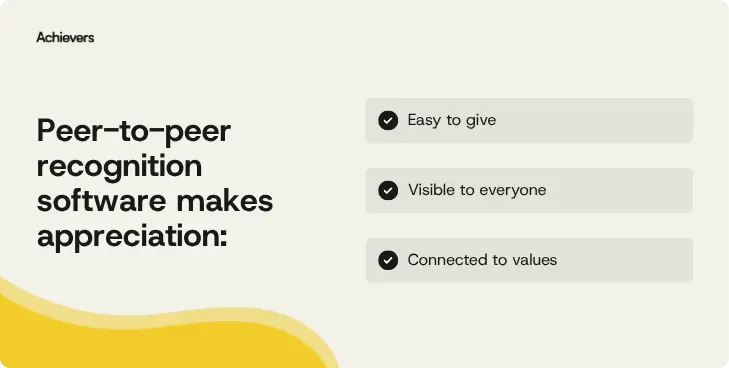
At its core, peer‑to‑peer recognition software does three essential things:
- Makes appreciation easy for employees to give and receive
- Creates visibility so recognition doesn’t disappear into inboxes or chat threads
- Connects recognition to the values and behaviours that matter most
When done well, it turns everyday appreciation into a shared, repeatable habit rather than a nice‑to‑have initiative.
Peer‑to‑peer recognition at a glance
Here’s a high‑level view of how leading peer‑to‑peer recognition software platforms compare for UK organisations.
Comparing the top peer‑to‑peer recognition software platforms in the UK
Peer‑to‑peer recognition software is widely available, but not all platforms deliver the same impact. For UK organisations navigating hybrid work, distributed teams, and rising expectations around culture and engagement, recognition needs to do more than exist. It needs to stick.
To create this comparison, we reviewed peer‑to‑peer recognition software platforms that are actively used by UK organisations, appear consistently in high‑intent Google search results for recognition and employee engagement, and offer a dedicated peer‑to‑peer recognition experience, not just a minor add‑on within a broader tool.
Each platform was then assessed using criteria grounded in what UK HR and people leaders value most today, informed by Achievers Workforce Institute research, buyer behaviour, and real‑world recognition programme design.
Our evaluation focused on five core criteria:
- Ease of use: How easily employees can recognise one another on a regular basis.
- Visibility across hybrid teams: Whether recognition is public, social, and visible across locations.
- Values alignment: How clearly recognition reinforces organisational values and behaviours.
- Reward relevance: Whether rewards feel meaningful and accessible to UK employees.
- Insight: The quality of reporting and analytics leaders can act on.
The result is a practical comparison, not a popularity ranking, designed to help UK organisations understand how different platforms support peer‑to‑peer recognition in distinct ways.
1. Achievers
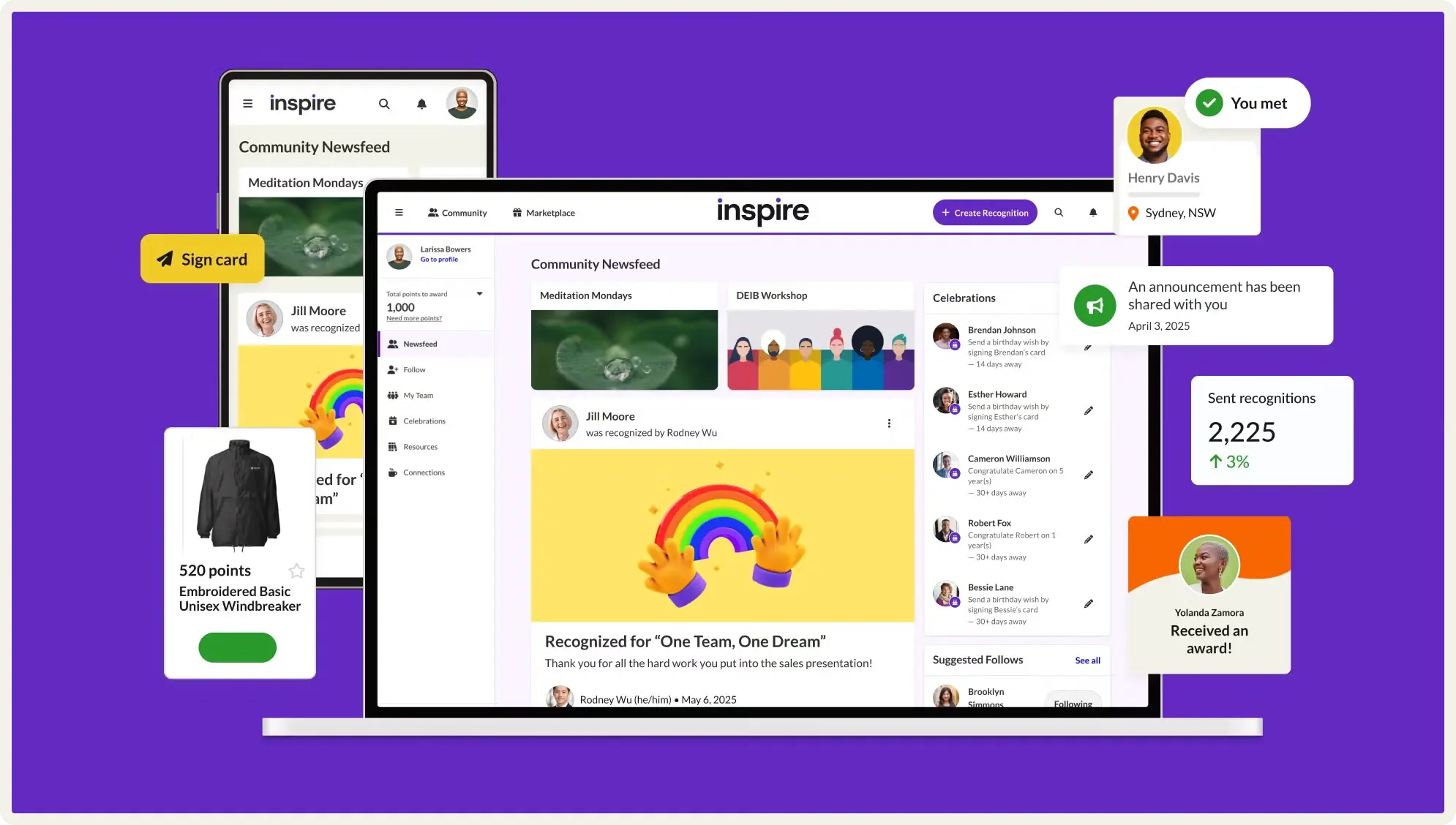
Best for: UK organisations that want peer‑to‑peer recognition to shape culture, strengthen connection, and deliver measurable results, not just surface‑level activity.
Achievers is built to make recognition a daily habit rather than a one‑off initiative. Peer‑to‑peer recognition is central to the platform, enabling employees to recognise one another in real time, directly tied to company values and visible across the organisation.
Where Achievers stands out for UK teams is balance. Recognition is easy for employees to give, meaningful for recipients, and genuinely useful for leaders. Integrations with Microsoft Teams, Microsoft 365, Slack, and HR systems help recognition live in the flow of work, while analytics provide clear insight into which behaviours are being reinforced and where engagement may be slipping.
Why it works: Achievers connects peer recognition, values, rewards, and insight in one system, helping UK organisations move from recognition activity to recognition impact.
2. Nectar HR
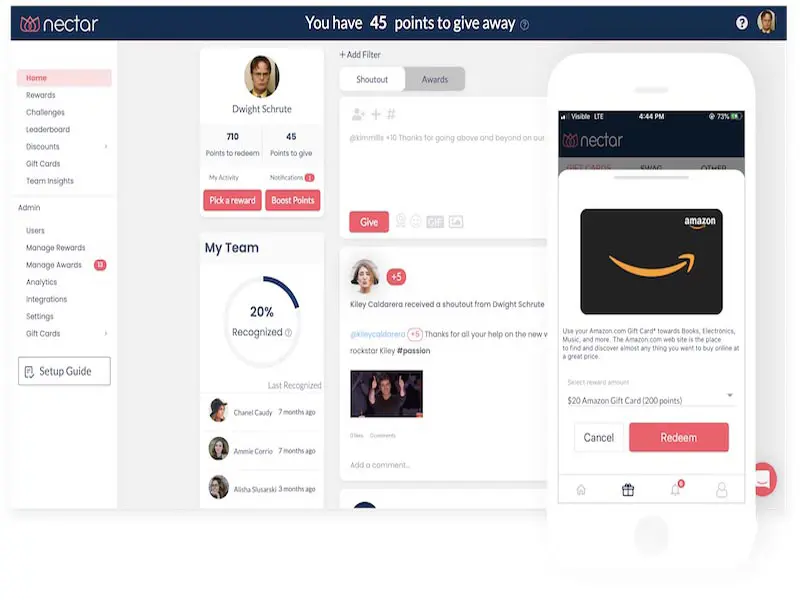
Best for: Mid‑sized organisations looking for visible, values‑driven peer recognition with a social feel.
Nectar HR focuses on peer‑to‑peer recognition through a central social feed where appreciation is shared publicly. Recognition can be tied to company values and supported by points and rewards, making it easy for teams to participate consistently.
Nectar works well for organisations prioritising visibility and participation, though larger or more complex environments may want to evaluate how insight and scalability support long‑term culture strategy.
Why it works: Nectar HR keeps peer recognition front and centre, helping appreciation feel social and frequent rather than formal.
3. Bonusly
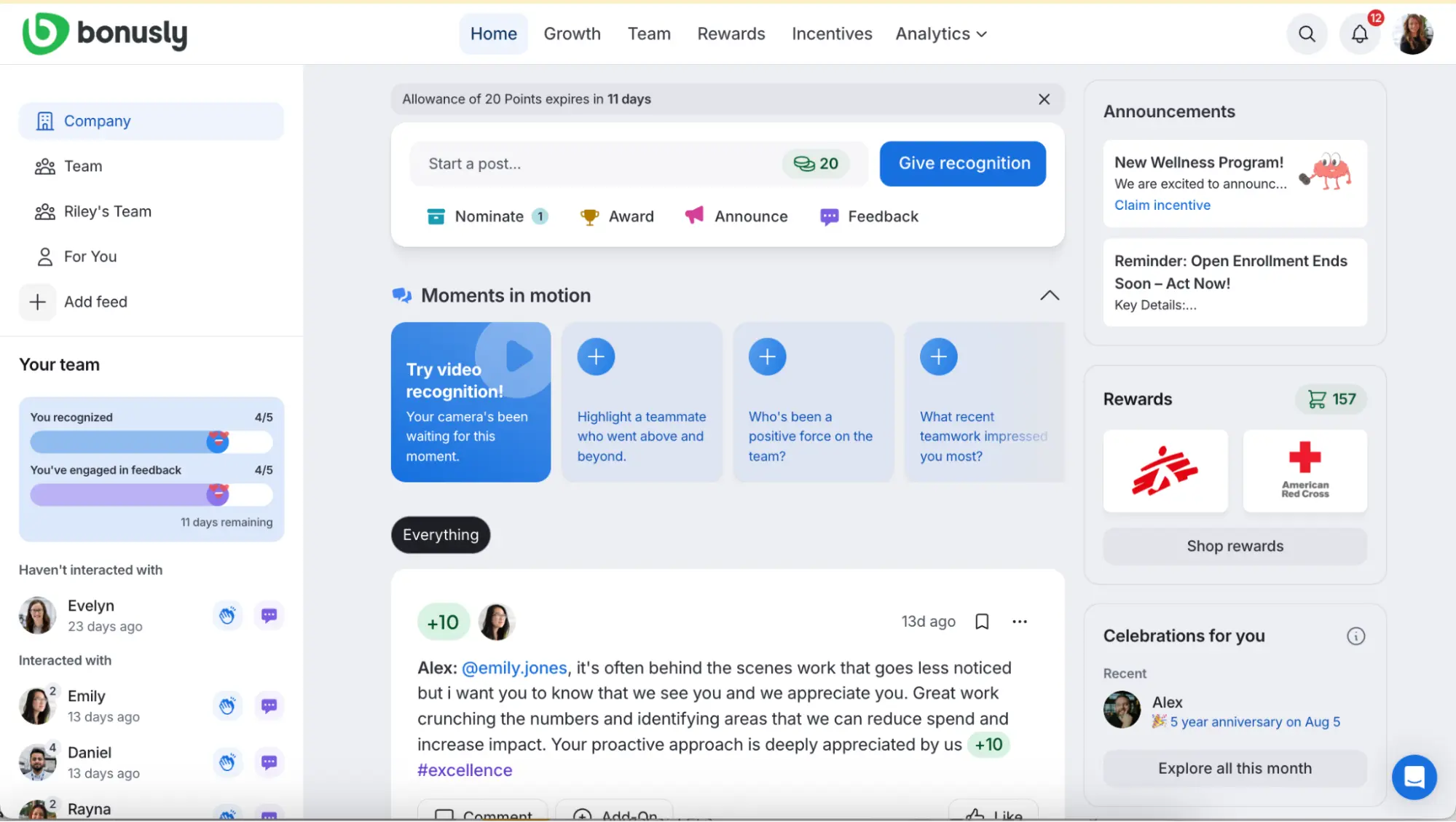
Best for: Smaller UK teams that want fast, informal peer recognition embedded in collaboration tools.
Bonusly is known for its lightweight, points‑based peer‑to‑peer recognition model, often used directly within tools like Slack and Microsoft Teams. Recognition is quick, friendly, and easy to adopt.
While effective for encouraging everyday appreciation, organisations with more advanced reporting or values‑driven programmes may find the platform better suited to simpler use cases.
Why it works: Bonusly lowers the barrier to recognition and encourages frequent peer‑to‑peer appreciation.
4. Motivosity
Best for: Organisations focused on building community and belonging through social recognition.
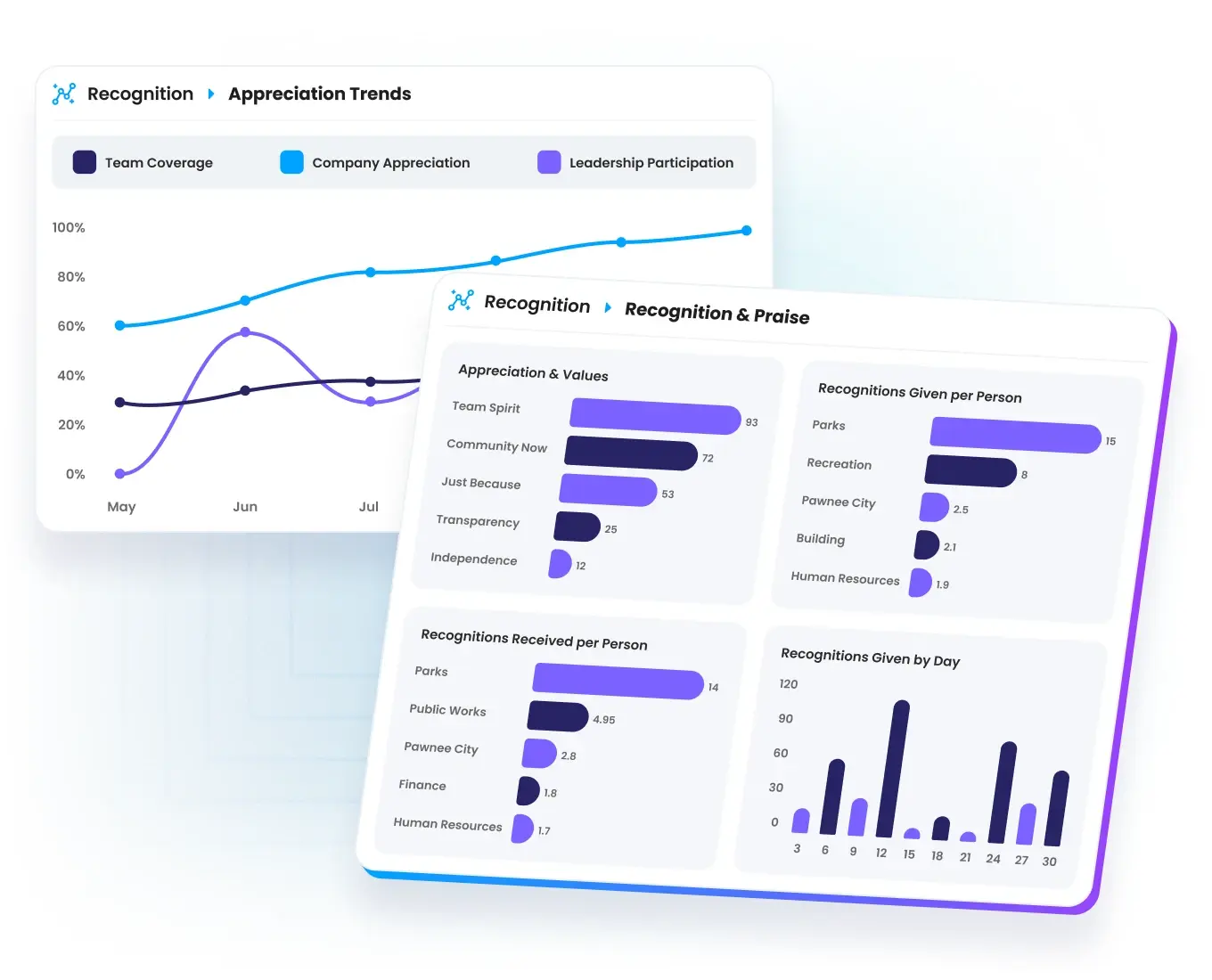
Motivosity blends peer recognition with community‑style features such as social feeds and shared moments. Recognition is visible and encourages participation, supporting connection across teams.
Motivosity is often chosen by organisations prioritising engagement and morale, though those seeking deeper analytics or HR integration may need to assess fit carefully.
Why it works: Motivosity makes recognition feel communal and people‑led rather than programme‑driven.
5. Mo (UKG Pro)
Best for: Organisations already using UKG Pro that want recognition closely linked to performance and feedback.
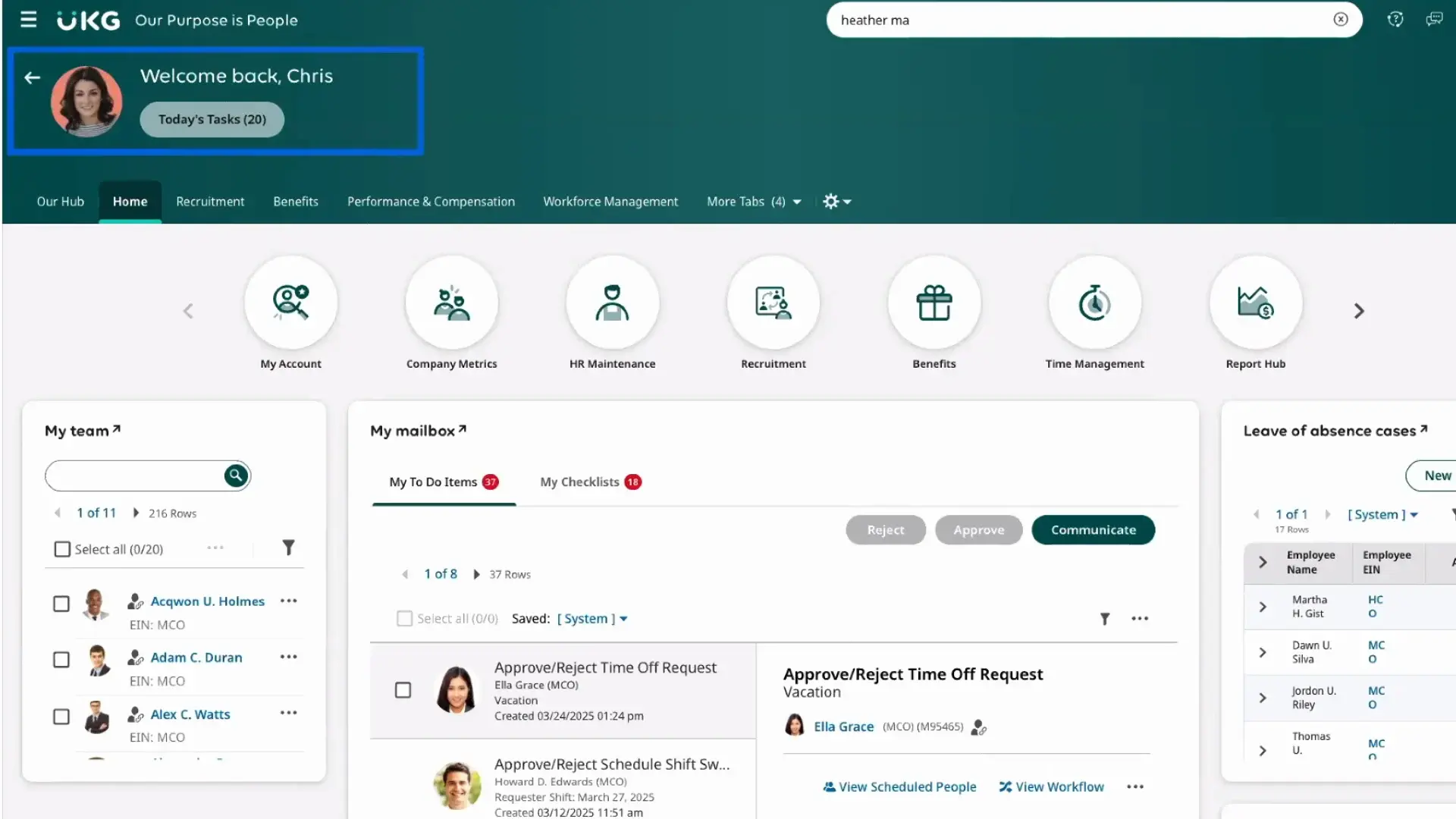
Mo integrates peer‑to‑peer recognition into broader performance management and feedback workflows. Recognition supports regular check‑ins and continuous improvement rather than standing alone as a separate experience.
This approach suits organisations that see recognition as part of ongoing performance conversations.
Why it works: Mo connects peer recognition to feedback and performance, helping appreciation support development.
6. Kudos
Best for: Teams seeking structured, public peer recognition with reporting.
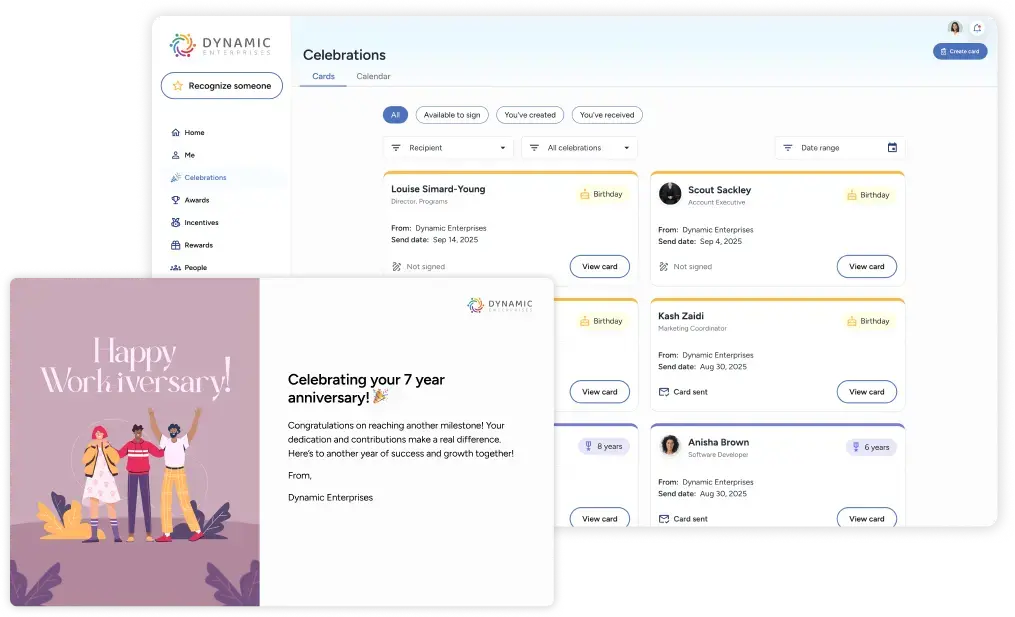
Kudos focuses on structured peer‑to‑peer recognition, often shared publicly to reinforce positive behaviours. Analytics help leaders understand participation and trends, supporting consistency across teams.
Kudos is commonly used where recognition needs clear structure and visibility.
Why it works: Kudos makes recognition visible and measurable, helping reinforce consistency across the organisation.
7. GoProfiles
Best for: Organisations using Microsoft environments that want recognition embedded in employee profiles.
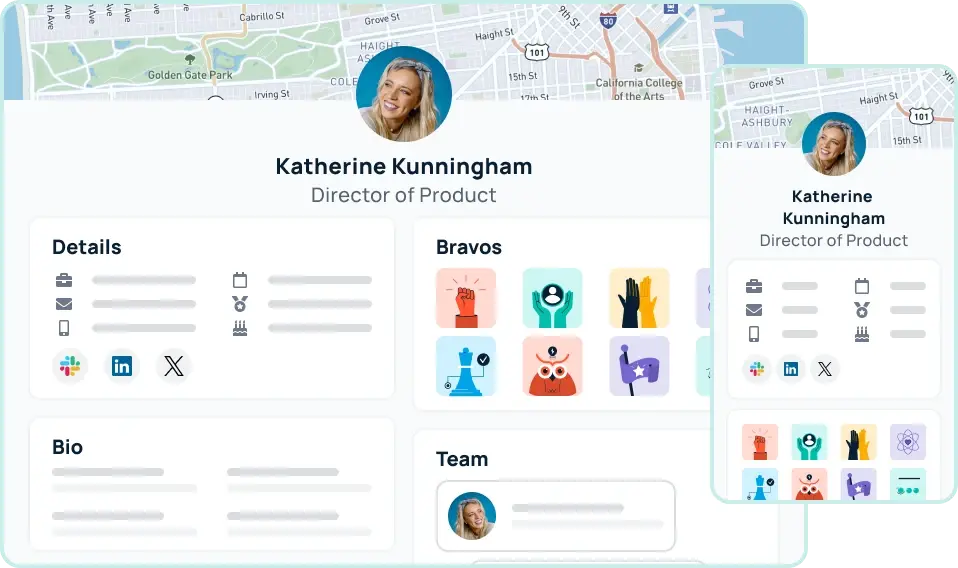
GoProfiles enables peer recognition directly within employee profiles, often inside Microsoft 365 ecosystems. Recognition is simple and profile‑based, helping colleagues see contributions at a glance.
This works best for organisations prioritising simplicity over programme depth.
Why it works: GoProfiles keeps recognition close to employee identity and everyday tools.
8. Perkbox
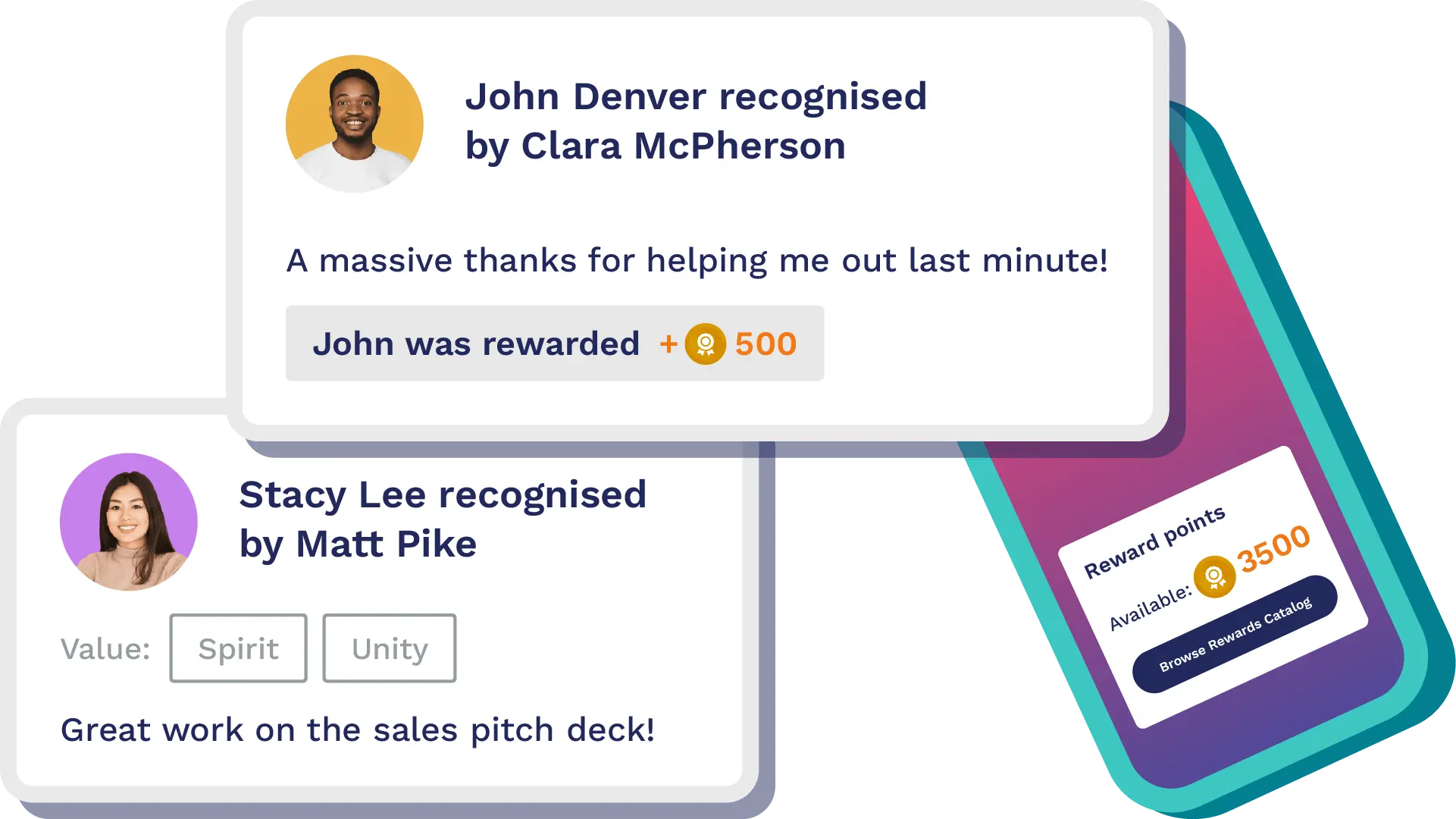
Best for: UK organisations combining recognition with benefits, wellbeing, and discounts.
Perkbox blends peer‑to‑peer recognition with perks, wellbeing tools, and employee discounts. Recognition is supported by tangible benefits, appealing to organisations looking for a broad employee experience solution.
Recognition may feel more benefits‑led than behaviour‑driven for some use cases.
Why it works: Perkbox connects appreciation to everyday perks, making recognition immediately tangible for UK employees.
9. HeyTaco
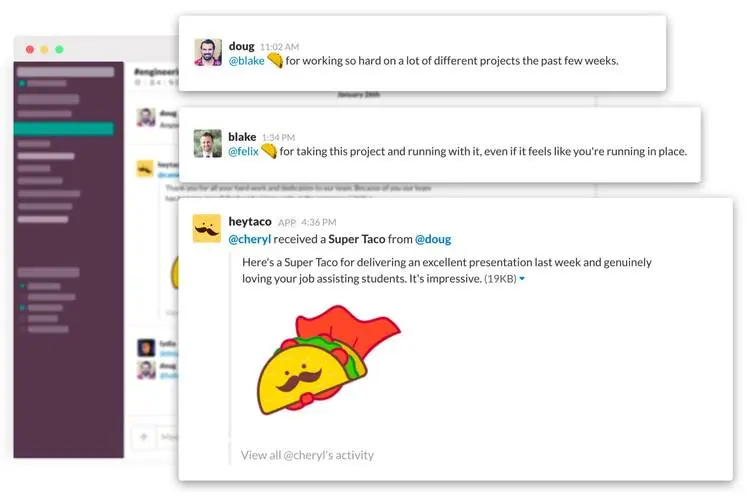
Best for: Small teams wanting playful, informal peer recognition.
HeyTaco uses a light‑hearted “taco” currency to encourage everyday appreciation. Peer‑to‑peer recognition is intentionally simple and fun, driving participation through humour and ease.
Best suited for smaller teams rather than complex organisational environments.
Why it works: HeyTaco makes recognition fun and friction‑free, encouraging frequent participation.
The takeaway: Every platform on this list enables peer‑to‑peer recognition, but how they deliver it varies widely. Some prioritise speed and simplicity. Others focus on social visibility or performance alignment. A smaller group, led by Achievers, connects recognition to values, rewards, and insight in a way that scales across UK organisations.
The right choice depends on what you want recognition to achieve: everyday appreciation, cultural alignment, stronger hybrid connection, or data‑driven action.
Why peer‑to‑peer recognition matters for hybrid and remote UK teams
Hybrid working has changed how people connect and how easily great work can go unnoticed.
Without shared office moments or informal check‑ins, recognition can quietly fall away. Work still gets done, teams still collaborate, and problems still get solved, but fewer of those moments are seen unless someone makes them visible.
Peer‑to‑peer recognition software helps bridge that distance by:
- Enabling real‑time recognition, regardless of location
- Creating shared visibility across teams, functions, and time zones
- Reinforcing connection when face‑to‑face interaction is limited
This matters because connection drives engagement. EMEA data shows that employees who feel appreciated are significantly more likely to feel a sense of belonging, align with organisational values, and commit to staying. In distributed UK teams, peer recognition becomes one of the most effective ways to create those signals of inclusion and trust.
Real‑world impact: the benefits of peer‑to‑peer recognition software
When UK organisations invest in the right peer‑to‑peer recognition software, the impact shows up quickly — and lasts. Teams don’t just feel better at work; they perform better.
That matters, because connection and clarity are currently in short supply. Achievers Workforce Institute’s EMEA State of Recognition Report shows that only 27% of UK employees feel a strong sense of belonging at work, and fewer than one‑third feel known as individuals, gaps that directly affect engagement and retention.
When peer‑to‑peer recognition is frequent, visible, and tied to values, it helps close those gaps, strengthening trust, reinforcing everyday behaviours, and supporting performance across hybrid teams.
Higher morale and engagement
Recognition from peers feels timely, authentic, and grounded in real moments — not calendar prompts. Employees feel valued for the work they contribute every day, not just during formal review cycles.
Stronger retention
Appreciation isn’t a soft benefit. When people feel genuinely recognised, they’re far more likely to see a future with their organisation and far less likely to quietly explore other options. Recognition doesn’t replace fair pay, but it plays a critical role in making work worth staying for.
Values brought to life
Company values shouldn’t live only on posters or intranet pages. When peer recognition is tied to values, those values show up in daily behaviour, reinforced by the people doing the work, not just leadership messaging.
More connected cultures
Peer‑to‑peer recognition software turns individual thank‑yous into shared moments. Recognition ripples outward, helping teams feel aligned, connected, and part of something bigger — even when they’re working across locations.
Clearer insight into what drives performance
Recognition leaves a trail. Over time, peer‑to‑peer recognition software reveals which behaviours teams value most, where collaboration thrives, and what’s really driving results. It’s real‑time cultural insight, without guesswork.
In short, peer‑to‑peer recognition software doesn’t just support appreciation, it puts it to work. And as we’ll explore next, not all platforms are equally equipped to do that well.
Key features to evaluate in peer‑to‑peer recognition software
Not all peer‑to‑peer recognition software is created equal. Some platforms make recognition effortless and meaningful. Others look polished in a demo and quietly lose momentum after launch.
Before comparing vendors, it helps to understand what actually matters, especially for UK organisations managing hybrid, frontline, and distributed teams.
Think of this as your buyer’s checklist, mapping essential features to real workforce needs.
Rewards and recognition options
Recognition should lead — rewards should reinforce. When comparing peer‑to‑peer recognition software, look for:
- Points‑based recognition that offers flexibility and choice
- Digital and physical rewards, including gift cards, experiences, or charitable giving
- Milestone recognition that goes beyond long service awards
- Company‑branded rewards that reinforce identity and pride
If rewards feel transactional or disconnected from behaviour, engagement fades.
Best fit for: Organisations focused on retention, motivation, and fair recognition across roles and locations.
Platform integrations and usability
Recognition only works if people use it. Strong peer‑to‑peer recognition software integrates into the tools UK employees already rely on, including:
- Microsoft 365, Microsoft Teams, Slack, and HRIS platforms
- Mobile‑first access for frontline or desk‑based teams
- Minimal clicks to recognise someone in the flow of work
- Seamless access across desktop, tablet, and mobile
If recognition requires extra steps, participation drops — quickly.
Best fit for: Hybrid, remote, and frontline‑heavy organisations.
Customisation and values alignment
Peer recognition shapes culture when it reinforces what matters most.
Ask vendors:
- Can recognition be directly linked to company values?
- Can teams or locations tailor recognition moments?
- Does the platform prompt meaningful, value‑based recognition?
- Can programmes evolve as priorities change?
Values‑aligned recognition turns principles into visible behaviours employees understand and repeat.
Best fit for: Organisations focused on culture, behaviour change, and alignment.
Real‑time recognition and analytics
Recognition shouldn’t be a black box.
Modern peer‑to‑peer recognition software gives leaders insight into:
- Who is recognising and who is being missed
- Which values are reinforced most often
- Recognition frequency and reach
- Trends across teams and locations
Real‑time recognition reinforces behaviour immediately, while analytics help leaders act with confidence.
Best fit for: Organisations that want recognition to inform decisions, not just decorate culture.
Quick comparison checklist: matching features to goals (UK)
Use this checklist to connect what you want recognition to achieve with the platforms best suited to deliver it.
Want to improve retention?
→ Prioritise frequent, values‑based recognition with meaningful rewards, offered by platforms like Achievers, Kudos, or Perkbox, where appreciation reinforces behaviours people want to repeat — not just outcomes.
Supporting hybrid teams across the UK?
→ Look for strong integrations and mobile access, such as Achievers, Bonusly, HeyTaco, or GoProfiles, so recognition fits naturally into everyday work across locations.
Building culture intentionally?
→ Choose platforms with customisation, values tagging, and visible social recognition, like Achievers, Nectar HR, or Motivosity, where recognition clearly signals what “good” looks like.
Need proof it’s working?
→ Analytics are essential. Platforms such as Achievers and Kudos provide insight into participation, behaviours, and trends, helping leaders understand what’s landing and where to focus next.
The right peer‑to‑peer recognition software doesn’t just check boxes. It supports how people across the UK actually work, connect, and contribute — every day.
Recognition that delivers results doesn’t happen by chance, it’s designed
Every peer‑to‑peer recognition platform on this list makes appreciation possible, but the way they bring it to life varies widely. Some are built for quick wins and simplicity. Others prioritise social visibility. A smaller group goes further — connecting recognition to values, meaningful rewards, and real insight in a way that scales across a UK workforce.
Choosing the right platform comes down to what you want recognition to actually achieve: frequent, genuine appreciation; reinforcement of the behaviours your culture depends on; stronger connection across hybrid teams; and insight leaders can use to make better decisions.
That’s where Achievers stands apart, helping UK organisations move beyond recognition activity to recognition impact, and turning everyday appreciation into measurable engagement, retention, and performance outcomes.
Peer-to-peer recognition software FAQs
Key insights
- Peer‑to‑peer recognition works best when it reflects everyday collaboration, not just formal achievements
- In hybrid UK workplaces, visible, real‑time recognition is one of the strongest drivers of connection and belonging.
- The most effective recognition platforms link appreciation to values and insight, turning culture into measurable results.
| Platform | Peer-to-peer recognition | Values-based recognition | Rewards included | Integrations | Best fit |
|---|---|---|---|---|---|
| Achievers | Real-time, social, organisation-wide | Deeply embedded and measurable | Global rewards marketplace | Workday, Microsoft Teams, 365, Slack, HR systems | Global and UK organisations focused on culture, insight, and measurable impact |
| Nectar HR | Social and highly visible | Tied to company values | Points-based rewards | HRIS, communication tools, and SSO providers | Mid-sized organisations prioritising visibility and participation |
| Bonusly | Fast, informal recognition | Tied to values | Points-based rewards | Slack, Microsoft Teams | Smaller teams wanting lightweight, high-frequency recognition |
| Motivosity | Social, community-driven | Supported but less structured | Rewards included | HRIS, communication tools, and SSO providers | Organisations focused on engagement and belonging |
| Mo (UKG Pro) | Embedded in feedback workflows | Linked to performance | Not a primary focus | Within UKG Pro ecosystem | Organisations connecting recognition to performance and development |
| Kudos | Structured and public | Strong values alignment | Includes rewards | Major communication and HR tools | Teams prioritising structure, visibility, and reporting |
| GoProfiles | Profile-based recognition | Not a central focus | Not emphasised | Microsoft 365 environments | TOrganisations wanting simple recognition within Microsoft tools |
| Perkbox | Part of a broader experience | More perks-led than values-led | Strong perks and discounts | Focused on HR and system administration | UK organisations combining recognition with benefits and well-being |
| HeyTaco | Informal and playful | Not values-based | Internal “taco” currency | Slack, Microsoft Teams | Small teams looking for fun, simple recognition |