Table of contents
Create a culture that means business™
Schedule a demo with an Achievers solution expert today.


 Copy URL
An employee recognition program helps organisations in Singapore improve engagement, retention, and performance by making great work visible and valued. That matters more than ever. The latest research from the Singapore State of Recognition Report shows only 24% of employees feel meaningfully recognised, and 73% are actively job hunting. Hybrid work has made recognition harder to deliver consistently, while high expectations and fast pace leave little room for feedback or clarity in the moment.
And that’s the real issue. People don’t need more pressure — they need more signals that what they do matters. Recognition provides that clarity. It helps people feel seen, heard, and appreciated, while giving organisations a practical way to strengthen connection, performance, and retention.
This guide walks through how to build a recognition program that works in Singapore — where results matter, and people do too.
What an effective employee recognition program is (and what it isn’t)
An employee recognition program is a structured way to consistently acknowledge the behaviours and contributions that matter most to your organisation. It’s values‑aligned, behaviour‑reinforcing, and designed to show people, clearly and often, how their work connects to purpose and performance.
And here’s what it isn’t: a once‑a‑year awards night, a spot bonus with no context, or a rewards catalogue masquerading as culture. In Singapore workplaces, recognition and rewards are often blurred, but they’re not the same. Rewards support recognition; they don’t replace it.
Key elements of effective recognition programs in Singapore
Instant, in‑the‑moment recognition
In Singapore’s fast‑moving workplaces, timing matters. Recognition is most effective when it happens close to the moment of impact — not weeks or months later. Instant, spot recognition reinforces what “good” looks like in real time, helping people course‑correct, build confidence, and keep momentum in a high‑performance environment.
Peer‑to‑peer recognition that fills the manager gap
Manager recognition alone isn’t enough, especially in organisations where coaching time is limited. Peer‑to‑peer recognition gives everyone a voice in reinforcing great work, strengthening connection across teams and reducing over‑reliance on already‑stretched managers.
Digital‑first recognition for hybrid teams
Hybrid work has changed how recognition shows up. Effective programs are built into the flow of work, with digital recognition that integrates seamlessly into tools employees already use — whether that’s Microsoft Teams, Slack, or core HR systems.
Personalised reward choice that reflects local preferences
Recognition lands better when it feels personal. In Singapore, that often means flexible reward choice — from vouchers and experiences to wellness and lifestyle services — allowing people to choose what’s meaningful to them, without adding friction for HR.
Values‑aligned recognition that creates clarity
When recognition is tied to values, it does more than say “thank you” — it shows people how the organisation expects work to be done. This is critical in APAC, where very few employees see company values consistently reflected in day‑to‑day behaviour. Recognition turns vague values into clear actions.
Data and analytics that keep recognition fair and effective
What gets measured gets better. Strong recognition programs use data to track frequency, participation, and distribution, helping organisations spot gaps, reduce bias, and ensure recognition is equitable across teams, roles, and work locations.
Mobile‑first access for everyday recognition
With mobile usage a key part of daily life, recognition needs to be just as accessible. Mobile‑first experiences make it easy for employees to recognise great work in the moment — whether they’re at a desk, on the move, or working remotely.
How to build an employee recognition program in Singapore: A step-by-step framework
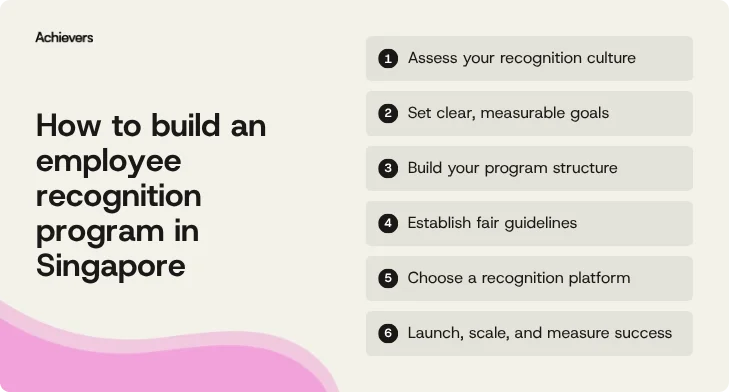
Building an employee recognition program that works in Singapore doesn’t require guesswork — but it does require intention. The most effective programs are designed deliberately, grounded in local realities, and built to scale as work changes.
Here’s how to get started:
1. Assess your current recognition culture
Before you build anything new, you need a clear picture of what’s happening today. In Singapore, 64% of employees receive recognition only a few times a year, which creates clear gaps in clarity, connection, and motivation.
Look for cultural blockers like hierarchical feedback norms or limited manager bandwidth, and check for hybrid blind spots where great work may be going unseen. Finally, assess whether your approach aligns with compliance expectations around fairness and inclusion — because recognition only works when people trust the system behind it.
2. Set clear, measurable program goals
Once you understand where recognition is breaking down, the next step is deciding what your employee recognition program is meant to change. Clear goals give the program focus and prevent it from becoming another well‑intentioned initiative with no real impact.
Start by anchoring your goals to the outcomes businesses care most about. That might mean reducing turnover in hard‑to‑replace roles, strengthening how company values show up in day‑to‑day work, or improving belonging and connection across hybrid teams. The key is specificity. When goals are measurable, recognition becomes a tool for progress, not just appreciation.
3. Build your recognition program structure
With your goals defined, it’s time to design the structure that makes recognition easy to understand and even easier to use. Start with program naming and branding that feels inclusive and culturally neutral — especially important in Singapore’s diverse workplaces.
Next, define how recognition will show up day to day. The best programs support multiple recognition types, including everyday social recognition, peer‑to‑peer moments, manager‑driven acknowledgement, nominations, well‑being recognition, and meaningful milestones. When structure is thoughtful, recognition feels consistent, credible, and part of how work actually gets done.
4. Establish inclusive and fair program guidelines
For a recognition program to work, people need to trust it. That starts with clear guidelines that define which behaviours the program is designed to reinforce — and why those behaviours matter. When expectations are explicit, recognition feels earned and meaningful, not arbitrary or performative.
Set simple, transparent criteria for nominations and awards so recognition is easy to give and easy to understand. Then pay attention to how recognition plays out over time — across teams, roles, and ways of working — to make sure it’s showing up fairly for everyone. Because that’s the difference between a program people believe in and one they quietly ignore.
5. Choose a recognition platform
The right platform should make recognition easy to give, easy to see, and easy to sustain. Look for tools that support peer‑to‑peer recognition, integrate seamlessly with the systems your teams already use, and offer a points‑based rewards experience with access to local merchants.
Strong platforms also make recognition visible. Analytics and manager insights should show who’s being recognised, how often, and where momentum is building or fading. There’s no shortage of recognition platforms in the APAC market — the best choice is the one that fits your goals, supports fairness, and makes recognition feel like part of everyday work, not another tool to manage.
6. Build a meaningful reward strategy
A meaningful reward strategy starts with understanding what people actually care about. In Singapore, 68% of employees value work‑life balance and flexibility most, while 39% place high importance on professional development. That means rewards work best when they support real life — saving time, supporting well‑being, or helping people grow — rather than offering something flashy but disconnected from day‑to‑day needs.
But rewards aren’t the headline — recognition is. The moment of appreciation is what creates meaning; the reward simply helps mark it. When rewards support recognition (and don’t try to steal the spotlight), appreciation feels genuine, motivation stays high, and culture doesn’t turn into a points‑collecting exercise.
7. Launch your recognition program
How you launch your recognition program sets the tone for everything that follows. Start by equipping managers first — not with long training sessions, but with clear expectations and practical examples of what good recognition looks like. Then run a pilot with early adopters to test the experience, surface friction points, and build confidence before rolling it out more broadly.
From there, support the launch with simple, multi‑channel internal communication that shows recognition in action, especially in hybrid settings where great work can be harder to see. Kick things off with an organisation‑wide moment, like a short recognition campaign or peer‑to‑peer challenge, to signal that recognition isn’t a side initiative. It’s how work gets noticed, celebrated, and repeated.
8. Sustain and scale the program
How you launch your recognition program sets the tone for everything that follows. Start by equipping managers first with clear expectations and practical examples of what good recognition looks like. Then run a pilot with early adopters to test the experience, surface friction points, and build confidence before rolling it out more broadly.
As the program grows, use quarterly business reviews to show where recognition is gaining traction and where it needs more support. Keep investing in manager coaching so recognition stays meaningful, consistent, and relevant. Programs stay strong when leaders keep recognition visible, reinforced, and connected to real outcomes.
9. Measure success and adjust
Measurement is what keeps a recognition program effective over time. The right signals show whether recognition is happening consistently, reaching the right people, and supporting the outcomes you care about.
Focus on a small set of indicators, like recognition frequency and distribution, engagement and belonging trends, intent to stay and turnover, reward usage, and whether recognition is showing up evenly across office‑based and remote teams. Use what you learn to adjust and improve. Recognition works when it keeps up. When it doesn’t, people notice.
Budgeting for a recognition program in Singapore
Budgeting for an employee recognition program is about deciding how recognition shows up consistently — not just how much it costs. In Singapore, effective budgets are designed to support frequent, inclusive recognition across the workforce, while standing up to scrutiny around fairness, value, and impact.
Here’s what you need to know:
- Focus on consistency, not one‑off spend: Budgets should support regular recognition throughout the year. Smaller, ongoing moments reinforce behaviour and connection far more effectively than occasional large awards.
- Design for business-wide participation: Budgeting should make it easy for recognition to reach across roles, teams, and work arrangements — not concentrate it in a few visible areas of the organisation.
- Link spend to outcomes leaders care about: Use Singapore‑specific engagement, belonging, and retention data to show how recognition supports business priorities. The goal is clarity on impact, not line‑item justification.
- Build fairness into the budget from the start: Recognition budgets should support equitable access and align with local expectations around fairness and inclusion, so appreciation feels credible and trusted across the workforce.
How to launch and sustain your recognition program
The goal of launching a program is simple: make recognition easy to use, easy to see, and strong enough to last well beyond launch day.
Here’s how:
- Enable managers first: Managers play an outsized role in whether recognition sticks, yet our reporting tells us that only 13% of employees receive regular coaching. Give managers clear guidance, simple tools, and real examples so recognition doesn’t feel like another task.
- Keep communication simple and inclusive: Launch messaging should clearly explain why recognition matters, how it works, and how everyone can participate — without jargon or over‑engineering.
- Design for hybrid from day one: Show how recognition works across locations and roles, making sure remote and frontline employees are just as visible as those in the office.
- Build early momentum: Short launch campaigns, peer‑to‑peer challenges, or spot recognition moments help normalise participation and signal that recognition is meant to be used often.
- Embed recognition into everyday rhythms: Reinforce recognition in weekly huddles, retrospectives, and townhalls, and encourage managers to model the behaviour consistently. What leaders do regularly is what teams repeat.
Compliance must-haves for building an employee recognition program in Singapore
Building an employee recognition program in Singapore also means understanding the local rules that shape how recognition, rewards, and employee data are handled. You don’t need to turn recognition into a compliance exercise, but a few guardrails help ensure the program remains fair, trusted, and sustainable.
- Fair and inclusive recognition: Recognition programs should align with the Tripartite Guidelines on Fair Employment Practices (TAFEP), which emphasises fair treatment and equal opportunity. Clear criteria and consistent access help ensure recognition feels earned, not selective or biased.
- Clear eligibility and participation rules: Be clear about who can participate and how recognition applies across different roles and employment types covered under the Employment Act. When eligibility is easy to understand, recognition feels more credible and easier to manage.
- Rewards and tax awareness: Some recognition rewards may be considered benefits‑in‑kind for tax purposes, depending on how they’re structured. Staying aware of IRAS guidance helps organisations design reward strategies that are simple, sustainable, and free of surprises.
- Data protection and privacy: Recognition platforms often involve employee names, activity, and participation data. Programs should align with the Personal Data Protection Act (PDPA) by being transparent about how data is used and keeping it secure.
- Designing with future fairness in mind: Singapore’s upcoming Workplace Fairness Act reinforces the importance of fairness and consistency at work. Recognition programs built with these principles in mind are already aligned with where regulation is heading.
This article provides general information only and does not constitute legal or tax advice. Requirements under local guidelines may vary. Consult qualified advisors and official agencies.
What successful recognition looks like: APAC success stories
Recognition works best when it’s designed with clear intent and used consistently. These examples show what that looks like in practice:
Coles
Coles wanted to increase engagement with its recognition program and make appreciation an easy, meaningful way to recognise everyday behaviours across its 135,000‑person workforce. Recognition needed to reach people consistently, not just surface during major milestones.
To do that, Coles partnered with Achievers and launched an Employee Appreciation Week supported by a multi‑channel approach. The program encouraged peer‑to‑peer and manager recognition, made recognition visible across the organisation, and ensured access for a hybrid workforce.
What happened:
- 32,000+ recognitions sent
- 2,775+ boosts received
- 125,000+ comments and likes
- A clear spike in platform engagement during the campaign
Coles’ results show what’s possible when recognition is easy to use, highly visible, and actively encouraged.
Orica
Orica wanted to increase employee engagement across its enterprise workforce, where recognition activity was low, and many employees were disconnected from traditional digital channels. The challenge was making recognition accessible, motivating, and relevant for people who don’t sit behind a desk.
To address this, Orica ran a one‑month, company‑wide recognition campaign through their Achievers platform, built around doubled points. Individual contributors received points to award, and managers were given increased recognition budgets to encourage participation.
What happened:
- 17,000+ recognition moments generated
- Manager participation increased by 43%
- Individual contributor participation increased by 1,138%
The campaign drove a clear shift in recognition behaviour, helping build a stronger culture of appreciation across the organisation.
Turn recognition program into your competitive advantage
Recognition is how companies in Singapore create clarity, build belonging, and keep great people. When recognition is frequent, values‑aligned, and easy to use, it becomes one of the fastest ways to shape culture and reinforce what success looks like every day.
When recognition is built well, it helps people stay engaged, stick around longer, do their best work, and lead with more clarity and confidence. In a market where expectations are high and talent has options, those outcomes matter now — not later.
If you’re ready to turn recognition into a real advantage, Achievers is ready to help.

Employee recognition program in Singapore FAQs
Key insights
- A recognition program is a practical system Singapore organisations use to create clarity, strengthen belonging, and retain talent in high‑performance environments.
- Recognition works best when it’s frequent, values‑aligned, easy to use, and visible in everyday work — not saved for special occasions.
- When recognition is designed intentionally and supported by the right tools, data, and leadership behaviours, it delivers clear results across engagement, productivity, and manager effectiveness.