Table of contents
Create a culture that means business™
Schedule a demo with an Achievers solution expert today.


 Copy URL
Employee wellness programs are the workplace equivalent of a well-stocked survival kit — thoughtfully designed to keep employees mentally sharp, physically healthy, and emotionally upright when work (or life) gets chaotic.
At their core, these programs exist to help people feel better and do better, all while creating a more energized, connected workforce. They can include everything from simple resources to full-blown initiatives, like health risk assessments, nutrition and fitness programs, stress-management workshops, and counseling services.
And because today’s employees expect more than a fruit basket and a yoga mat, many wellness strategies also expand into areas like financial well-being support, flexible work options, and programs that nurture social connection.
The big-picture idea? Employee wellness programs exist to reduce risks, boost motivation, and build a culture where people actually want to show up. When done well, these programs align with organizational goals, shape positive habits, and create a sense of belonging that fuels both employee satisfaction and business performance. Translation: happy humans, healthier companies.
What is an employee wellness program?
An employee wellness program is basically an organization’s way of saying, “Hey, we actually want you to feel like a functioning human being, not a caffeine-powered stress robot.” It’s a structured set of initiatives designed to support the physical, mental, emotional, and sometimes even financial well-being of employees. Think of it as a toolkit for feeling and working better.
A solid wellness program can include things like:
- Fitness or nutrition resources help employees build healthier habits that improve energy, focus, and long-term well-being, ultimately reducing absenteeism and burnout.
- Stress-management sessions give employees practical tools to navigate pressure, boosting resilience and maintaining productivity during demanding periods.
- Mental health support ensures employees have access to care when they need it, on days like World Mental Health Day and beyond. This helps create psychological safety at work and reducing the risk of disengagement or turnover.
- Preventive health screenings catch potential issues early, helping employees stay healthier while lowering long-term healthcare costs for both the individual and the organization.
- Flexible work options enable employees to balance personal and professional demands, increasing satisfaction, trust, and retention.
Social or community-building activities strengthen connection and belonging, which are proven to enhance collaboration, morale, and overall engagement.
Key drivers behind workplace employee wellness initiatives
Employers introduce wellness programs for a simple reason: healthy, happy employees make work way less chaotic — and much more productive.
On the business side, wellness programs are a strategic power move. Companies want to reduce healthcare costs, lower absenteeism, and prevent the kind of burnout that turns high performers into people who stare blankly at their screens wondering why they opened that tab. A well-run program can boost engagement, improve retention, and help shape a culture where employees feel supported rather than squeezed. In other words, investing in wellness is cheaper than constantly replacing people who’ve run out of steam.
But the motivation isn’t purely financial. Employees today expect workplaces that treat them like whole people — not just task-completing machines. They want support for stress, mental health, flexibility, and the realities of modern life (like, say, juggling deadlines with dentist appointments and existential dread). Wellness programs help fill those gaps by offering resources such as counseling, fitness support, flexible schedules, and opportunities to connect socially. These offerings show employees that their well-being isn’t an afterthought but a core part of how the company operates.
Put simply: employers introduce wellness programs because it’s good for people and good for business. It meets employee needs, strengthens culture, and ultimately builds a workplace where everyone thrives—and maybe even enjoys themselves along the way.
The tangible benefits of employee wellness programs
Let’s unpack why employee wellness programs don’t just feel nice — they actually pay off. Achievers Workforce Institute (AWI) research provides a solid reality check: yes, it’s actually worth it. Not just for employees’ well-being, but for the organization’s health (figuratively and literally).
According to data from the 2026 Engagement and Retention Report, recognition plays a pivotal role in magnifying employee feelings around their well-being at work. Compared to employee who don’t feel appreciated or engaged, employees who do are 47x more likely to feel supported in their well-being. In fact, appreciation has an impact on wellness across the board, making it an important area of focus for HR and business leaders.
What employees really get out of employee wellness programs
Wellness programs aren’t just perks — they’re your workplace superpower. They can pay off big time for both employees and the company. Here’s what you can expect when your wellness initiatives hit the sweet spot:
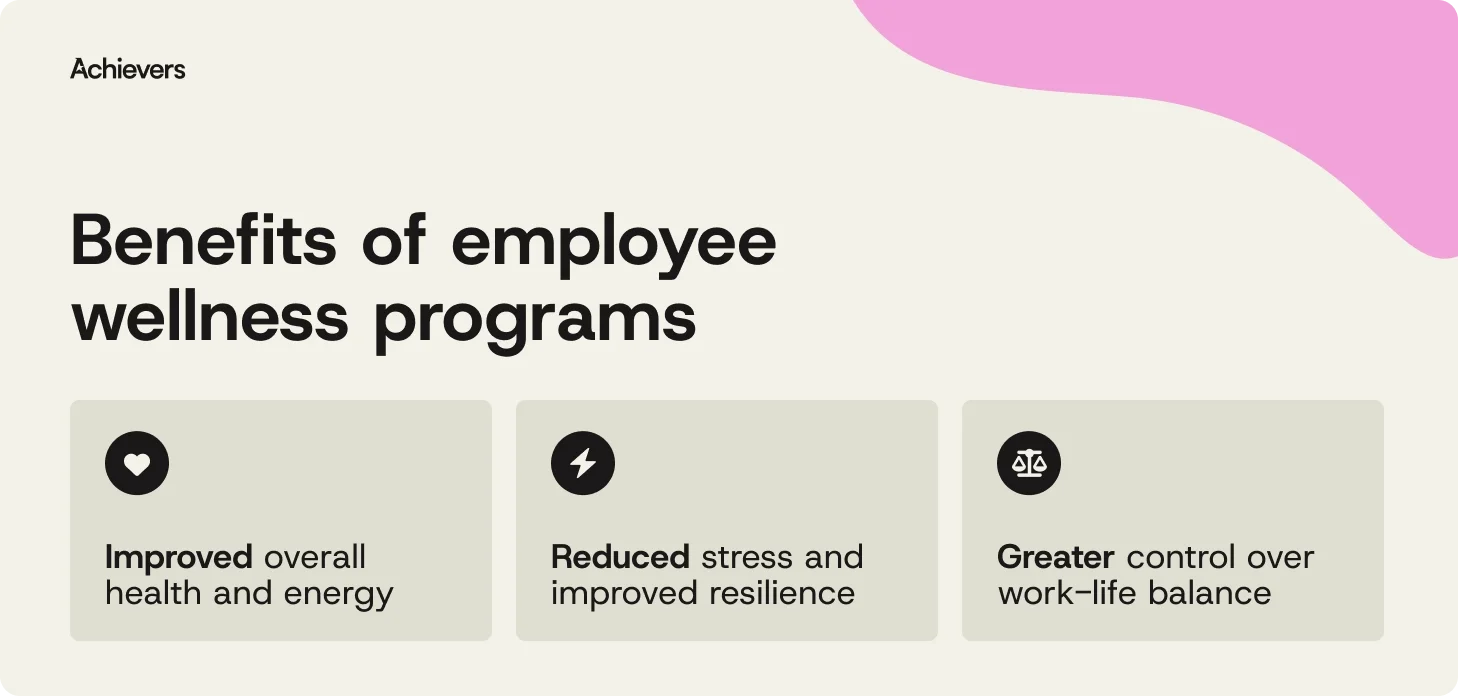
• Better overall health and energy: Employees gain access to tools and habits that help them feel physically stronger, mentally sharper, and better equipped to handle daily work demands.
• Reduced stress and improved resilience: Wellness programs give employees practical ways to manage pressure, maintain balance, and avoid burnout in fast-paced environments.
• Greater control over work–life balance: Wellness initiatives like flexible schedules and mental health resources empower employees to manage their time and personal needs without sacrificing performance.
Another biggie: belonging. AWI data highlights that the top three drivers of well-being aren’t just pay or benefits — they’re:
1. Feeling connected and appreciated
Employees with strong connection and regular recognition are 12.8x more likely to feel well-being support and 56x more likely to feel connected to company values. Appreciation boosts meaning, belonging, and emotional resilience.
2. Strong connection to people and culture
Connection dramatically improves well-being outcomes. Employees with strong peer or manager connection are 5.4x more likely to feel well-being support, 15x more likely to feel belonging, and significantly less likely to be job hunting. Human connection reduces stress and strengthens psychological safety.
3. Work–life balance
Balance is a core well-being driver: employees with work–life balance are 2.5x less likely to be job hunting, 2.5x more likely to see a long career, and far more likely to feel stable, energized, and supported. Balance protects mental health, reduces burnout, and sustains long-term performance.
What the organization gains from employee wellness
Each year in August, and on the second Saturday in June, many organizations leverage National Wellness Month and Global Wellness Day to showcase the breath of their wellness offering. From a business perspective, wellness programs shouldn’t be hawking free yoga mats — they should be touting real, measurable impact. According to Engagement and Retention Report data, a few key levers make all the difference:
Higher retention and lower turnover risk
Employees who feel appreciated and supported in their well-being are 2.5x less likely to be looking for work, reducing recruitment and onboarding costs.
Stronger engagement and productivity
Employees with high connection and recognition are more engaged (up to 4.7x more likely) and find work meaningful (3.3x more likely), driving better performance and innovation.
Greater sense of belonging and loyalty
Well-being support fosters belonging (up to 15x more likely) and connection to company values, creating a resilient, committed workforce that strengthens culture and collaboration.
Why employee wellness programs actually matter
Wellness programs aren’t optional perks — they’re essential for both employees and the organization to thrive. In 2026, employees expect support for their mental, physical, and emotional well-being, and research proves that programs focused on recognition and connection deliver real, measurable results.
Why it matters to employees
Wellness programs aren’t just feel-good extras — they’re the secret sauce for employees to thrive. Programs built on recognition, connection, and supportive leadership can supercharge well-being: appreciated employees are way more likely to feel supported, aligned with company values, and genuinely part of the team. The payoff? Less stress, better mental health, and a deeper sense of purpose at work.
What it means for organizations
Investing in employee well-being isn’t just nice — it’s smart business. Teams that feel recognized and connected are more likely to stay, be engaged, and find real meaning in their work. Recognition and belonging aren’t optional—they’re the engines that drive retention, trust, and performance.
At a strategic level
Wellness programs can’t be one-size-fits-all. To really work, organizations need to listen, act, and weave recognition, growth, and connection into everyday work. AWI data shows a gap: while 34% of HR pros feel engaged, only 25% of employees do, proving that programs must deliver real, tangible support to make a difference.
Measuring and maximizing the benefits of employee wellness programs
Employee wellness programs are an investment, and like any investment, you want to know it’s paying off. Calculating ROI means asking the right questions: Are your people happier, more engaged, less stressed, and sticking around longer? Clear goals are your North Star, guiding you toward the metrics that actually matter.
1. Define your goals
Before tracking anything, decide what success looks like:
• Boost engagement and participation
• Reduce stress and burnout
• Improve retention and loyalty
• Support overall well-being
2. Track participation and feedback
Collect both quantitative and qualitative insights:
• Monitor attendance or usage of programs
• Gather employee feedback through surveys or focus groups
• Listen for stories, anecdotes, and informal comments
3. Measure impact on key outcomes
Look for signals that wellness programs are making a difference:
• Engagement levels
• Retention and turnover trends
• Productivity and performance indicators
• Overall employee satisfaction and morale
4. Iterate and optimize
Wellness programs thrive when they evolve:
• Act on feedback and participation trends
• Test new offerings and phase out low-impact activities
• Keep programs aligned with employee needs and organizational goals
5. Report and share insights
Transparency makes ROI meaningful:
• Present clear, actionable findings to leadership
• Celebrate wins and highlight opportunities for improvement
• Use insights to justify investment and refine strategy
By following these steps, organizations can transform wellness programs from a nice-to-have perk into a measurable driver of engagement, loyalty, and overall workplace success.
Go from perks to impact
At the end of the day, employee wellness programs aren’t just feel-good perks — they’re strategic investments that pay real dividends. When thoughtfully designed and carefully measured, they boost physical and mental health, reduce stress, enhance work-life balance, and foster a sense of belonging for employees. For organizations, the payoff is equally tangible: higher engagement, improved retention, reduced absenteeism, and measurable improvements in productivity and overall culture.
The smartest first step? Take a close look at your own workplace. Assess the unique needs, challenges, and priorities of your employees, and then define a few clear metrics to track success over time. By combining a tailored approach with meaningful measurement, companies can create wellness programs that truly deliver — for both the people doing the work and the business that relies on them.
Make employee wellness programs work better with Achievers
As an employer, supporting employee wellness is key to driving engagement, productivity, and retention. With Achievers, you have the tools and support needed to create a workplace where employees feel physically, mentally, and emotionally supported, and connected to your company’s mission. Empower your teams by offering programs that promote well-being, reduce stress, and foster work-life balance.
At Achievers, we believe that well-designed wellness programs are one of the most effective ways to enhance company culture and improve overall employee health. Our platform is built to help HR leaders, managers, and employees implement wellness initiatives that make a tangible impact. With a 93% activation rate, our programs are proven to deliver measurable improvements in employee well-being and organizational outcomes.
Let us help you cultivate an environment where every employee feels supported, energized, and equipped to thrive—both at work and beyond.
Benefits of employee wellness programs FAQs
Key insights
- Employee wellness programs improve well-being, reduce stress, and foster a sense of belonging
- Organizations that invest in wellness see tangible benefits like higher retention, engagement, and productivity
- Measuring and iterating wellness programs with clear goals and employee feedback ensures they deliver real impact for both people and the business
Employee wellness programs should include: Fitness or nutrition resources, stress-management sessions, mental health support, preventive health screenings, flexible work options, social activities.