Table of contents
Create a culture that means business™
Schedule a demo with an Achievers solution expert today.


 Copy URL
Employee survey tools help organizations uncover communication gaps, identify workplace issues early, and understand whether employees feel informed, supported, and connected at work. According to data from the 2026 State of Recognition Report, only 18% out of 2,500 employees surveyed feel informed when changes affect their job or company, and just 23% say communication is clear during periods of uncertainty. Effective survey tools help leaders pinpoint where communication is failing, track changes over time, and identify issues before they become retention risks.
What is an employee survey tool?
An employee survey tool is software that helps organizations collect, analyze, and act on employee feedback. Companies use these tools to measure engagement, communication, manager effectiveness, workplace culture, and other aspects of the employee experience.
Why do employee survey tools matter today?
Employee survey tools matter because they give organizations a direct view into how employees experience communication, leadership, culture, and change. Survey data helps HR and people leaders identify emerging issues, understand employee sentiment, and make informed decisions about where to focus their improvement efforts.
Who is impacted by employee survey tools?
Employees, managers, HR teams, and senior leaders are impacted by employee survey tools because each group uses feedback differently to improve workplace outcomes.
- Employees use surveys to share concerns about communication, workload, management, workplace culture, and career growth.
- Managers use survey results to identify team-level issues that may not come up in one-on-one conversations, such as unclear priorities, low morale, or gaps in communication.
- HR and people leaders use survey tools to track organization-wide trends, evaluate the effectiveness of workplace initiatives, and identify areas that may affect engagement and retention.
- Senior leaders rely on survey results to understand how business decisions, organizational changes, and company communications are being experienced across the workforce.
When do employee survey tools work and when do they fail?
Employee survey tools work when organizations collect feedback on a consistent basis, share results with employees transparently, and make visible changes based on the feedback employees share. They fail when surveys don’t result in any action or follow-through from leadership.
Where do employee survey tools show up in an organization?
Employee survey tools show up across the employee lifecycle, from onboarding and satisfaction surveys to performance reviews, workplace culture initiatives, change management, and exit interviews. Organizations use them to gather feedback during major business changes, measure employee sentiment over time, and identify any issues affecting communication, retention, and the overall employee experience.
How do employee survey tools work in practice?
Employee survey tools work by collecting feedback from employees, identifying patterns in the data, and helping leaders take action on the issues that matter to the organization.
Surveys are typically delivered at key moments across the employee lifecycle, such as onboarding, engagement check-ins, organizational changes, and exit processes. Responses are analyzed to uncover trends in areas like communication, manager effectiveness, recognition, workload, and company culture.
15 employee survey tools to build a more connected workplace
This research-backed list of 15 employee survey tools was created with a combination of vendor research, user-verified reviews from trusted platforms, including G2 and People Managing People, and direct information from Achievers.
1. Achievers
G2 rating: 4.6/5
Strengths
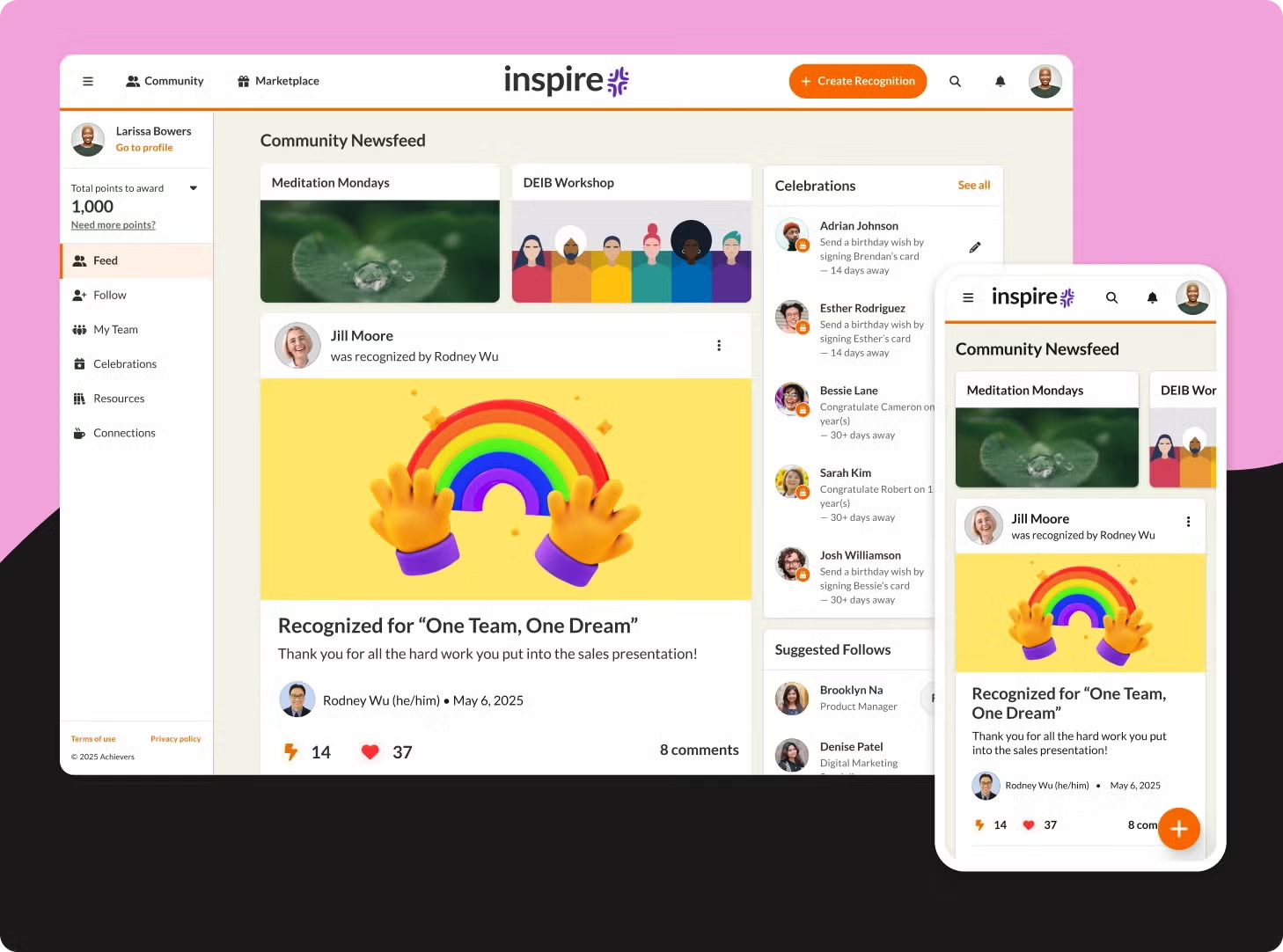
Achievers is a unified employee experience platform designed to help organizations listen, recognize, and act at scale. Its employee survey capabilities are part of a broader Voice of Employee toolkit that includes employee sentiment surveys, lifecycle feedback, quizzes, polls, and real‑time analytics, all built to surface insights and support meaningful follow‑through.
Achievers also includes recognition and rewards capabilities that can be used alongside feedback programs, including monetary and non-monetary recognition and a global rewards marketplace. The platform offers enterprise‑grade reporting, global scalability, and software integrations into several HRIS and HCM platforms, and meets the latest safety and compliance requirements.
Best for
Enterprise and mid-market organizations, starting at 500 employees, that want employee surveys as part of a broader approach to employee experience, including recognition, rewards, and ongoing listening and connection tools.
Key features
- Voice of Employee toolkit that includes surveys, quizzes, and polls, with 100+ customizable templates
- Research-backed pulse survey tool with heatmaps and leader action guides
- Near real-time data access and self-serve reporting, including the ability to create and schedule reports from a dashboard
- Admin permissions and controls to extend or limit access to reports and datasets
- Integrations with Workday, Outlook, Slack, and Microsoft products, plus an open API for additional connections
- Monetary and non-monetary recognition capabilities that can be used to support follow-through after feedback
- Global rewards marketplace spanning nearly 190 countries, with 3M+ rewards and 2.5K+ brands (as described in the positioning materials)
- Security and compliance capabilities, including ISO 27001 and SOC 2 Type 2, and compliance with GDPR and CCPA
Weakness
Achievers is designed for organizations looking to scale and those with complex or global needs. Teams looking for a simple survey tool with minimal setup may find the platform broader than what they need for basic polling.
Customer review
“Achievers is honestly one of the most uplifting platforms I’ve ever used! I love how easy it is to celebrate the amazing work happening around me, and sending appreciation feels just as good as receiving it. Every time I read through the recognition others give and receive, I can’t help but feel inspired—it’s like a constant stream of motivation that pushes me to go above and beyond. Achievers doesn’t just highlight great work; it boosts morale, builds connection, and genuinely makes me excited to contribute my best every day.” Kathryn C., via G2
2. ThriveSparrow
G2 rating: 4.3/5
Strengths
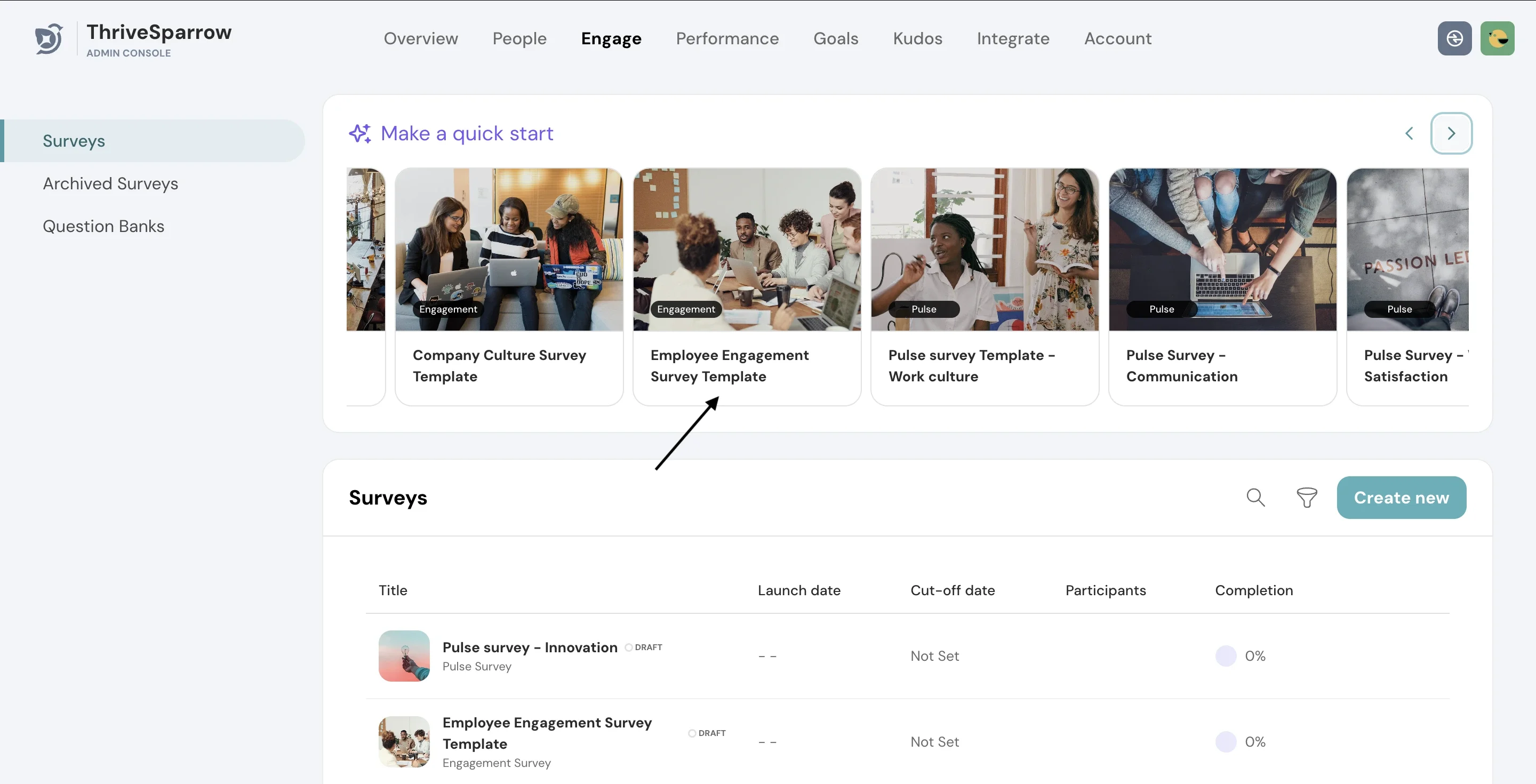
ThriveSparrow is an employee success platform that combines employee surveys with performance and engagement tools in one system. It supports continuous listening through pulse surveys and eNPS, along with AI-based sentiment analysis to help summarize themes in open-text feedback. It also offers action plans tied to survey results, plus options to reach deskless teams through QR-code surveys and multilingual surveying.
Best for
Teams that want employee surveys alongside performance feedback, goals, and check-ins in a single platform.
Key features
- Pulse surveys and eNPS surveys, with dashboards and heatmaps
- AI sentiment analysis to summarize themes in open-text comments
- Action plans that convert survey results into follow-up steps and support progress tracking
Weakness
Organizations that need deeper enterprise integrations and more advanced reporting flexibility may find ThriveSparrow’s integration and customization options limiting.
Customer review
“The feedback and surveys are easy to track and it helps us to customize the surveys which helps us with the feedback for our company challenges.” Satish V., via G2
3. SurveyMonkey
G2 rating: 4.4/5
Strengths
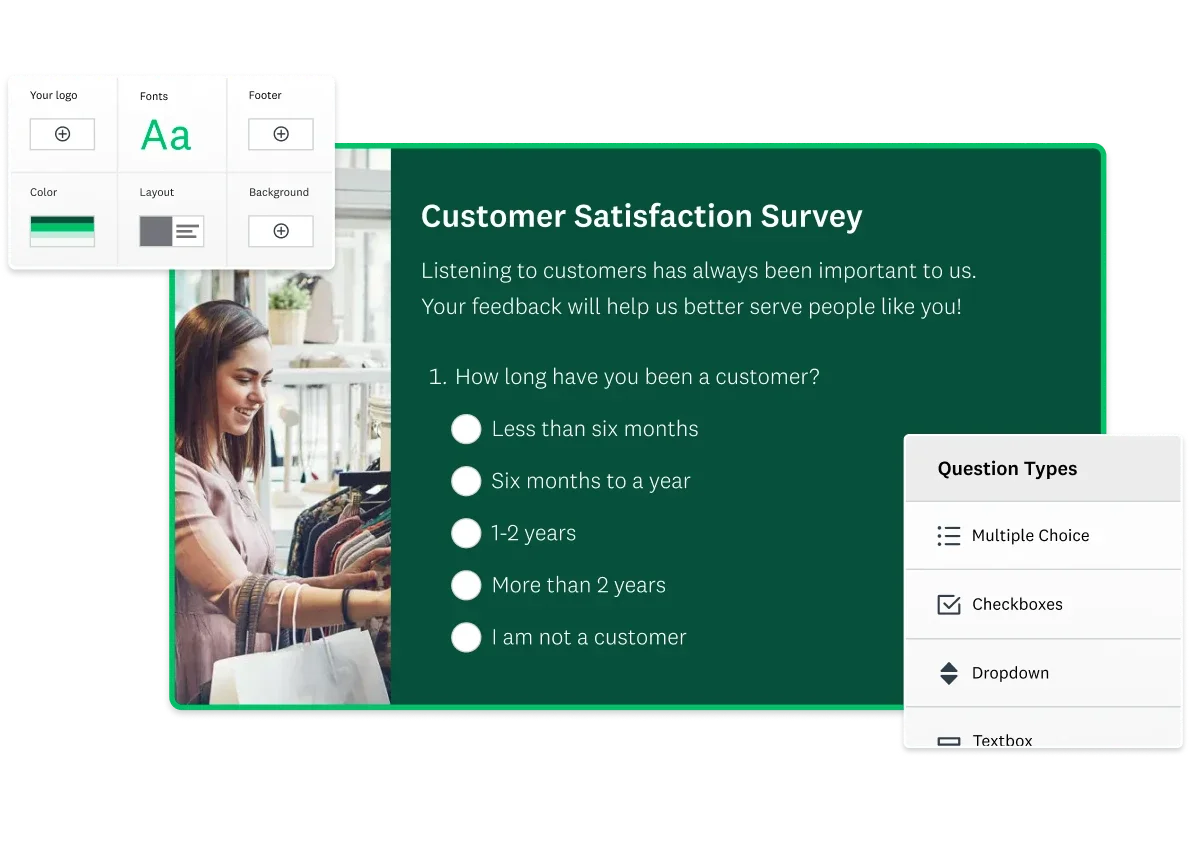
SurveyMonkey is a survey platform that supports employee, customer, market research, and event feedback use cases. It offers a large library of survey templates, an AI-assisted survey builder, and multiple distribution options, including email, links, and embedded surveys. SurveyMonkey also provides analytics tools to help teams identify trends, analyze responses, and share insights across stakeholders.
Best for
Teams that need a flexible, general-purpose survey tool for collecting feedback.
Key features
- Survey builder with AI-assisted question creation and 500+ templates
- Multiple distribution methods and audience targeting options
- Analytics and reporting tools for analyzing survey results and trends
Weakness
May offer fewer built-in tools for connecting employee survey results to ongoing action planning and recognition.
Customer review
“Easy interface for distributing and editing surveys. Feedbacks from surveys are quiet easy to analysis. Customer support is great.” Verified review via Capterra
4. Qualtrics
G2 rating: 4.4/5
Strengths
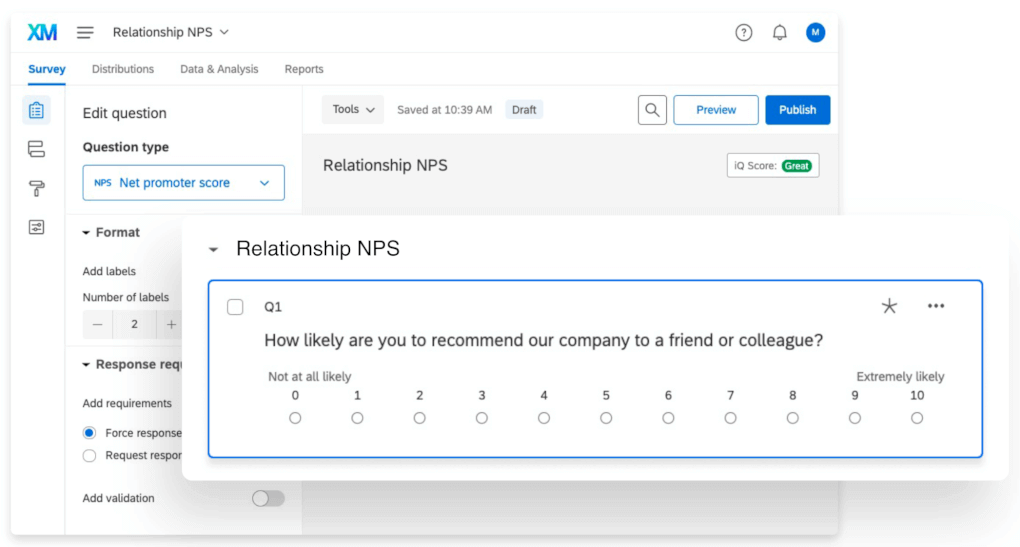
Qualtrics is an experience management platform used to collect and analyze employee feedback at scale. It supports engagement, pulse, and lifecycle surveys, with tools to track trends over time and analyze large volumes of responses, including open-text comments. The platform also provides dashboards and guided action planning to help managers understand results.
Best for
Large organizations that want an employee listening program with benchmarking, analytics, and manager-level action planning.
Key features
- Engagement, pulse, and lifecycle surveys with benchmarking and trend tracking
- Text and sentiment analysis to surface themes
- Manager dashboards with guided action planning tools
Weakness
Qualtrics may offer fewer built-in options for tying employee feedback directly to recognition and rewards.
Customer review
“While we definitely see the value in using Qualtrics for our surveys and insights, we had a less than stellar experience with the purchase and onboarding.” Review via Gartner
5. Survey Legend
G2 rating: 4.4/5
Strengths
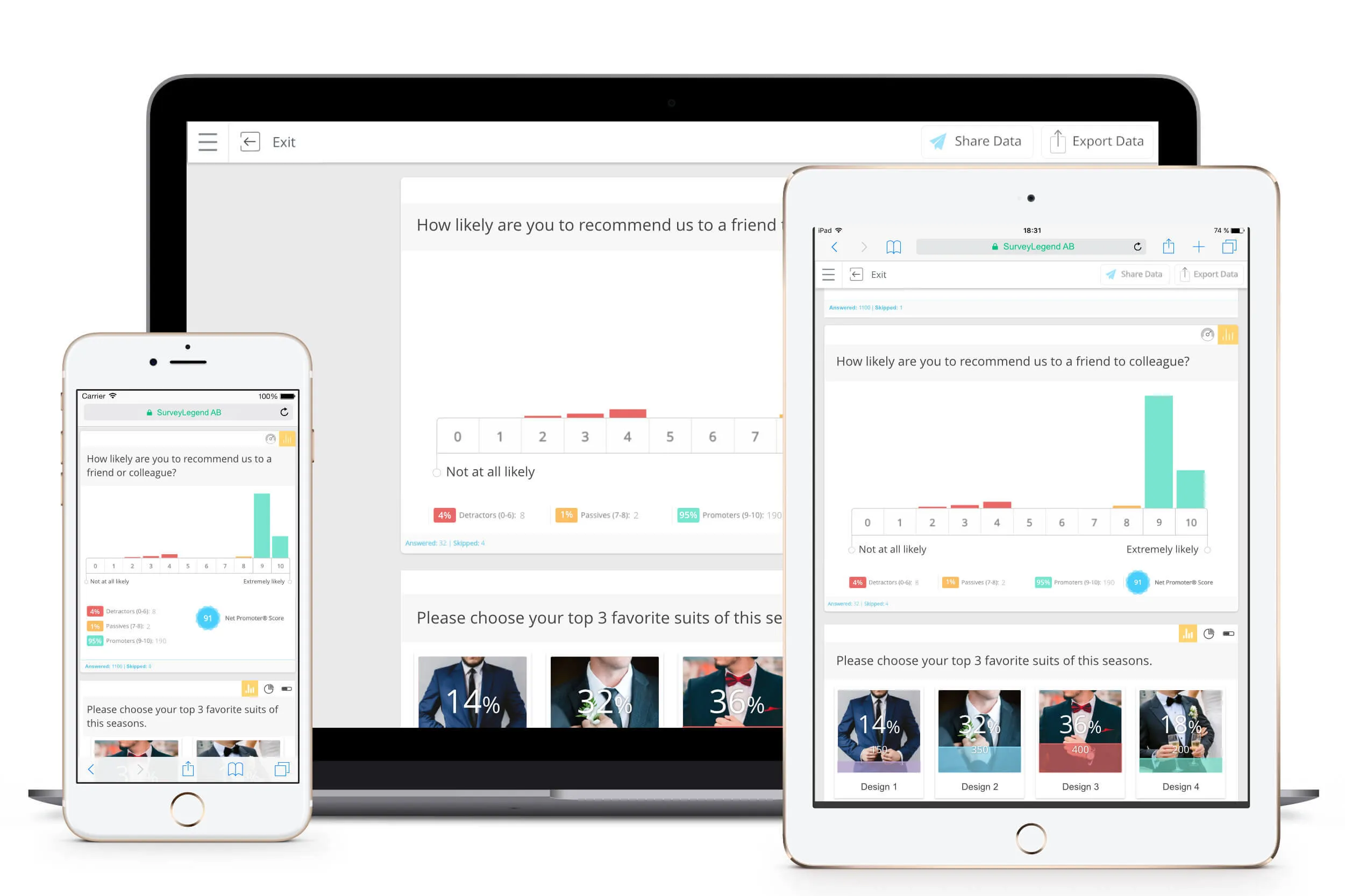
SurveyLegend is an online survey platform focused on ease of use and visual design. It offers drag-and-drop survey creation, a wide range of question types, and strong customization options, including themes, images, and white-label branding. The platform also supports survey logic and real-time analytics.
Best for
Teams that want a simple, design-forward survey tool for collecting feedback quickly and sharing it across channels.
Key features
- Drag-and-drop survey builder with multiple question types and logic
- Extensive design customization, including themes, images, and white-label surveys
- Real-time analytics to view and interpret responses as they come in
Weakness
SurveyLegend may be less suited for organizations that need employee survey tools designed to support ongoing listening programs and scalable action planning.
Customer review
“Ease of use and ability to customize. I also liked the ability to access live analytics while the survey is in progress.” Cindy, via Capterra
6. Vantage Circle
G2 rating: 4.7/5
Strengths
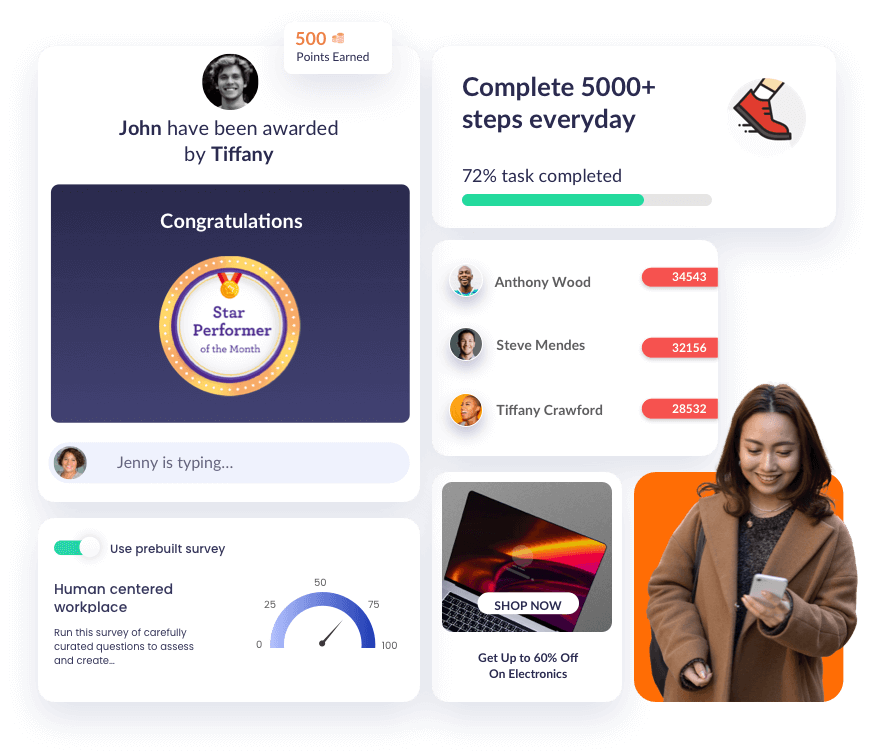
Vantage Circle combines recognition, rewards, well-being, perks, and employee feedback. Its survey offering, Vantage Pulse, supports quick pulse surveys, eNPS, lifecycle surveys, and AI-powered sentiment analysis to help teams understand how employees are feeling in real time. The platform also includes dashboards and action-oriented insights designed to help HR teams and leaders respond to feedback.
Best for
Organizations that want employee surveys alongside recognition, wellness, and perks.
- Key features
- Pulse surveys, eNPS, and lifecycle surveys with real-time dashboards
- AI-driven sentiment and trend analysis to highlight risks and patterns
- Action recommendations to help leaders respond to survey results
Weakness
May be less suited for organizations that need advanced analytics and reporting at scale.
Customer review
“The overall experience is very good. I have been using the website from more than 3 years. I loved the experience.” Review via Software Advice
7. Leapsome
G2 rating: 4.8/5
Strengths
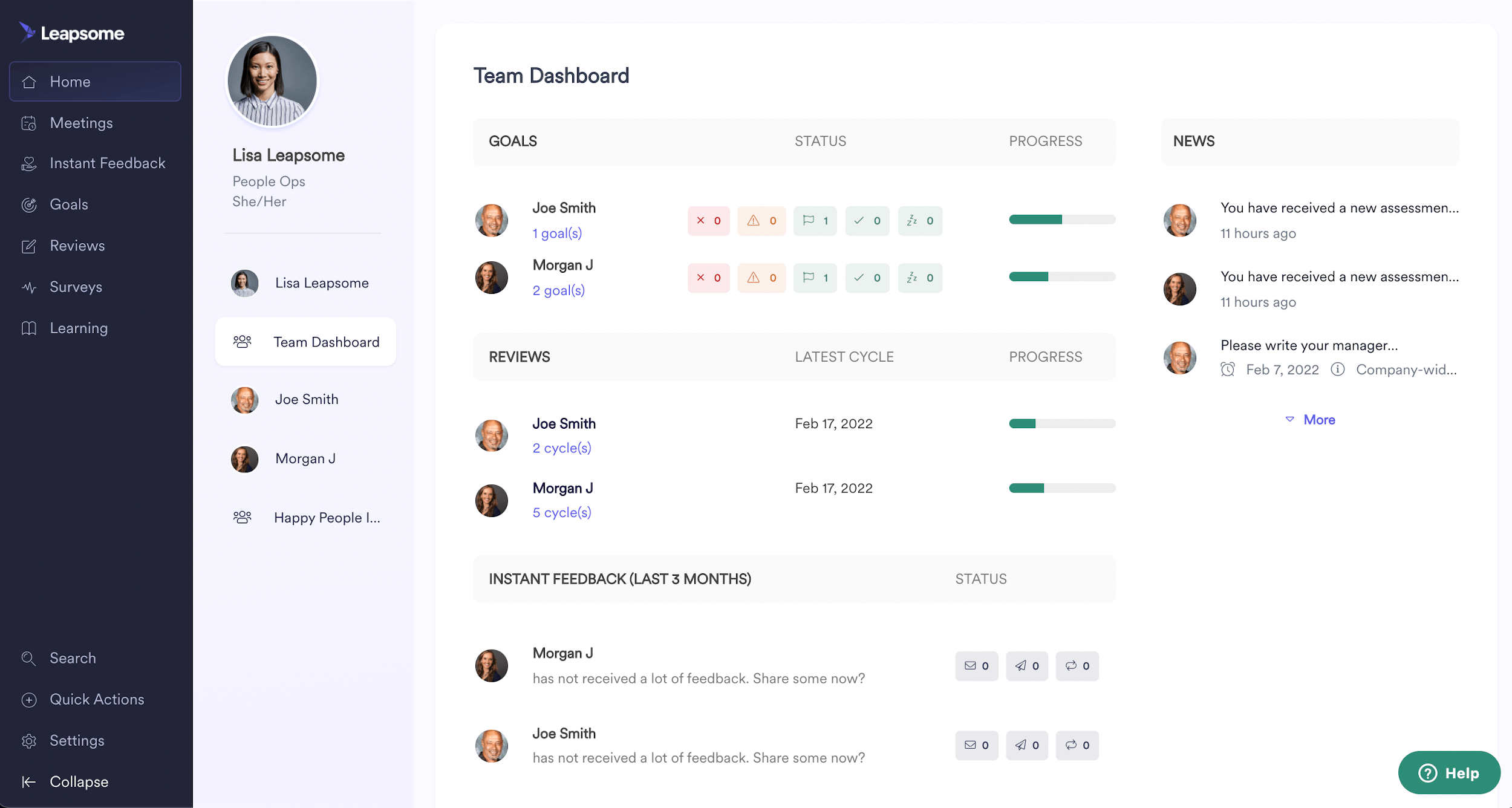
Leapsome brings together core HR, performance management, and employee surveys in one system. Its employee survey tools support engagement, pulse, onboarding, and lifecycle surveys, with AI-powered analysis to summarize responses and surface key themes. Because surveys are connected to goals, feedback, and performance workflows, teams can view engagement insights alongside people data.
Best for
Organizations that want employee surveys closely connected to performance management, goals, and development.
Key features
- Engagement, pulse, onboarding, and lifecycle surveys with recurring scheduling
- AI-powered analysis to summarize responses and identify themes and sentiment
- Action recommendations and follow-up tools linked to goals and performance workflows
Weakness
Leapsome may require more internal effort to design and run recognition and feedback programs at scale.
Customer review
“The praise system gives everyone a sense of accomplishment and provides a rewarding feeling that makes the overall environment feel more human.” Alan O., via G2
8. Lattice

G2 rating: 4.7/5
Strengths
Lattice is a people management platform that brings together performance management, goals, engagement surveys, and feedback in one system. Its survey tools support engagement and pulse surveys, with AI-powered insights to help teams identify trends and understand employee sentiment. Because surveys are closely tied to goals, feedback, and 1:1s, managers can review results alongside day-to-day performance conversations.
Best for
Businesses that want employee surveys connected to performance management, goals, and manager workflows.
Key features
- Engagement and pulse surveys with AI-powered insights
- Feedback and survey data connected to goals, 1:1s, and performance conversations
- Manager dashboards that surface trends and areas for follow-up
Weakness
Lattice may be less suited for organizations that want employee feedback reinforced through a dedicated employee engagement platform.
Customer review
“It is a great tool to get feedback from colleagues and managers regarding your tasks, objectives and progress.” Paulo G., via Software Advice
9. XOXOday
G2 rating: 4.6/5
Strengths
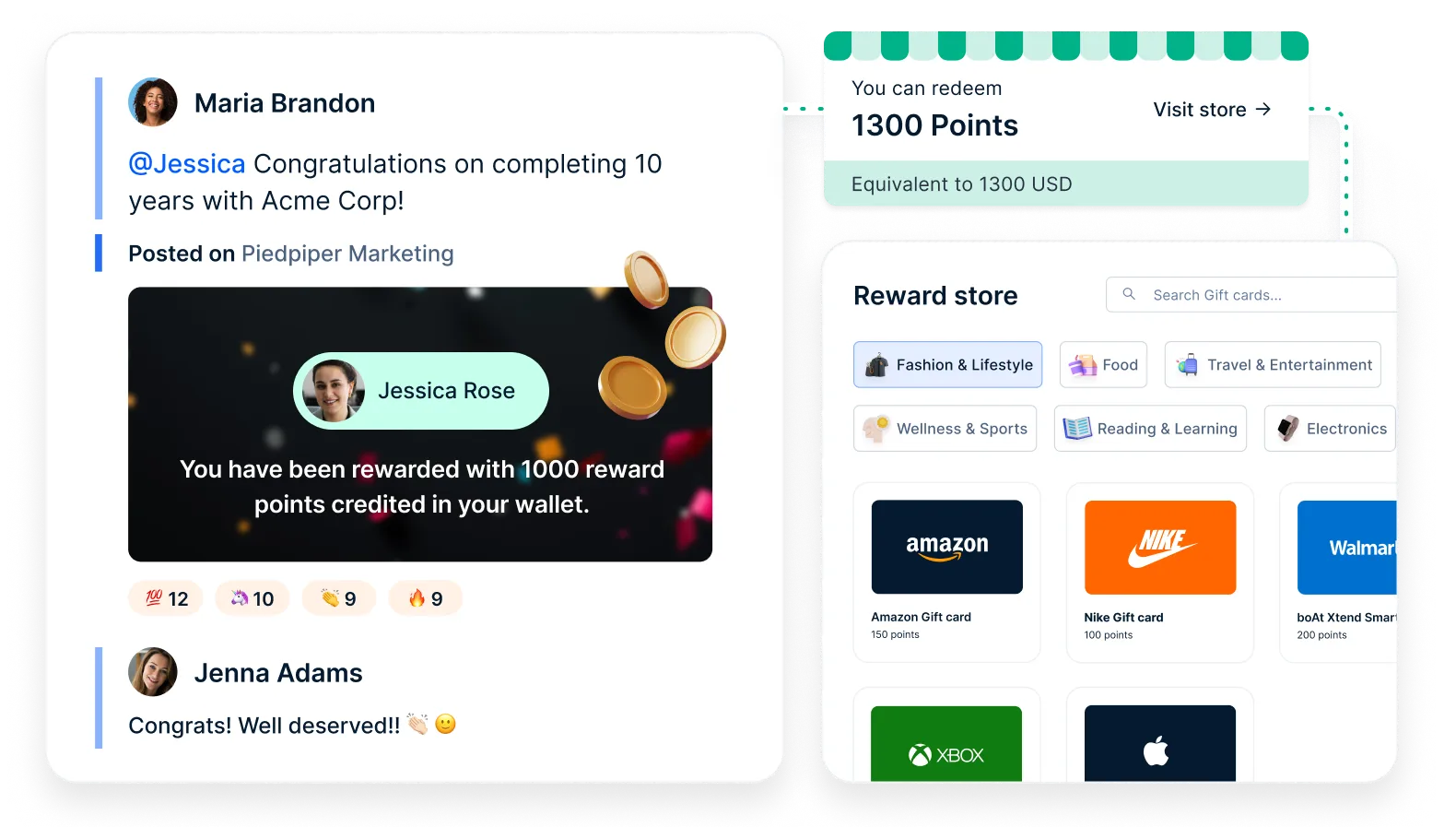
Xoxoday offers a global rewards and incentives platform alongside Empuls, its employee engagement solution. Empuls combines recognition, rewards, surveys, perks, and internal communication in one platform, while Xoxoday’s rewards marketplace supports a wide range of global redemption options. Together, the platform supports pulse surveys, eNPS, lifecycle feedback, and AI-powered sentiment analysis.
Best for
Teams that want employee surveys combined with rewards and incentive programs.
Key features
- Pulse surveys, eNPS, and lifecycle surveys with sentiment analysis
- Global rewards marketplace with a broad range of digital and physical reward options
- Automated recognition and rewards for milestones and achievements
Weakness
May not offer the advanced capabilities needed to run consistent recognition and feedback programs across larger teams.
Customer review
“I’ve recently been using it for some employee surveys also. I think, those could be little more improved and, the service experience could also be enhanced.” Palakh K., via G2
10. SurveyLab
G2 rating: 4.5/5
Strengths
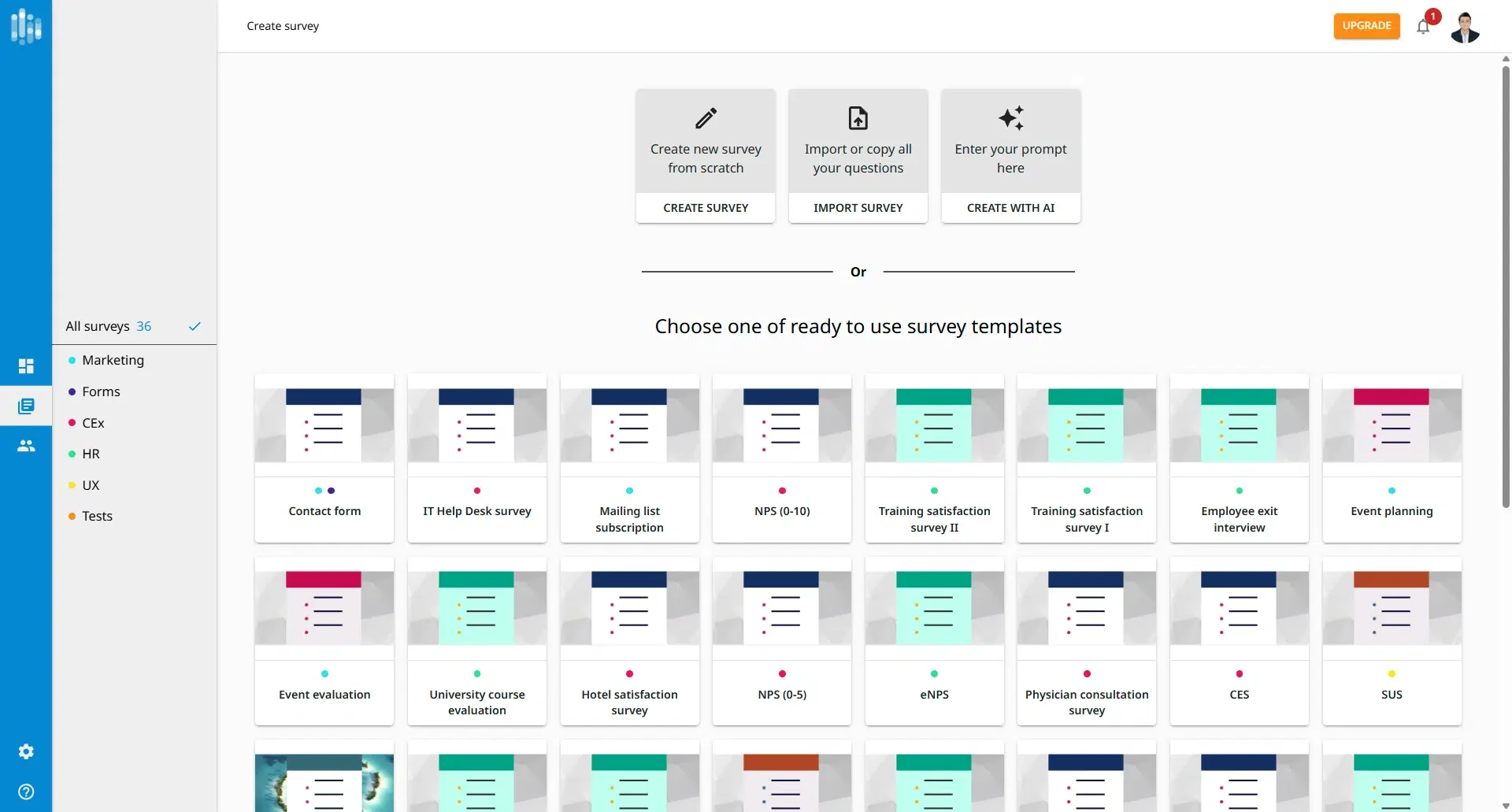
SurveyLab is a professional online survey platform designed for customer, employee, and market research. It supports a wide range of survey types, including engagement surveys, 360 feedback, and lifecycle questionnaires, with features like logic and branching, multi-language support, and mobile-friendly distribution.
Best for
Teams that need a flexible survey tool for employee feedback, 360 reviews, and research use cases.
Key features
- Engagement surveys and 360 feedback tools with flexible survey design
- Multi-language surveys and mobile-friendly distribution options
- Reporting and export tools for sharing results and analysis
Weakness
May require additional tools to manage employee listening as an ongoing, company‑wide program rather than one‑off surveys.
Customer review
“It offers many predefined, customizable survey templates and saves your time.” Dayanand G., via Capterra
11. Microsoft Forms
G2 rating: 4.4/5
Strengths
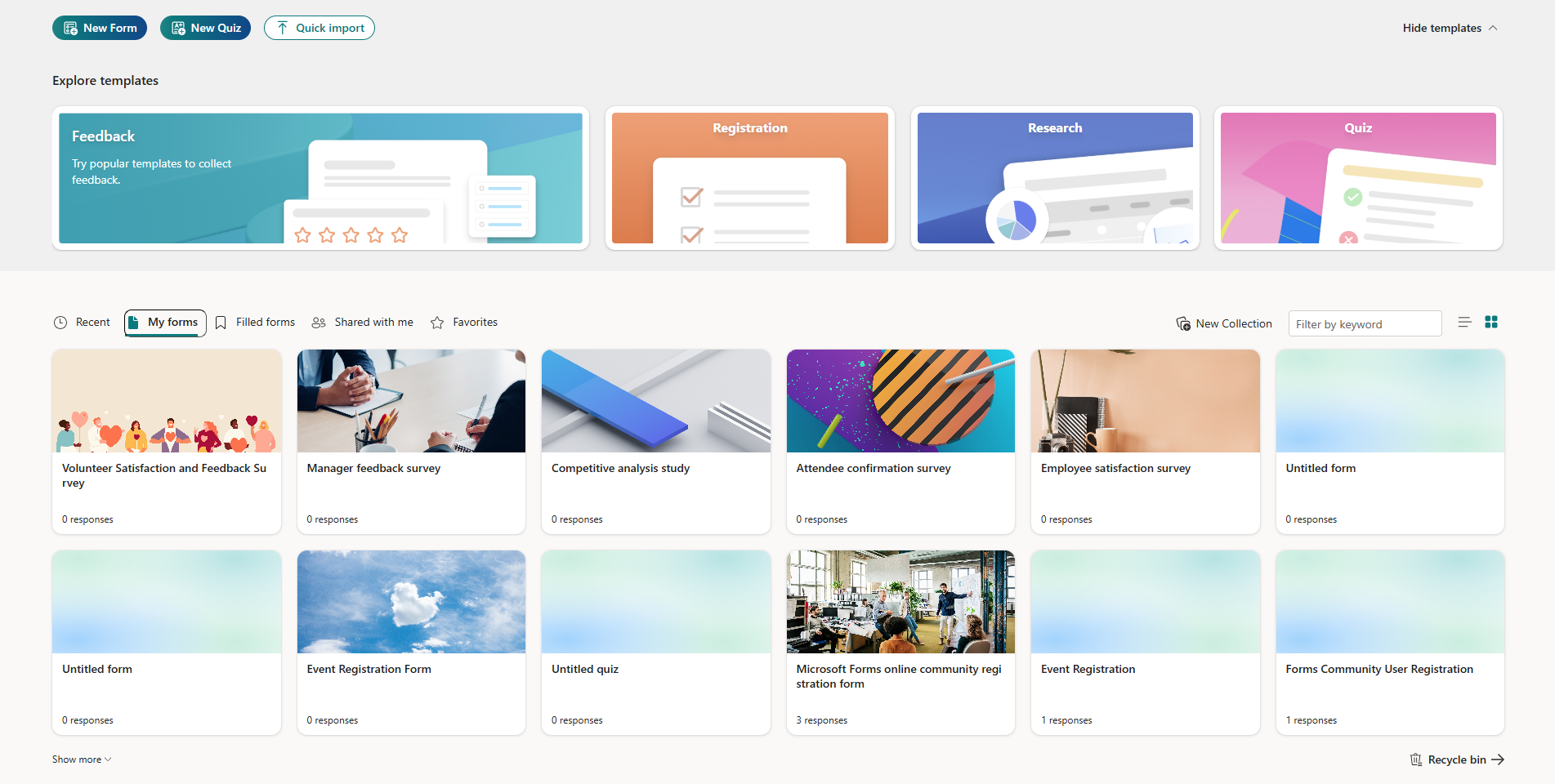
Microsoft Forms is a survey and form‑building tool included with Microsoft 365. It supports quick creation of surveys, polls, and questionnaires using templates, basic logic, and real‑time response summaries. Forms integrates seamlessly with Microsoft tools like Excel, Teams, SharePoint, and OneDrive.
Best for
Teams already using Microsoft 365 that need a way to collect feedback or run quick surveys.
Key features
- Fast survey and form creation using templates and basic question logic
- Real‑time response summaries with export to Excel
- Native integration with Microsoft 365 apps like Teams and SharePoint
Weakness
May be better suited for simple surveys than for running structured, ongoing employee listening programs.
Customer review
“Microsoft forms is very easy to use, you can set up a basic form or something more complex using the bridge feature within the questions.” Verified review via G2
12. LutherOne
G2 rating: 5/5
Strengths
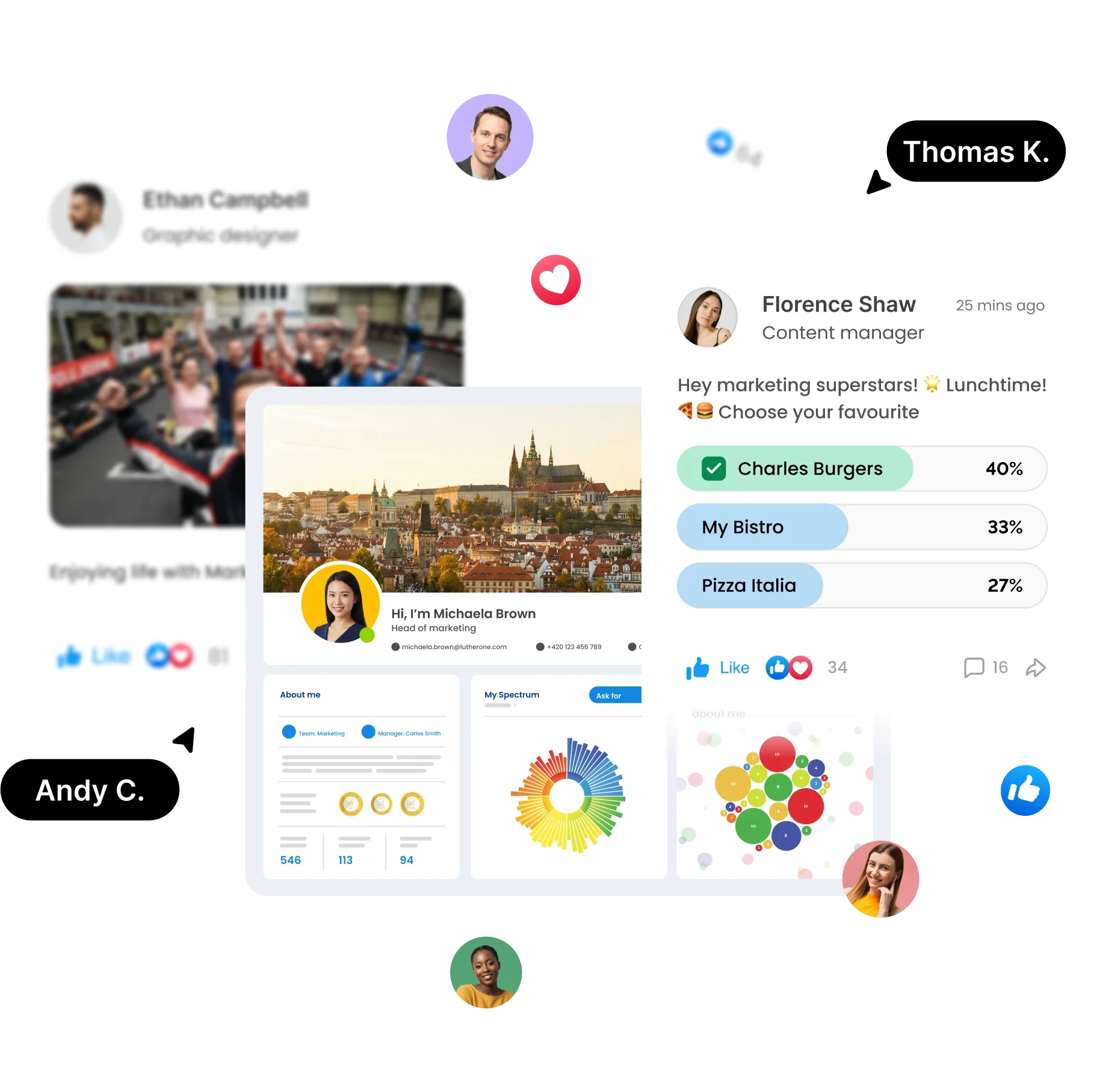
LutherOne is a people analytics and engagement platform focused on continuous employee listening and real-time insights. It supports pulse surveys, engagement tracking, and 360-degree feedback, with dashboards that surface trends like engagement, eNPS, and attrition risk.
Best for
Teams that want regular employee surveys paired with real-time dashboards and analytics.
Key features
- Continuous pulse surveys and 360 feedback with smart question rotation
- Real-time dashboards showing engagement, eNPS, and risk indicators
- Predictive analytics and built-in action planning tools to support follow-through
Weakness
While it offers advanced insights, organizations looking for a more unified engagement solution may need to look for more advanced tools.
Customer review
“We really like the te tool – it’s new, easy to use, the teams that helps us with the development and implmenting is awesome.” Audrone L., via Capterra
13. Officevibe by Workleap
G2 rating: 4.3/5
Strengths
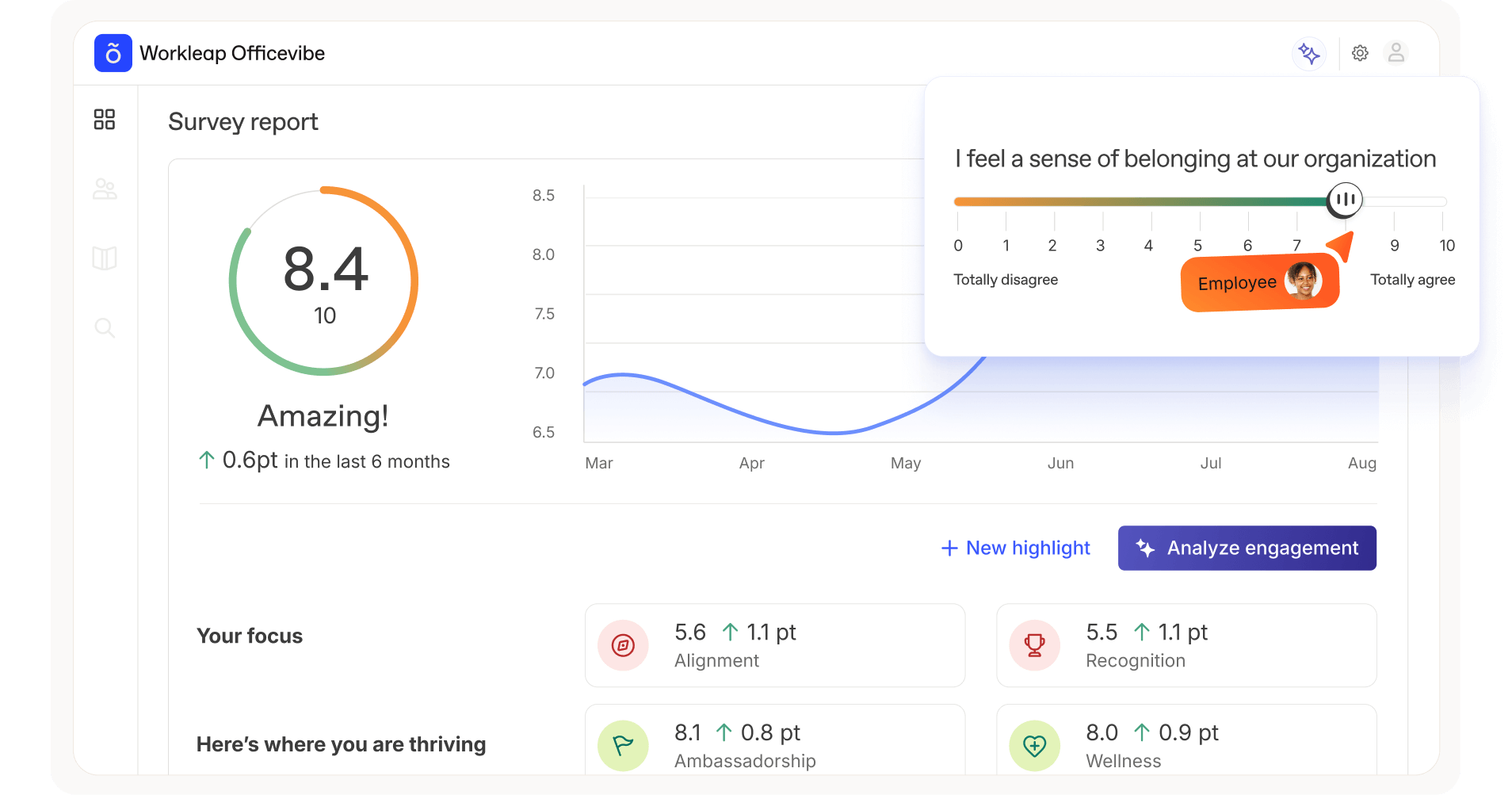
Workleap is a people management platform that combines employee engagement, performance management, and compensation tools. Its Officevibe product focuses on continuous engagement through pulse surveys, anonymous feedback, and clear reporting that helps managers spot trends and issues early. The platform also includes guidance and recommended actions to support manager follow‑through.
Best for
Small to mid-sized organizations that want an engagement and performance platform with built‑in manager guidance.
Key features
- Pulse surveys and anonymous feedback to track engagement over time
- Manager dashboards with highlights and AI‑supported insights
- Built‑in recognition and recommended actions to support follow‑through
Weakness
While it offers various survey capabilities, it may not offer the same breadth and depth of engagement data and may require more advanced tools.
Customer review
“There’s room to simplify certain workflows and make the learning curve smoother so teams can adopt and benefit from the platform faster.” Ukendra P., via G2
14. TMA Performance (formerly DecisionWise)
G2 rating: 3.9/5
Strengths
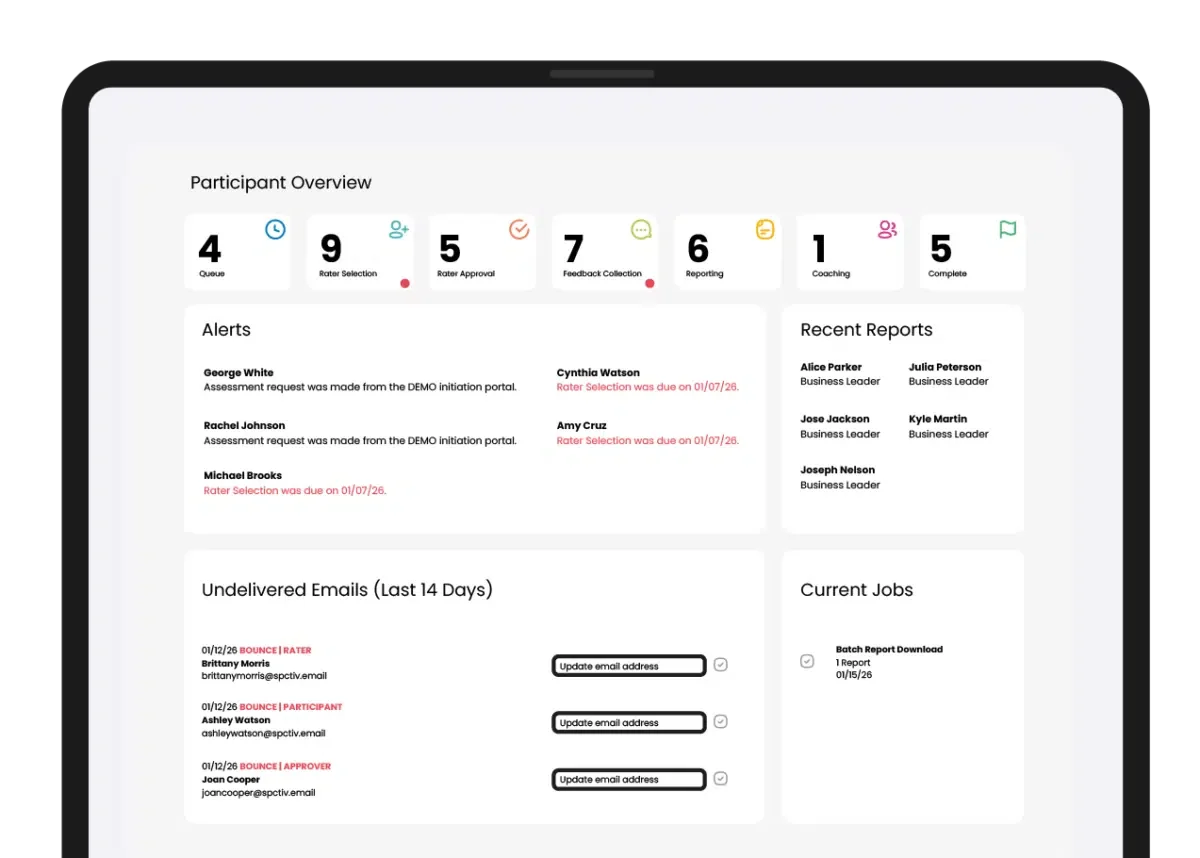
TMA Performance is a talent and employee experience platform focused on understanding both the work environment and individual motivations. It offers employee engagement and lifecycle surveys, competency‑based 360 feedback, and talent assessments. The platform emphasizes diagnostic insight through structured survey models and leadership frameworks.
Best for
Organizations that want to combine engagement surveys with talent assessments and competency‑based development tools.
Key features
- Engagement and lifecycle surveys to measure workplace conditions
- Competency‑based 360 feedback for leadership and development
- Talent and motivation assessments to support role alignment and growth
Weakness
While it offers strong diagnostic surveys and assessments, organizations looking for ongoing, real‑time engagement signals and faster follow‑through may need additional tools.
Customer review
“The amount of data that can be obtained from the platform is overwhelming at times. It can be challenging to translate the data into meaningful action items at the individual level.” Fredrick P., via Capterra
15. Rippling
G2 rating: 4.8/5
Strengths
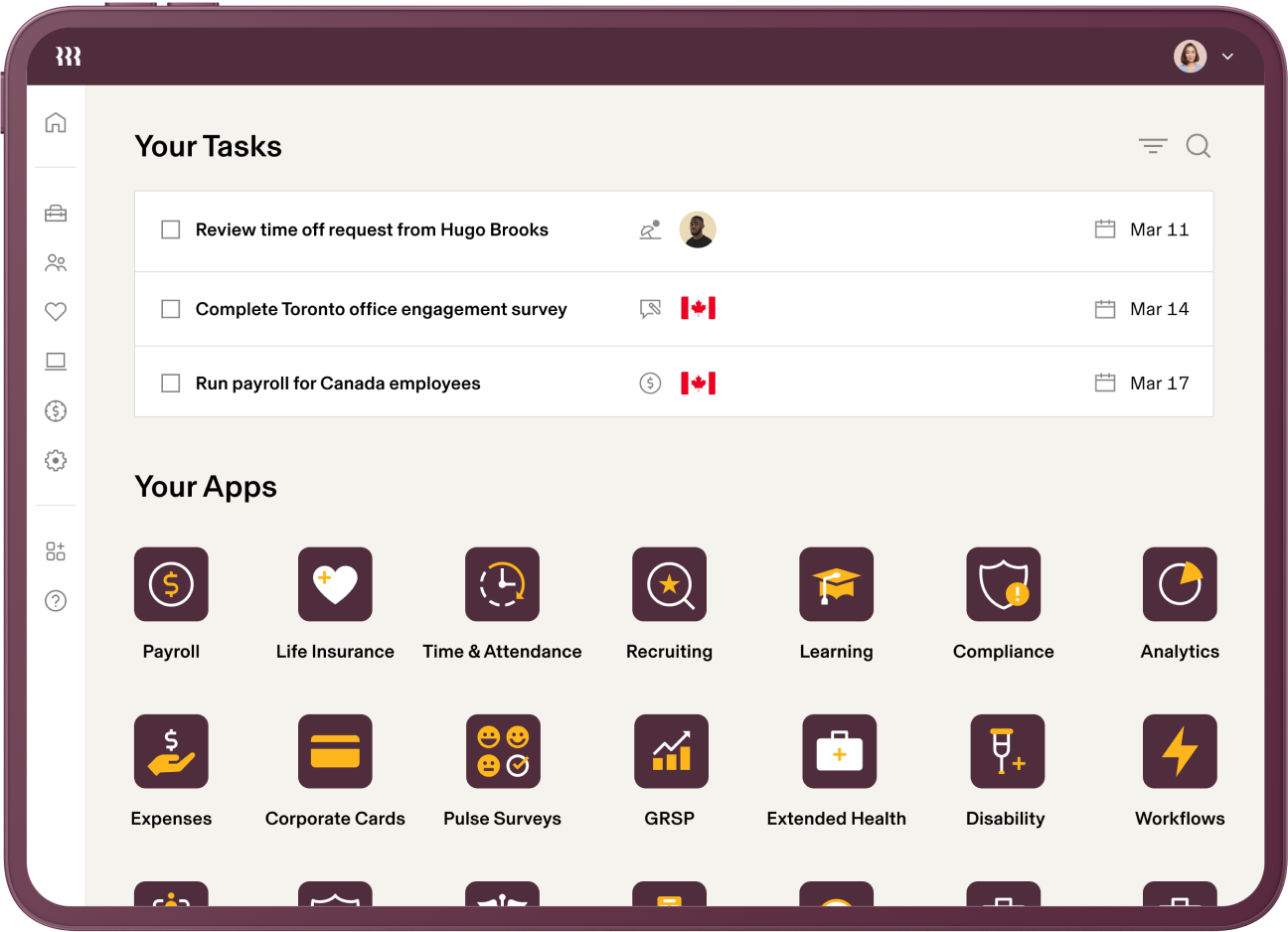
Rippling Surveys is built into Rippling’s broader workforce platform, which means survey results can be viewed alongside employee data already stored in the system. It supports common surveys such as engagement, onboarding, exit, and DEI feedback, and it can send surveys automatically based on employee events. It also supports role-based permissions, so teams can control who can run surveys and who can view results.
Best for
Teams already using Rippling that want employee surveys connected to HR workflows and automated follow-ups.
Key features
- Event‑based surveys triggered by employee lifecycle changes
- Workflow automation and notifications based on survey responses
- Unified analytics that combine survey data with employee attributes
Weakness
Teams looking for a more employee experience-led approach that connects feedback to structured action planning and recognition may prefer a platform built specifically for that need.
Customer review
“Overall, it provides excellent value for money for startups looking for an integrated HR, payroll, and IT management platform.” Ashwath S. via G2
What are the key features to look for in an employee survey tool?
Survey design and question libraries
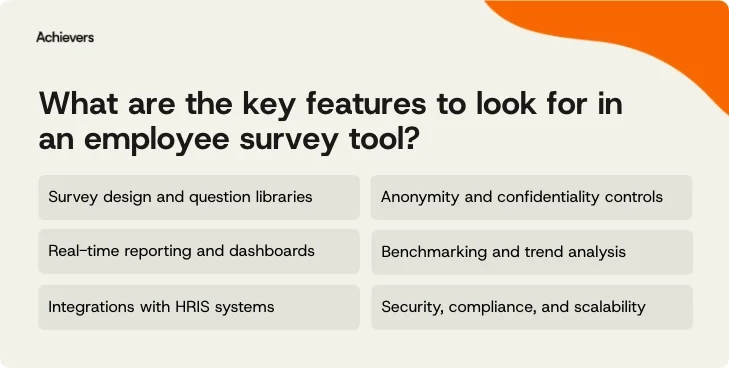
Survey design and question libraries help organizations collect consistent, comparable feedback without building surveys from scratch. Look for tools with proven question libraries and flexible templates that support engagement, culture, lifecycle, and manager effectiveness surveys without forcing teams to start from scratch.
Anonymity and confidentiality controls
Anonymity and confidentiality controls help employees share honest feedback without concern that responses will be traced back to them. Features like anonymity thresholds, role‑based access, and confidentiality safeguards help employees feel safe sharing what they really think.
Real-time reporting and dashboards
Real-time reporting and dashboards help leaders identify issues as they come up rather than weeks after a survey closes. Look for filtering options by team, department, location, or demographic group, along with dashboards that make trends easy to interpret and act on, before small issues become larger problems.
Benchmarking and trend analysis
Benchmarking and trend analysis add context to survey results, and help organizations understand whether results are improving, declining, or remaining unchanged over time. The ability to track trends over time or compare engagement scores across teams helps leaders understand whether progress is actually happening.
Action planning and accountability tools
Action planning and accountability tools help organizations turn survey results into real culture and business improvements. Features such as task assignment, progress tracking, and manager action plans make it easier to address feedback and show employees where leaders are following through.
Integrations with HRIS systems, collaboration tools, and recognition platforms
Integrations with HR systems, collaboration tools, and recognition platforms connect survey data to the systems employees use every day. These integrations reduce administrative work, improve data accuracy, and help organizations understand how feedback is connected to what employees are experiencing at work.
Security, compliance, and scalability
Security, compliance, and scalability determine whether a survey platform can support long-term employee listening programs. Enterprise-grade security controls, regulatory compliance support, and the ability to manage large employee populations help ensure survey tools are reliable, consistent, and trusted by staff.
How employee survey tools help organizations identify and solve workplace issues
1. Identify recurring workplace issues
Survey tools help reveal trends that appear across different teams, locations, or survey cycles. Focus on issues that consistently emerge in areas such as communication, manager trust, recognition, career growth, and job burnout rather than isolated comments.
2. Assign ownership and track progress
Survey tools help organizations address workplace issues by assigning owners, setting timelines, and tracking progress. This allows leaders to follow through on survey results and measure the impact of changes over specific periods of time.
3. Measure whether issues improve over time
Survey tools help organizations measure whether workplace issues are improving by comparing results across survey cycles. If scores remain unchanged or decline, leaders can adjust their approach and focus on areas that need additional attention.
Which organizations are using employee survey tools successfully?
Organic Valley
The problem: Organic Valley needed a way to measure and demonstrate its food safety culture across facilities. The team was managing survey responses manually in spreadsheets, making reporting and analysis time-consuming.
The solution: Organic Valley worked with Achievers to create a custom food safety culture survey using the Voice of Employee platform. The survey measured employee perceptions across four areas: values and mission, people systems, adaptability, and consistency. Survey results were automatically grouped by facility and made available through reporting dashboards.
The results: Organic Valley achieved an 86% survey participation rate, reported zero audit findings related to food safety culture since launching the survey, and established a repeatable process for measuring and tracking improvement year over year. Survey data is now used to support audit preparation, inform training decisions, and identify opportunities for improvement across the organization.
Why Achievers is more than an employee survey tool
Most employee survey tools are good at collecting feedback. Achievers is designed to help organizations understand feedback, act on it, and measure whether those actions improve the employee experience over time.
What makes Achievers different is the connection between employee listening and employee experience. Survey insights can be paired with recognition, engagement, and action-planning data, giving leaders a clearer view of what employees are experiencing and where intervention is needed. Achievers helps organizations build a continuous feedback loop that supports communication, accountability, and continuous improvement across the business.

Employee survey tools FAQs
Key insights
- Employee survey tools help organizations identify communication gaps before they become retention risks.
- Organizations get the most value from survey programs when they use results to identify recurring workplace issues measure whether changes improve future survey results.
- Survey tools that connect feedback with recognition, engagement, and action planning give leaders a clearer understanding of what employees are experiencing and how to improve it over time.
| Platform | Best for | Key feature | Recognition feature | G2 rating |
|---|---|---|---|---|
| Achievers | Organizations that want surveys as part of a complete employee experience strategy | Voice of Employee tools paired with real-time insights and follow-through | 4.6/5 | |
| ThriveSparrow | Teams combining engagement surveys with performance check-ins | AI-powered sentiment analysis with action plans | 4.3/5 | |
| SurveyMonkey | Teams needing a flexible, general-purpose survey tool | AI-assisted survey creation with 500+ templates | 4.4/5 | |
| Qualtrics | Large organizations running enterprise listening programs | Advanced analytics with benchmarking and trend tracking | 4.4/5 | |
| SurveyLegend | Teams prioritizing speed and design in survey creation | Highly customizable, design-forward surveys | 4.4/5 | |
| Vantage Circle | Organizations combining engagement, wellness, and feedback | Pulse surveys with AI-driven insights and recommendations | 4.7/5 | |
| Leapsome | Teams linking engagement to performance and development | Surveys connected to goals and performance workflows | 4.8/5 | |
| Lattice | Businesses aligning engagement with manager workflows | Engagement insights tied to goals and 1:1s | 4.7/5 | |
| Xoxoday (Empuls) | Teams pairing surveys with rewards and incentives | Engagement surveys with global rewards marketplace | 4.6/5 | |
| SurveyLab | Teams running surveys, 360 reviews, and research projects | Flexible survey design with multilingual support | 4.5/5 | |
| Microsoft Forms | Microsoft 365 users running quick internal surveys | Simple survey creation with native M365 integrations | 4.4/5 | |
| LutherOne | Teams focused on continuous listening and analytics | Real-time dashboards with predictive insights | 5/5 | |
| Officevibe (Workleap) | SMBs needing pulse surveys with manager guidance | Continuous engagement tracking with recommended actions | 4.3/5 | |
| TMA Performance | Organizations combining surveys with talent assessments | Diagnostic engagement surveys and 360 feedback | 3.9/5 | |
| Rippling | Rippling customers connecting surveys to HR workflows | Event-triggered surveys tied to employee lifecycle data | 4.8/5 |