Table of contents
Create a culture that means business™
Schedule a demo with an Achievers solution expert today.


 Copy URL
What makes people want to stay and give their best? Hint: It’s not just the paycheck. Compensation matters, but it’s only one piece of a much bigger picture. The real magic happens when organizations deliver a total rewards experience that speaks to the whole employee, from recognition to growth and well-being.
And it works. Companies with strong recognition programs see 31% lower voluntary turnover. That’s real ROI.
However, building a rewards strategy that actually inspires your people takes thought, intention, and a platform that knows what it’s doing.
The building blocks of a total rewards program, and why they actually matter
Total rewards is about the full experience of working for your organization. Yes, that includes pay. But it also includes everything else that makes your people feel supported, valued, and motivated to stick around and do their best work. Let’s break down the essentials.
Financial compensation: The must-have
Money isn’t everything, but it matters. Competitive compensation is the foundation of any rewards strategy. Without it, the rest of your offering is on shaky ground (no matter how great your snack wall is).
Example:
Recognition: The performance multiplier
When people feel seen, they show up. That’s why employee recognition, especially when it’s timely, specific, and frequent, plays a starring role in any total rewards strategy. And while financial rewards like gift cards are great, research shows that meaningful, non-monetary recognition can make an even bigger impact.
Culture doesn’t build itself, but recognition helps shape it.
Example:
Benefits and incentives: The standouts
Think of these as the extras that help people choose your organization and stay long-term. Healthcare, paid time off, and retirement plans are table stakes. But when you offer flexible work, tuition support, or even the ability to choose projects, you’re signaling that your employees matter as people and not just performers.
Example:
Why total rewards are worth the effort
Building a standout total rewards program isn’t something you knock out over a long weekend. It takes time, strategy, and a bit of internal soul-searching. But the payoff? Absolutely worth it. Here’s what’s in it for your organization — beyond the warm, fuzzy feeling of doing right by your people:
- More engagement: When employees feel appreciated, they bring more to the table. Recognition is the single biggest driver of engagement — not ping pong tables, not free snacks. (Sorry, snacks.) A thoughtful total rewards program shows employees that what they do matters — and that motivates them to keep doing it, and doing it well.
- A reputation that does the recruiting for you: The best employer brands aren’t built in boardrooms — they’re built on word of mouth. And nothing gets people talking like a rewards program that makes them feel seen, supported, and celebrated. When your team brags about their experience, the right candidates start knocking. No paid campaign can beat genuine employee enthusiasm.
- Retention that doesn’t require begging: Keeping great people is hard. Giving them reasons to stay makes it easier. When employees know they’re getting more than a paycheck, things like flexible perks, real recognition, and growth opportunities, they’re less likely to shop around. Bonus points if they actually know what rewards are available to them (so, yes — communicate often).
- A stronger employee value proposition (aka your secret weapon): Your EVP is your promise to your people, and total rewards is a major part of it. If your benefits don’t reflect what employees care about, they’ll notice. But when your rewards are aligned with what matters most, your EVP becomes a magnet for top talent and a reason for your best people to stick around.
Total rewards is a competitive advantage. Invest in it, shape it thoughtfully, and don’t forget to make it personal. Your future workforce will thank you.
How to develop a comprehensive total rewards plan
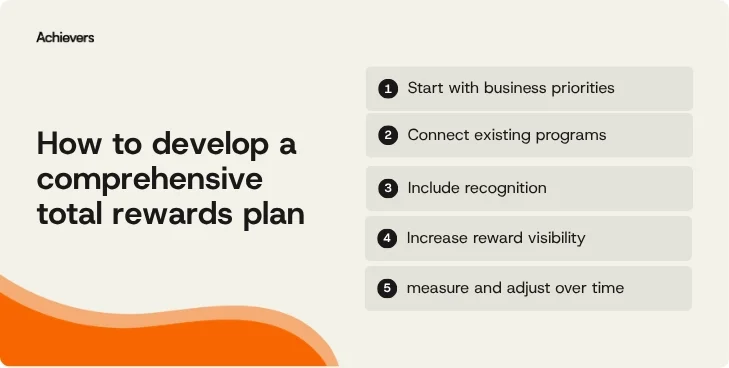
1. Develop a plan around business outcomes
To develop a comprehensive total rewards plan around business outcomes, start by identifying the workforce and business goals your strategy needs to support. Whether the priority is improving retention, strengthening performance, increasing engagement, or supporting culture initiatives, every element of the plan should contribute to a measurable outcome.
2. Develop a plan that connects and unifies existing programs
Connect compensation, benefits, recognition, and employee incentives under a single strategy. Employees experience these programs as one total rewards package, so they should work together to reinforce the same behaviors, priorities, and goals.
3. Develop a plan that includes recognition
Build recognition directly into your total rewards plan instead of treating it as a separate initiative. The research from the 2026 State of Recognition Report shows that, of the 3,000 employees surveyed globally, 44% say the most meaningful recognitions are specific without a monetary reward. The strongest total rewards plans recognize that how rewards are delivered is often just as important as the rewards themselves.
4. Develop a plan employees that’s more visible to employees
To develop a comprehensive and visible total rewards plan employees can understand, make the full value of compensation, benefits, rewards, incentives, and recognition visible. When employees can clearly see what they receive, appreciation, engagement, and program participation improve.
5. Develop a plan that measurable and adjustable over time
To develop a comprehensive total rewards plan that evolves with workforce needs, regularly review participation, engagement, performance, and retention data. The strongest plans adapt over time, using employee feedback and program insights to guide future investments and improvements.
Take your total rewards program from “fine” to unforgettable
Sure, competitive pay and solid benefits are important — no one’s turning those down. But if you want to build a rewards program that actually moves the needle, you’ve got to go further. Think recognition. Think purpose. Think people-first, not perks-only.
That’s where Achievers comes in.
Our platform makes it easy to embed recognition into your total rewards strategy — not as an afterthought, but as a foundation. With tools that encourage frequent, meaningful appreciation, we help organizations turn great intentions into daily habits that actually stick.
The result? A company culture where employees feel supported, celebrated, and ready to bring their best — not just because they’re paid to, but because they want to.
Invest in the tools that shape behavior and build connection. With Achievers, recognition doesn’t just complement your total rewards program — it elevates it.
Total rewards program FAQs
Key insights
- Employees experience compensation, recognition, rewards, and benefits as one package, even when organizations manage them separately. Connecting these programs creates a more consistent employee experience.
- Employees are more likely to appreciate and use total rewards when they can easily see and understand everything available to them in one place.
- The most effective programs connect rewards investments to employee behaviors, performance, and retention goals instead of treating rewards as standalone perks.
Competitive compensation — whether through salary, bonuses, commissions, or stock options — is the foundation of any rewards strategy.
Employee recognition — from shoutouts to e-cards — shapes culture and strengthens any total rewards strategy.
Benefits — from health and retirement to wellness, PTO, and development — show employees they matter as people, not just performers.
Total rewards isn’t just perks — it’s about culture where people feel seen, supported, and excited to stay. That’s your competitive edge.