Table of contents
Create a culture that means business™
Schedule a demo with an Achievers solution expert today.


 Copy URL
Careers aren’t straight lines anymore — they’re more like scenic routes with a few surprise detours. Employees know this, and they’re looking for clarity on where they’re headed and confidence that their organization will help them get there. That’s where a strong professional development plan comes in.
Think of it as a GPS for growth: it gives employees direction, structure, and momentum while helping organizations build the skills they need for the future. Done well, employee development isn’t just about climbing the ladder — it’s about boosting performance, engagement, and long-term success. And unlike that New Year’s resolution to “read more,” this plan won’t gather dust in a drawer.
What is a professional development plan?
A professional development plan is a personalized roadmap linking career goals to the skills and experiences needed to achieve them. It aligns employees and managers, adds clarity and accountability, and turns growth into a motivating, measurable process — not just a one-time conversation.
Why professional development plans matter
Development plans make growth intentional, not accidental. They boost confidence, performance, and employee engagement while preparing employees for future opportunities. By expanding skills and strengthening mobility, they help organizations stay agile and retain talent — creating a workforce ready to adapt as business needs change.
Core components of a strong professional development plan
Effective professional development plans are structured, realistic, and aligned to both individual and organizational goals. While every plan should be personalized, the strongest ones share a common foundation. A few core components include:
Clear career goals
Development starts with clarity. Employees need a defined sense of direction whether that’s progressing into a future role, expanding expertise in their current position, or preparing for, leadership responsibilities. Clear goals provide focus and help prioritize development efforts.
Skill and competency needs
Once goals are defined, the next step is identifying the skills and competencies required to reach them. This includes both strengths to build on and gaps to address. Understanding these needs ensures development is targeted and relevant, rather than generic.
Development activities
Growth happens through action. Development activities may include formal learning, coaching, stretch projects, mentorship, or hands-on experience. The most effective plans combine learning with real-world application, helping employees build capability through practice.
Resources and support
Development doesn’t happen in isolation. Employees need access to tools, learning resources, and manager support to succeed. Clear ownership — including how managers will coach and enable progress — makes talent development feel achievable rather than aspirational.
Milestones and timelines
Progress needs visibility. Milestones and timelines break long-term goals into manageable steps, making development easier to track and adjust. They help maintain momentum and provide natural opportunities for reflection and recalibration.
Regular feedback
Growth is rarely linear. Regular feedback ensures development plans stay relevant as priorities evolve. Ongoing check-ins allow employees and managers to adjust goals, refine activities, and reinforce progress over time.
How to create a professional development plan
A strong professional development plan doesn’t need to be complicated — but it does need to be intentional. Focusing on a few high-impact steps helps ensure plans are realistic, relevant, and actually used.
Identify strengths, interests, and career direction
Development planning starts with understanding the employee as an individual. Conversations should explore current strengths, areas of interest, and longer-term career direction — even if that direction isn’t fully defined yet. This step creates context and employee motivation, ensuring the plan reflects what the employee wants to grow toward, not just what the organization needs in the moment.
Assess skills with manager input
Once direction is established, assess current skills against future goals. Combining self-reflection with manager feedback creates a more accurate picture of development needs. This shared understanding helps prioritize the most important capabilities to build and creates early alignment between employees and managers.
Define development actions tied to outcomes
Development plans are most effective when actions clearly support upskilling and reskilling efforts. Learning activities, coaching, stretch assignments, and project experience should all be intentionally selected and linked to specific outcomes. When employees understand why they’re doing something and how it supports their goals, development feels purposeful instead of performative.
Set checkpoints and revisit progress
Development only works when it’s revisited. Establishing clear checkpoints keeps progress visible and prevents plans from fading into the background. Regular reviews allow goals to evolve, priorities to shift, and momentum to continue as roles and business needs change. Plans succeed when employees feel ownership — and managers feel equipped to guide progress consistently.
Best practices for employee development planning
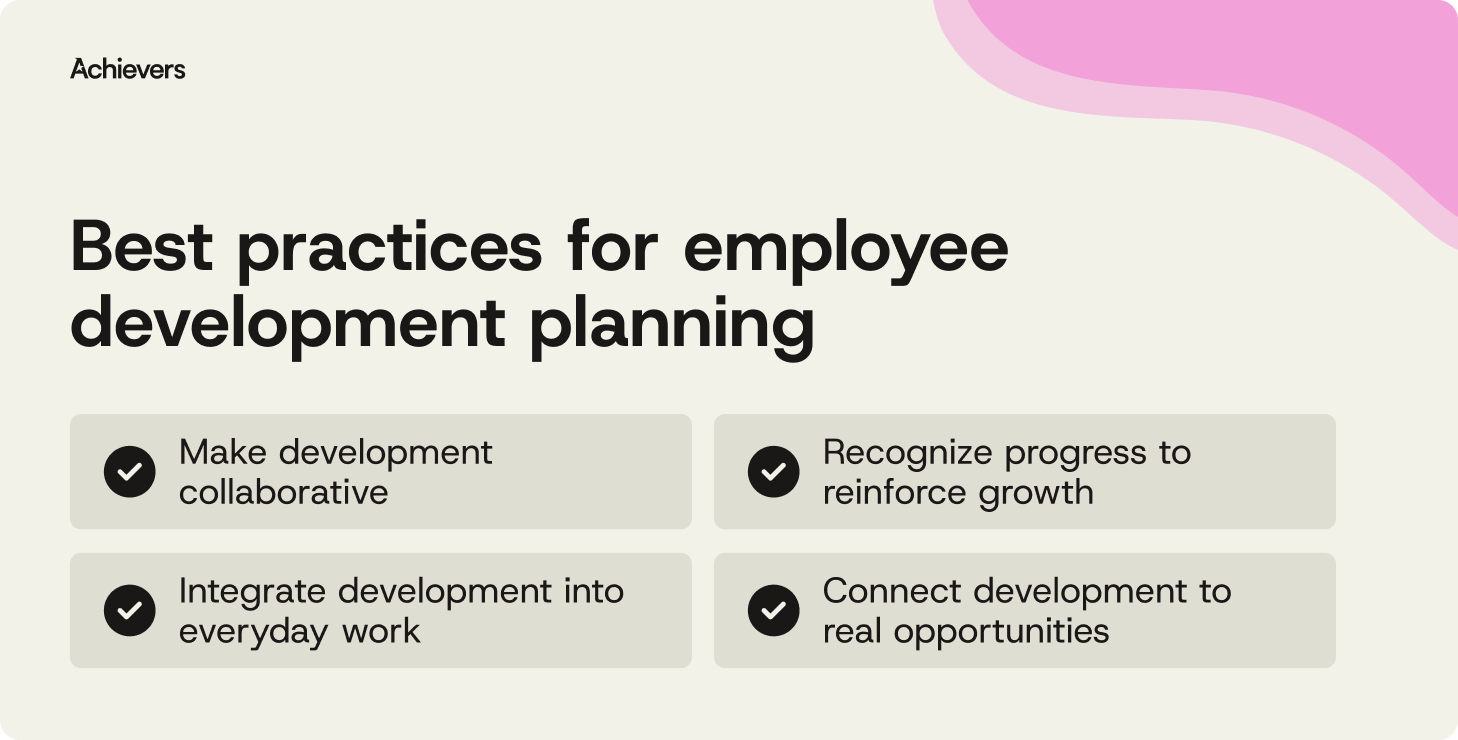
Organizations that get development planning right tend to follow a few modern, people-centered principles. A few best practices include:
Make development collaborative
Development plans should be built together, not handed down. Collaboration between employees and managers creates shared accountability and trust and makes growth conversations more open and productive over time.
Integrate development into everyday work
The most effective development doesn’t happen outside the job — it happens within it. Embedding growth into projects, feedback conversations, and ongoing responsibilities makes development feel achievable and relevant, rather than like an extra task competing for time.
Recognize progress to reinforce growth
Recognition plays a critical role in sustaining development. Acknowledging effort, learning, and application of new skills reinforces progress and motivates continued growth. When development is recognized, it becomes part of the culture — not just a personal goal.
Connect development to real opportunities
Development feels meaningful when it leads somewhere tangible. Tying plans to visible career paths, new responsibilities, or internal mobility opportunities helps employees see the payoff of their effort and strengthens engagement and retention. Development should feel energizing and forward-looking — not like administrative homework.
Professional development plan examples
Professional development plans aren’t one-size-fits-all. Real-world examples help illustrate how the same framework can be adapted to support early-career employees, emerging leaders, and experienced professionals — each with distinct goals, timelines, and development needs.
Early-career employee
An early-career professional may focus on building foundational skills, gaining confidence, and exploring potential career paths. Development activities often emphasize learning, feedback, and exposure.
High-potential manager
For emerging leaders, development plans often prioritize people management skills, strategic thinking, and leadership experience. Coaching and stretch assignments play a critical role, reinforcing learning through hands-on leadership moments.
Experienced employee reskilling
As business needs evolve, experienced employees may focus on building new capabilities to transition into future-facing roles. Reskilling plans emphasize targeted learning and hands-on application, helping employees stay engaged while preparing for what’s next.
Common professional development challenges and how to overcome them
Plans get created, then forgotten
One of the most common challenges with professional development plans is that they’re created during annual reviews and then rarely revisited. Without regular touchpoints, plans lose relevance and momentum. Integrating development discussions into weekly or monthly check-ins keeps goals visible, reinforces accountability, and allows managers to support progress in real time rather than after the fact.
Vague or unrealistic goals
Development stalls when goals are too broad or disconnected from day-to-day work. Breaking goals into smaller, measurable steps helps employees understand what progress actually looks like and how to achieve it. Clear, measurable success criteria make development feel attainable and give both employees and managers a shared way to track improvement over time.
Managers lack coaching confidence
Many managers want to support employee growth but aren’t always sure how to do it effectively. Providing simple prompts, structured frameworks, and recognition tools helps managers lead better development conversations without adding pressure. When managers feel confident in coaching and acknowledging progress, development becomes a natural part of how teams operate.
No visibility into progress
When progress isn’t visible, development is easy to deprioritize. Work milestone software, with simple dashboards and regular progress updates, gives employees and managers a clear view of what’s moving forward — and what needs attention. Visibility keeps momentum alive and makes growth feel real, not theoretical.
How technology supports professional development
Technology plays a critical role in making professional development scalable, visible, and sustainable — without increasing administrative burden. The right tools don’t replace human conversations, but they support and reinforce them in meaningful ways. Here’s a few ways technology can help:
- Centralize goals and plans: Centralized platforms provide a single source of truth for development goals, activities, and progress. When plans are easy to access and update, they’re more likely to stay active and relevant across teams and timeframes.
- Provide skill insights: Skill data helps organizations understand current capabilities and future needs. These insights guide learning investments, personalize development paths, and ensure growth efforts align with evolving business priorities.
- Reinforce progress through recognition and feedback: Digital recognition and feedback tools make development visible. Acknowledging progress, effort, and skill application reinforces learning behaviors and motivates employees to continue growing.
- Surface internal opportunities: Technology can highlight projects, roles, and career pathways that align with employee development goals. By making internal opportunities easier to discover, organizations strengthen mobility and retention.
Technology doesn’t create development — but when used well, it empowers development to stick.
Professional development plans for purpose-driven growth
Professional development plans do more than guide career progression — they build confidence, strengthen capability, and support long-term success for both employees and organizations.
When development is intentional and embedded into everyday work, growth becomes part of how performance is sustained — not an afterthought. Development doesn’t happen by accident. It’s designed, supported, and continuously reinforced.
At Achievers, we believe recognition is the fuel that keeps development moving forward. By celebrating progress and connecting people to purpose, our platform helps organizations turn growth plans into real outcomes — creating a workforce that’s ready for what’s next.
Professional development FAQs
Key insights
- Professional development plans turn career growth from an informal conversation into a structured, measurable process that benefits both employees and the organization.
- Development succeeds when it’s personalized, regularly revisited, and reinforced by managers — not treated as a one-time planning exercise.
- Technology and recognition help development plans stay visible and actionable, increasing engagement, internal mobility, and long-term retention.