Table of contents
Create a culture that means business™
Schedule a demo with an Achievers solution expert today.


 Copy URL
Culture is something every organization has, and something every organization can improve. It shows up in how people treat each other, how decisions get made, and what behaviors are encouraged or overlooked.
Improving culture matters because it affects both people and performance. According to Great Place to Work®, organizations with high‑trust cultures are 5.5x more likely to achieve year‑over‑year revenue growth. That’s because trust shapes how people show up, make decisions, and perform. When people trust their leaders and each other, work moves faster, and problems are easier to solve.
The good news is that culture can be improved through clear, intentional actions. The tips below focus on practical ways to improve culture in ways people can see, feel, and experience every day.
How to improve organizational culture: 10 tips that actually work
Organizational culture is a simple concept. Ultimately, culture influences how people show up to work, how engaged they feel, and how progress actually happens.
Whether your culture needs small improvements or more meaningful change, these tips focus on practical ways to strengthen it, and create a workplace people want to be part of.
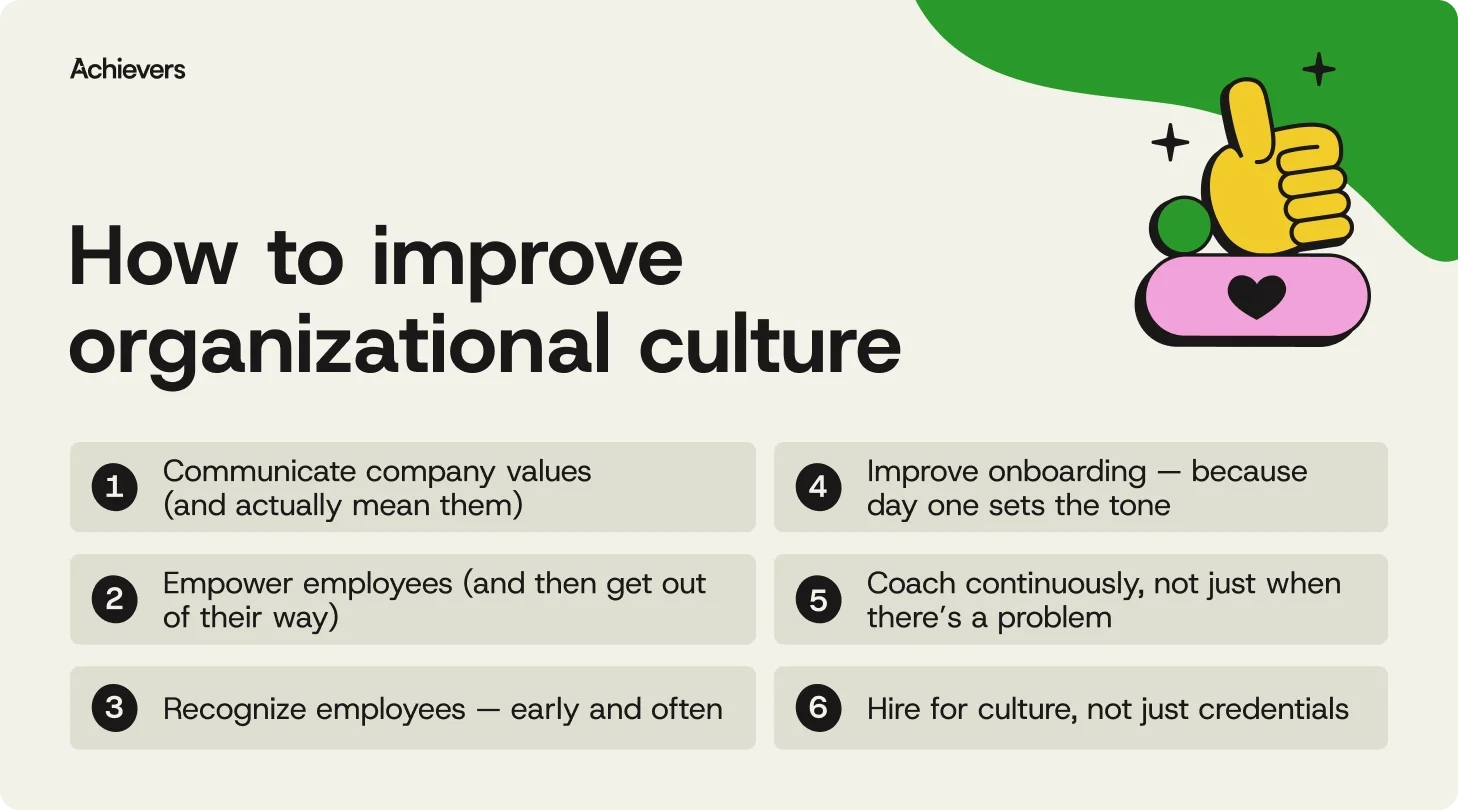
1. Communicate company values and live by them
Core values should guide decisions, shape behavior, and help employees understand what “good work” looks like.
Ideas:
- Define what each value looks like in everyday behavior.
- Call out values during team meetings, decision-making, and recognition moments.
- Use values as criteria in hiring, promotions, and performance conversations.
When values are reinforced consistently, employees understand what’s expected and why their work matters.
2. Recognize employees early and often
Recognition plays a direct role in engagement and motivation. When people feel appreciated, they’re more likely to stay committed and contribute at a higher level.
Ideas:
- Encourage managers and peers to recognize wins in the moment.
- Be specific about what was done and why it mattered.
- Tie recognition back to company values or goals.
Frequent, meaningful recognition helps people feel seen and motivates them to keep contributing.
3. Empower employees and trust them to deliver
Employees do their best work when they’re given ownership, encouraged to share ideas, and trusted to make decisions. This doesn’t mean removing support — it means providing clear goals, the right resources, and guidance when needed, then stepping back.
- Set clear goals and decision boundaries.
- Give employees room to solve problems and make choices.
- Offer support and feedback without micromanaging.
When people feel trusted, they take more ownership and initiative, and approach each task with confidence.
4. Improve onboarding to set the right expectations
Onboarding shapes how new employees experience your organization from the start. It should go beyond paperwork and systems to explain culture, values, and what success looks like.
Ideas:
- Clearly explain values, expectations, and how success is measured.
- Connect new hires with peers or mentors early.
- Check in regularly during the first few months.
A strong onboarding experience helps people contribute sooner and feel aligned from day one.
5. Coach continuously, not only during reviews
Continuous coaching helps employees build skills, work through challenges, and understand their path forward.
Ideas:
- Hold regular one-on-ones focused on growth opportunities, not just completed tasks.
- Give feedback that’s timely, specific, and balanced.
- Ask employees about their goals and challenges.
From one-on-ones to mentorship programs, creating a culture of continuous development keeps people motivated and helps your business stay future-ready. Bonus: it’s also how you turn good managers into great ones.
6. Hire for values, not just experience
Hiring with culture in mind helps build teams that collaborate well and share common expectations. This means learning how candidates approach problems, work with others, and align with your organization’s values.
- Use behavior-based interview questions.
- Assess how candidates collaborate, communicate, and adapt.
- Involve multiple perspectives in hiring decisions.
When you hire people who “get it” — and want to be part of it — you build stronger teams, reduce turnover, and make onboarding a whole lot smoother.
7. Keep communication open and straightforward
Open and transparent communication starts with leadership but should live at every level. Employees want to understand what’s happening, why decisions are made, and how they can share feedback.
Ideas:
- Share updates regularly, even when the news is uncertain.
- Create ways for employees to give feedback safely and anonymously.
- Follow up on questions and concerns with curiosity.
When people feel informed and heard, they stay engaged and focused instead of worrying.
8. Make collaboration part of how work gets done
Building a collaborative culture means breaking down silos, encouraging cross-functional work, and making space for shared wins.
Ideas:
- Encourage cross-team projects and shared goals.
- Recognize collaborative efforts, not just individual wins.
- Make time for teams to connect and problem-solve together.
When people see themselves as working toward shared goals, employees know they’re all on the same team.
9. Prioritize inclusion through everyday actions
Diversity drives innovation, and inclusion keeps people engaged. But it doesn’t happen by accident. Organizations need to be intentional.
Ideas:
- Ensure different voices are heard in meetings.
- Review processes for bias or barriers.
- Support inclusive leadership practices.
Celebrating what makes people different? That’s what makes everyone feel like they’re part of something meaningful.
10. Set the tone through leadership behavior
Employees watch what leaders do more than what they say. That means leaders must show up with integrity, listen well, own their mistakes, and recognize others often.
Ideas:
- Model the values you expect others to follow.
- Be transparent, accountable, and open to feedback.
- Recognize others often and authentically.
It’s simple: if you want employees to live the culture, leadership has to live it first. No pressure.
How Achievers helps you build culture that sticks
Let’s be honest — building a great culture isn’t just about good intentions. It’s about having the right tools to turn values into actions, and actions into lasting impact. That’s where Achievers comes in.
Our platform is designed to make culture real — not theoretical, not aspirational, but visible in the way people work, recognize, and grow every day. Here’s how:
- Recognition that means something: Give employees more than a thumbs-up. Achievers makes frequent, meaningful recognition part of the daily rhythm — tied to your values, your goals, and your people.
- Feedback you can actually use: With real-time pulse surveys and always-on feedback tools, leaders can spot issues early, celebrate what’s working, and keep a finger on the cultural pulse — no guesswork required.
- Insights that drive action: Advanced analytics show the real impact of your engagement efforts. No fluff — just clear, actionable data to help you iterate, improve, and keep culture moving in the right direction.
- Integration that plays nice with everything: Achievers integrates with the tools you already use, which means no extra admin headaches. Just more recognition, more engagement, and more impact — right where your people work.
The result? A culture where employees feel seen, heard, and empowered to do their best work — because recognition isn’t an initiative. It’s how your company runs.
Building a thriving organizational culture starts with one step
Culture isn’t built overnight — but it does start with intention. When organizations prioritize recognition, open communication, and meaningful connection, they lay the groundwork for something bigger: a culture where people feel valued, trusted, and excited to contribute.
You don’t need a massive overhaul to get started. Begin by reinforcing your values and recognizing the great work already happening around you. Over time, those small moments add up to something powerful — a workplace where people don’t just show up. They thrive.
So yes, culture takes effort. But it’s the kind that pays off — in engagement, retention, innovation, and results. And there’s no better time to start than right now.

Improving organizational culture FAQs