Table of contents
Create a culture that means business™
Schedule a demo with an Achievers solution expert today.


 Copy URL
A well-designed employee rewards and recognition program does more than make people feel good. It drives engagement, boosts performance, and improves retention. But not all recognition programs deliver results. The difference between a program that sounds good and one that actually works comes down to how recognition is delivered — and how often.
Research from the State of Recognition Report shows that when employees are recognized weekly, they are 2.6x more likely to be performing at their best. The takeaway is simple: recognition works when it is frequent, meaningful, and clearly connected to the behaviors your organization wants to see more of.
In this guide, we’ll unpack what makes recognition truly effective, walk through reward strategies that work (and the ones that don’t), and share practical tips to help you build a workplace where appreciation isn’t an afterthought — it’s a habit. Let’s get into it!
What are employee rewards and recognition programs?
At its core, an employee rewards and recognition program is a structured way for organizations to acknowledge and reinforce great work. It recognizes employee contributions — both big wins and everyday efforts — and pairs that recognition with meaningful rewards.
Most modern rewards and recognition programs are delivered through a centralized platform. Recognition is visible across teams, reinforcing shared values, while rewards are often points-based, giving employees the flexibility to choose what matters most to them — from gift cards to experiences and more.
The goal is simple and strategic: increase morale, encourage strong performance, and improve employee retention.
When done well, employee recognition doesn’t just make people feel good — it moves the needle on engagement, productivity, and retention. The good news? Building a recognition program that works isn’t rocket science. It just takes the right approach, a bit of planning, and a genuine commitment to appreciating your people.
Real-world recognition: Simple ways to show employees they matter
Effective employee recognition doesn’t have to be complicated. It just has to be genuine. What matters most is recognizing employees in ways that feel timely, meaningful, and connected to their contributions.
Here are a few practical, proven examples of how organizations can recognize and reward employees:
Work anniversaries that feel intentional, not automatic
A quick “Congrats on five years!” is a start. But personalized messages, public recognition, or a thoughtful reward show employees that their time and commitment truly matter. Celebrating service milestones — from year one to year ten — reinforces loyalty and reminds people they’re valued for the long haul.
Employee appreciation events that go beyond the basics
Team lunches, virtual celebrations, and company‑wide appreciation events create space to recognize employees without rushing through it at the end of a meeting agenda. These moments help organizations pause, say thank you, and build connection — bonus points if dessert is involved.
Achievement recognition that reinforces the right behaviors
Calling out accomplishments — like completing a major project, reaching a performance goal, or navigating a tough deadline — helps reinforce the behaviors your organization wants more of. Recognition shared in team meetings, awards programs, or internal platforms makes success visible and repeatable.
Employee spotlights that keep recognition consistent
Weekly or monthly employee spotlights provide a simple way to recognize individuals regularly, not just during major milestones. A short feature in a newsletter or a shout‑out on collaboration tools like Slack helps employees feel seen — and shows others what great work looks like in action.
Recognition vs. rewards: What’s the difference?
Employee recognition and employee rewards are closely connected — but they are not the same thing. Understanding the difference matters, because the strongest rewards and recognition programs use both intentionally.
Let’s break it down:
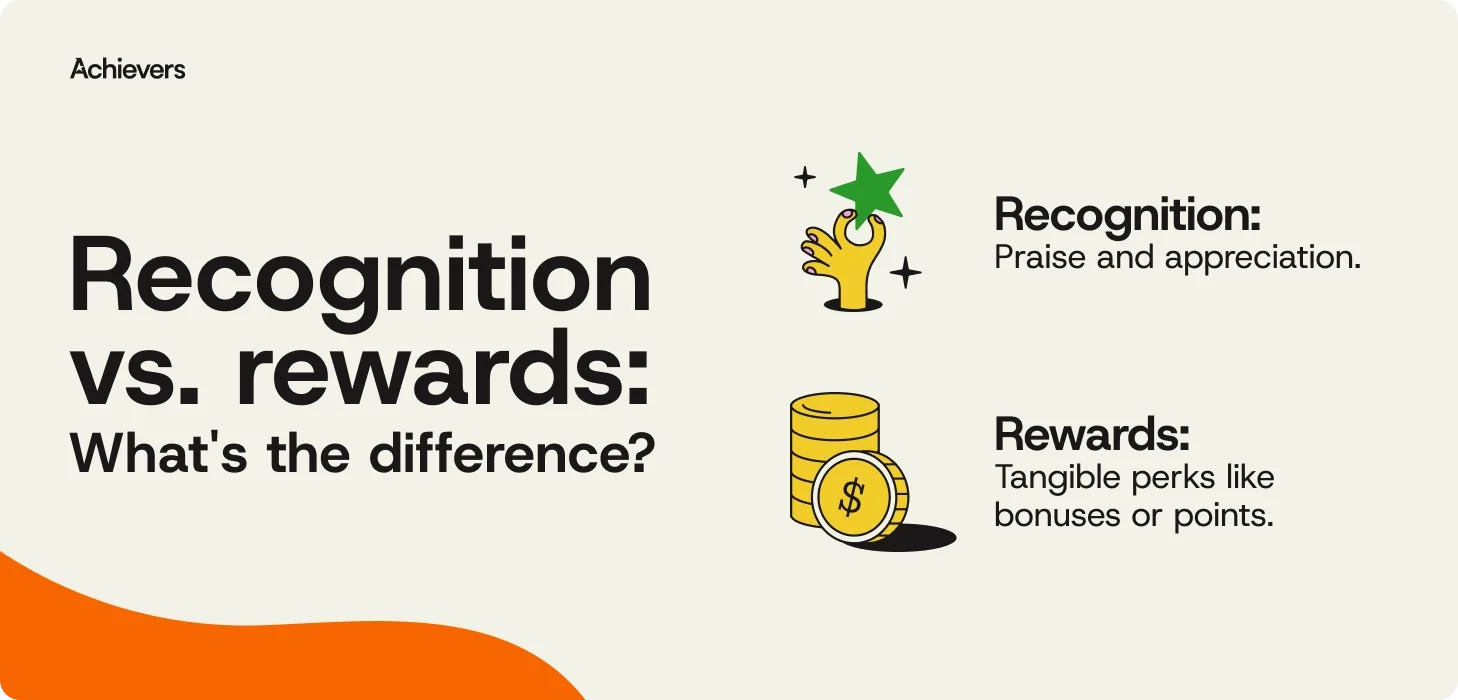
Recognition is the act of acknowledging an employee’s effort, behavior, or results. It can be as simple as a sincere thank-you message, a public shout-out, or a note that highlights why someone’s work mattered. Recognition is often social and visible, reinforcing values and making great work easier to see and repeat.
Rewards, on the other hand, are tangible. They typically include things like bonuses, gift cards, points, experiences, or perks that employees can redeem. Rewards add an extra layer of impact by giving recognition material value — but they work best when paired with clear, meaningful recognition.
In short:
Recognition says, “I see what you did, and it mattered.”
Rewards say, “And we value it.”
The most effective employee rewards and recognition programs don’t treat these as either-or. They combine timely recognition with thoughtful rewards to reinforce the behaviors that drive engagement, performance, and retention — without overcomplicating the process.
Why invest in in an employee rewards and recognition program?
Beyond making people feel appreciated, rewards and recognition programs help build a workforce that is more engaged, more connected, and more likely to stay. (Excited for Monday morning? Let’s call that a stretch goal.)
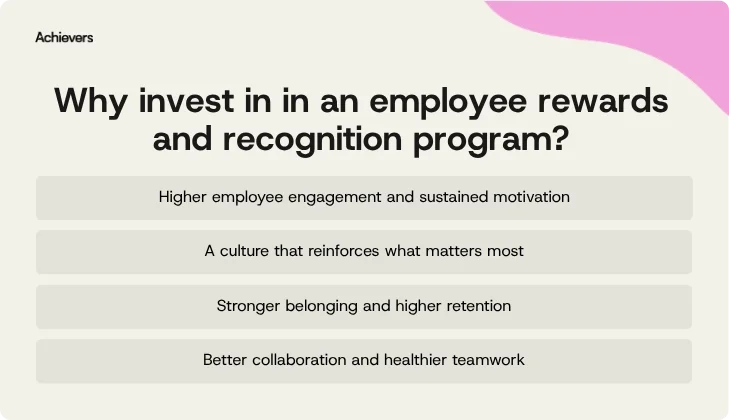
Here’s what effective rewards and recognition programs make possible:
Higher employee engagement and sustained motivation
When employees feel seen and appreciated, they bring more energy and commitment to their work. Regular recognition — especially through points-based programs — keeps appreciation flowing in real time, rather than saving it for annual reviews that arrive long after the moment has passed.
A culture that reinforces what matters most
Recognition is one of the most effective ways to reinforce company values and priorities. By consistently highlighting behaviors that align with your mission, recognition helps those behaviors spread across teams — turning values from posters on the wall into actions people repeat.
Stronger belonging and higher retention
Feeling valued builds connection. When employees know their work matters, they feel more included, more motivated, and more likely to envision a future with the organization. Recognition shifts work from “just a job” to “I belong here.”
Better collaboration and healthier teamwork
When recognition is part of everyday work — not limited to manager notes or private messages — relationships improve. Public appreciation, peer-to-peer recognition, and shared celebrations help teams support one another and create a culture where people lift each other up, not just when food is involved.
Recognition by the numbers: The business impact of saying “thank you”
We all know recognition matters — but data shows it delivers real, measurable results when it’s done consistently and with intention. Insights from Achievers Workforce Institute’s State of Recognition Report make one thing clear: recognition works — but only when it’s designed to scale and stick.
Employees who are recognized at least once a month are 45% more engaged.
Regular recognition creates momentum. Monthly recognition signals to employees that their contributions are noticed in real time — not just when something goes wrong or performance reviews roll around. Engagement improves when appreciation is part of the everyday rhythm of work, not a one-off event.
Consistent manager recognition reduces turnover risk by 35%.
Manager recognition carries weight because it connects effort directly to expectations and priorities. When managers recognize employees regularly, it builds trust, clarity, and confidence — all critical factors in whether employees choose to stay or start quietly updating their résumés.
Organizations with peer-to-peer recognition programs are 37% more likely to see positive business outcomes.
Recognition doesn’t scale when it lives with managers alone. Peer recognition helps reinforce culture at every level by making appreciation visible across teams. It also captures contributions leaders might never see — turning recognition into a shared responsibility, not a top-down task.
Recognition programs built around frequent, low-cost moments are 26% more likely to succeed.
Big rewards are memorable, but small, frequent moments are sustainable. Programs that prioritize regular, meaningful recognition over occasional high-cost rewards are easier to maintain — and far more effective at shaping behavior over time.
Social (non-monetary) recognition can account for 60–70% of total recognition and still drive results.
Recognition doesn’t have to be expensive to be impactful. Public praise, thoughtful messages, and visible appreciation meet a fundamental human need: to feel seen. Monetary rewards add value, but social recognition is what builds connection and culture at scale.
96% of high-performing recognition programs align recognition to company values.
High-impact programs don’t recognize everything — they recognize what matters most. When recognition is tied directly to organizational culture and values, it reinforces priorities, guides behavior, and turns abstract values into everyday actions employees can model and repeat.
Milestone awards drive 50% higher retention than generic years-of-service awards.
Not all milestones are created equal. Recognition that reflects meaningful moments — growth, impact, and contribution — resonates far more than generic tenure awards. Employees stay longer when recognition feels personal, relevant, and earned.
Bottom line: You don’t need a giant budget to make it work — just a little intention and a lot of follow-through.
How to build a rewards and recognition program that actually works
Building a program that delivers results doesn’t have to be complex. With a clear structure, the right focus, and a genuine commitment to appreciation, you can create a recognition experience employees actually care about — and yes, maybe even enjoy.
Here’s what makes the difference:
Recognize employees early, often, and without unnecessary friction
Frequency matters. When recognition is part of the daily rhythm of work — not reserved for birthdays or annual reviews — employees feel seen and supported in real time. The most effective programs remove barriers to recognition, using simple, intuitive platforms that make it easy for everyone to participate, from senior leaders to new hires.
Make recognition specific and meaningful
Generic praise is easy to forget. Recognition is most impactful when it clearly explains what someone did and why it mattered. Instead of a vague “great job,” call out the behavior or outcome you want to reinforce: helping a team meet a deadline, stepping up for a customer, or collaborating across functions. Specific recognition builds clarity and makes great work repeatable.
Ask for feedback — and act on it
The best recognition programs evolve. Regular employee feedback, whether through satisfaction surveys, pulse checks, or informal conversations, helps you understand what’s landing and what isn’t. Just as important: showing employees that their input leads to real changes. Listening — and following through — builds trust, credibility, and long-term engagement.
Build a rewards and recognition program with the right partner
Your program is only as effective as the platform behind it. The right third‑party solution doesn’t just make recognition easier — it helps turn appreciation into a consistent, measurable habit across your organization.
When evaluating employee recognition platforms, focus on a few essentials:
- Ease of use and everyday adoption: If a platform feels clunky, people won’t use it. Look for a solution that fits naturally into existing workflows and tools employees already use.
- Support for frequent, visible recognition: Public, real‑time recognition helps reinforce values, build connection, and show employees what great work looks like — beyond their immediate team.
- Flexibility in rewards: The best platforms combine social recognition with flexible reward options. Points‑based systems that let employees choose what’s meaningful to them create more personal and lasting impact than one‑size‑fits‑all rewards.
- Insights that connect recognition to results: Look for platforms that provide data and insights — not just activity counts. Strong reporting helps HR and leaders understand what’s being recognized, how often, and how recognition supports engagement, performance, and retention over time.
- Scalability and long‑term partnership: Your recognition needs will change and grow with your business. A strong platform should scale with your organization, support global teams, and keep recognition a priority long after implementation — because culture doesn’t stop changing once the software is live.
Supercharge your employee rewards and recognition program
When done right, a well-structured employee rewards and recognition program makes employees feel valued, fostering a culture of appreciation that directly impacts business success. Frequent, meaningful recognition that aligns with company values encourages the kind of positive behaviors that lead to better team dynamics and results.
A truly effective program strikes the right balance between social and monetary rewards. It’s about making recognition personal and impactful. The good news? You don’t need a manual for this. A modern, mobile-friendly platform like Achievers streamlines the process, supporting peer-to-peer recognition, manager-driven appreciation, and points-based rewards. Plus, with a wide range of rewards employees actually want, you can create a recognition experience that keeps everyone motivated — and happy to stay.
Rewards and recognition program FAQs
Key insights
- Employee rewards and recognition work best when they are frequent, meaningful, and tied to the behaviors that matter most to your business.
- The strongest recognition programs combine social appreciation with flexible rewards to drive engagement, performance, and retention at scale.
- Recognition becomes a lasting advantage when it’s embedded into everyday work and supported by the right structure, tools, and commitment.