Table of contents
Create a culture that means business™
Schedule a demo with an Achievers solution expert today.


 Copy URL
Managing changes in the workplace is one of the biggest hurdles that HR and business leaders face, and yet, 54% of CHROs say their change strategies aren’t engaging employees the way they should, according to Gartner. That’s a big gap between good intentions and actual impact; and it often comes down to one thing: how employees experience the change.
Handled well, change can energize your team, creating alignment, sparking momentum, and building resilience. But for change to be successful, it takes connection, clarity, and communication.
5 key strategies to manage workplace change
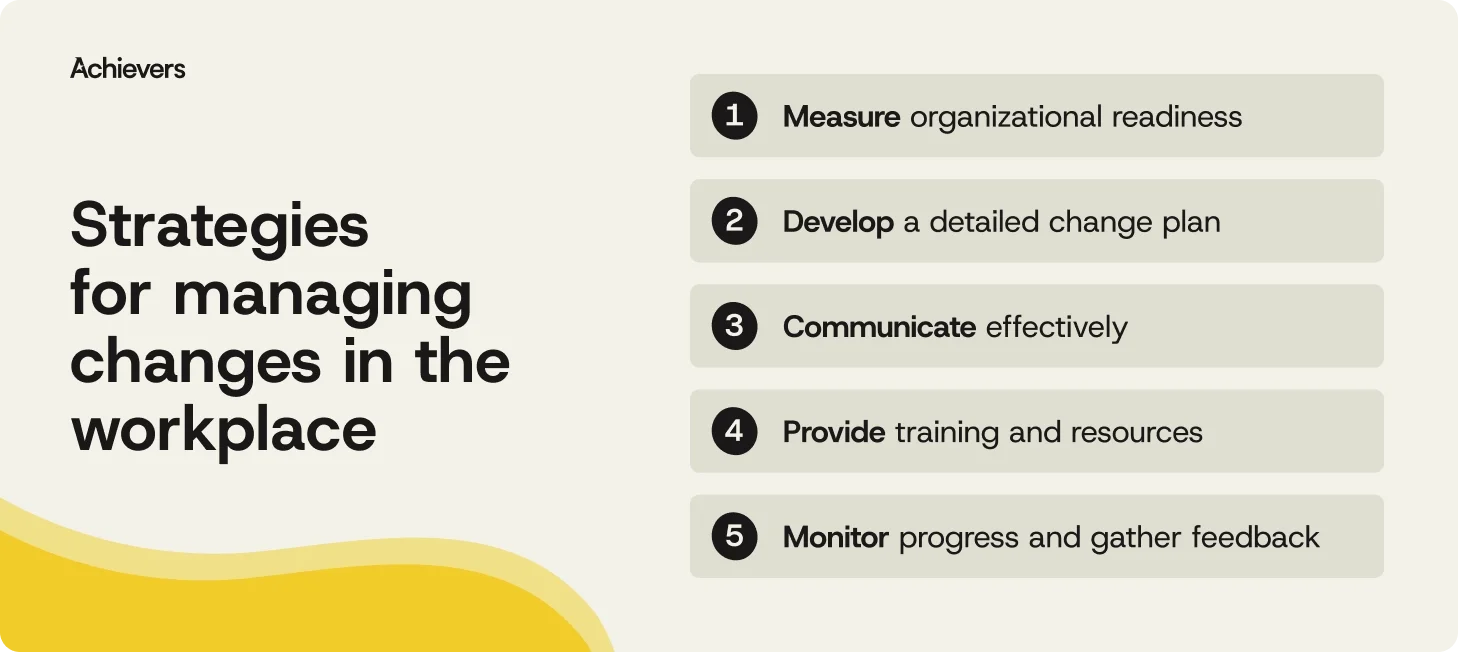
1. Measure organizational readiness
Before launching a new initiative, consider how ready your organization is by taking the pulse of your people and processes.
- Use pulse surveys, interviews, or readiness assessments to understand attitudes, confidence, and capability gaps.
- Look for early signs of resistance or support so you can address them before they escalate.
2. Develop a detailed change plan
A thoughtful detailed change plan not keeps things on track and shows your team that there is real intention behind the decisions being made.
- Map out goals, timelines, milestones, and ownership. Who’s doing what, and when?
- Make sure your plan reflects your company’s core values and real-world workflows.
3. Communicate effectively
When you communicate change effectively with your team, they understand what’s changing, why it matters, and how it affects them.
- Mix up your communication channels. Communicate via town halls, emails, manager briefings, and Slack updates.
- Prioritize transparent communication and two-way dialogue. Employees should be able to ask questions and receive clear, direct answers regarding changes in the company.
4. Provide training and resources
Providing appropriate training and resources ensures that your team is equipped to keep up with new responsibilities and processes, and helps them feel empowered along the way.
- Offer practical, easy-to-access resources like workshops, micro-learnings, or cheat sheets.
- Focus on what employees need to do differently and give them the tools to succeed.
5. Monitor progress and gather feedback
- Create regular feedback checkpoints and be willing to pivot if current changes or communications aren’t having an impact.
- Use pulse surveys, team check-ins, and data to track progress and sentiment.
When you hear feedback, act on it. When input directly connects to improvements within the company, that’s a significant factor in building employee trust.
Best practices for managing changes in the workplace
1. Reinforce the “why” through recognition
Employees need to know why the work their effort matters. When employees are recognized for embracing new behaviors, those behaviors are repeated.
- Shout out early adopters who are modeling the change.
- Tie recognition directly to the actions and mindsets you want to see more of.
It’s a fast, visible way to shape culture and keep progress moving forward.
2. Use data to spot friction points
Using data to spot friction points allows leaders to identify where change adoption is stalling or where employees are becoming disengaged.
- Use employee feedback tools and engagement metrics to track how people are adjusting.
- Act fast on what you learn; even small changes can reignite momentum.
With real-time insights and data points at your disposal, you can make more informed decisions that benefit both the business and the employee experience.
3. Keep employees in the loop
Change shouldn’t be something that happens to your people. Ongoing input keeps them engaged and invested.
- Ask how the transition is landing and co-create solutions when things hit a snag.
- Create space for employee-led initiatives, pilots, or tweaks to processes.
Recognized and empowered employees are more likely to stay committed through the ups and downs.
4. Make change part of the flow of work
The more friction your new process creates, the faster it will be abandoned. Integrate change into the tools, routines, and rhythms your people already use.
- Sync new workflows with familiar platforms.
- Provide just-in-time resources instead of overwhelming all-at-once training.
Change that fits into the day-to-day is more likely to last, especially when it feels like less work, not more.
How Achievers helps you turn change into lasting impact
Achievers helps organizations turn moments of change into impactful, long-term business success, by offering an all-in-one recognition, feedback, and engagement solution.
Here’s how:
- Reinforce desired behaviors with frequent recognition: Achievers’ social recognition makes change visible by celebrating employees who embrace new processes, collaborate across teams, and help others adapt. This creates clear examples for others to follow.
- Motivate participation with meaningful rewards: Employees can redeem points through Achievers’ Global Rewards Marketplace, helping organizations connect change-related milestones and accomplishments to tangible appreciation.
- Capture employee feedback in the moments that matter: Voice of Employee tools allow leaders to gather sentiment, identify emerging concerns, and understand how employees are experiencing change in real time.
- Embed recognition into the tools employees already use: Software integrations with HRIS and workplace tools make it easier for managers and peers to recognize contributions consistently, without adding another process to learn during a period of change.
- Track adoption and engagement over time: Reporting and analytics help leaders understand participation trends, recognition activity, and engagement signals so they can measure progress and adjust their approach when needed.
When you combine thoughtful planning with tools like Achievers, designed to keep people engaged, heard, and supported, change becomes a culture-shaping opportunity.
Managing changes in the workplace FAQs
Key insights
- Successful change management includes assessing readiness early, identifying adoption risks, and building a plan that reflects how employees work.
- Employees embrace change when they understand the why, receive ongoing communication, and have opportunities to provide feedback throughout the process.
- Recognition, employee feedback, and real-time engagement data help organizations reinforce new behaviors, remove friction, and sustain change over time.